Article by Mitica Docan – Published Saturday, April 11, 2026 8:11 p.m. / Updated Saturday, April 11, 2026 8:39 p.m.
In theory, for many of us, Holy Saturday should be the last day of fasting. In practice, everyone did what they could, disciplined their will more or less, abstained or ate various things. Beyond the known challenges, I've noticed a recent, hidden temptation with dramatic accents that I'm trying to fight. For now, with little chance.
My phone tells me that I've spent an average of 4 to 5 hours a day online for the past 3 weeks. By the nature of the job, I have to add about 10 hours spent in front of the laptop, simultaneously or not.
Easily, that would mean about 12-13 hours a day seized by technology, that is, 3 full days per week spent staring at a screen. As a paid watcher of the news, it's kind of natural for me to do that. You can't blame the confectioner for eating a lot of sugar. As a “civilian”, the effect is often hidden and devastating. From functional exhaustion to an unconscious feeling of being stuck. I no longer report back pain.
However, until 2-3 years ago, things seemed somewhat manageable.
We all frantically played mario and snake on our nokia phones then moved on to yahoo messenger and facebook on our laptop. Now, we sit on 6-inch portable screens, on social networks like Instagram and TikTok, on the tram going home. We have remained avid consumers of instant messaging, gaming, likes, and if we look back, it doesn't seem like much has changed in our online behavior. Except that another essential “player” appeared in the discussion. The algorithm.
“Homo Algorithmicus”
Technology is no longer the means of addiction, it is the addiction itself. For the first time, apps have begun to learn about us at a faster rate than we learn about them. It adapts almost instantly and delivers a spider web that holds the user's attention, so much so that you no longer know who is using whom. And for the first time, almost all of us are finding it increasingly difficult to return to reality.
The world spent the first decade of the 2000s worrying about becoming the “homo videns” that political scientist Giovanni Sartori warned about, that is, people unable to maintain logical, conceptual reasoning due to the abundance of ready-made video images.
We were fed up with the idea that television would dilute critical thinking and usher in a new political era where image is essential and consistency of message will lose ground to tone of voice. We have seen this prophecy fulfilled with the non-stop cycle of news and live reactions, with politicians fighting for airtime and destroying any compromise as they resort to verbal violence necessary to grab attention.
Now, the problem is even more acute. We do not know exactly whether in a limited time horizon it will be possible to reason in any way. We have become hunted hunters, exploited in a circle of compulsive interaction.
Studies show how our cognitive capacity has begun to decline due to exacerbated screen consumption, and human attention spans have been compared to that of “goldfish.” In addition, the human brain is “rewired” by the famous dopamine injections, convinced to choose emotionally, drained of the necessary resources to “process” reality, trained to impatience, etc. And thus more vulnerable to algorithms.
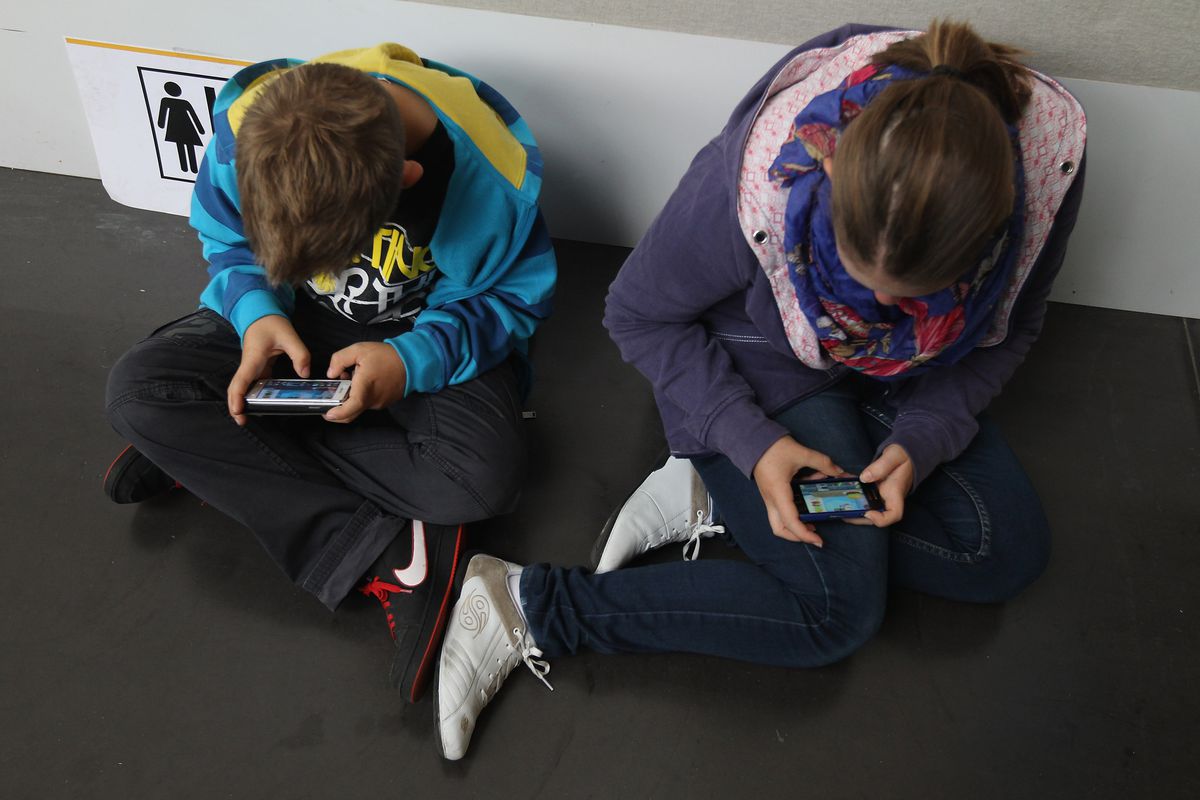
Social networks on phones are the biggest consumers of personal time, photo: pixabay.com
The phone and the terrifying “phantom vibration syndrome”
Unlike Sartori's TVs, “the rise of the phone as the device of choice is far more damaging,” notes a recent article in the Washington Post. “Phone use is compulsive and illogical. With the phone, people can sit on social media while walking, watching a movie, or talking to someone, and so on. Basically, it interrupts other activities, … leading to less satisfying conversations and less fulfilling relationships.”
In contrast, WashPo highlights a Harvard study on digital detox. “After just one week of reduced smartphone use, participants reported decreases in anxiety (16.1%), depression (24.8%) and insomnia (14.5%).” The benefits were immense even when the layoff was only for a few hours.
A terrifying effect I recently learned about is “phantom vibration syndrome”when you feel your phone ringing in your pocket, even if it's on the table. It's a sign of nervous system hyper-vigilance, basically a symptom of technological withdrawal. I think I felt this one too.
A long discussion, a starting point
If anyone has resisted reading to this point, they probably sensed the irony. A text written on a digital platform condemning the excess time spent on digital platforms. And he also noticed that there is not terribly much new in coming out with a banner against wasted time online.
But on an Easter weekend, in the face of the fundamental event for the liberation of mankind, we should be able to put our phones away and reflect on how we use them. As much as our will is in the middle, so much of the algorithms. How much we listen to what the family around us says and how much we mechanically scroll, indifferent to our loved ones. Devices, applications, games, all lead from one point to a form of captivity that diminishes us as people and turns us into a kind of raw material.
More and more theologians are talking about these pitfalls, much better than I am.
Christ is risen!