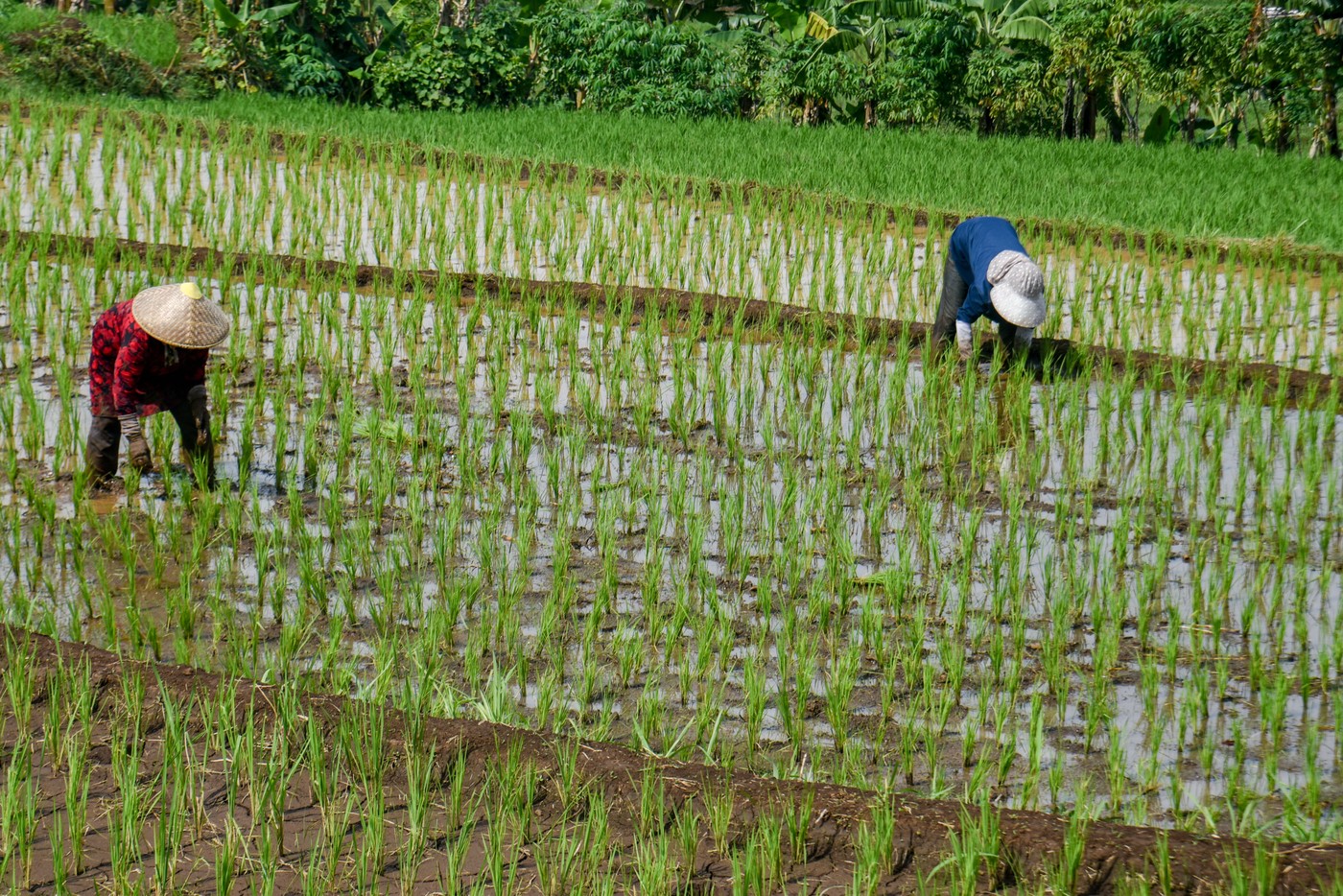
Rice fields ready for harvest are idle, and farmers are considering giving up planting rice for the next season, as rising fuel and fertilizer costs due to the Middle East war are affecting one of the world's largest rice-growing regions, reports Agerpres citing Bloomberg economic agency.
In Southeast Asia, tens of millions of small farmers struggle to find affordable fertilizer, as well as the diesel fuel needed for tractors, irrigation pumps and rice planters. In Thailand, some farmers leave the crop in the ground because it is too expensive to harvest.
The fuel and fertilizer shortages highlight how the war in Iran has upended global trade and raised concerns about food shortages. As well as driving up oil prices, the closure of the Strait of Hormuz, which remains largely blocked despite a temporary truce, has blocked a vital route for fertilizer and fuel supplies, with Asia particularly affected.
Rice is a staple food for more than half of the world's population
“There are a lot of panicked farmers,” said Patrick Davenport, director of BRM Agro, a rice grower in Cambodia, where about three-quarters of the population lives in rural areas. According to Davenport, some farmers are reluctant to continue planting rice this month without a guaranteed profit.
In the Philippines, the world's main rice importer and also a major producer, rice production could drop by at least 10% this year, says Raul Montemayor, national manager of the Federation of Free Farmers Cooperatives. This could mean the loss of approximately two million tons of rice, considering that the national production is estimated at 20.3 million tons.
“This is a very big possibility, and the reduction will be felt during the next harvest season, from September or October,” said Montemayor.
Rice is a staple food for more than half the world's population, as well as a livelihood for rural communities in a region where agriculture still accounts for a large part of economic activity. Farmers who struggle with the high costs of inputs, which have doubled or even tripled, now find themselves under pressure from the low prices at which they have to sell their products.
Hurt by high inventories, benchmark prices for Thai white rice fell to their lowest level in a decade in late October and have only partially recovered since then, spending most of last month below $400 a tonne.
“Margins are extremely small, which means they will plant less,” said Maximo Torero, the chief economist of the United Nations Food and Agriculture Organization, who noted that another closure of the Strait of Hormuz for 20 to 30 days would affect food supplies as early as the second half of the year. The lack of inputs can only be solved if ships can start moving through the straits again. “I don't see any other solution,” said Torero.
Farmers are looking for creative ways to reduce their dependence on imported fertilizers and fuels
The lack of inputs could not come at a worse time for rice farmers in Southeast Asia, many of whom grow two or more crops a year and are currently in between seasons. Harvesting of dry-season fields is underway, while planting begins for the main wet-season rice crops in Thailand and the Philippines.
“This is when all these fuel costs start to matter a lot. Fertilizer costs will matter a lot. Availability will matter a lot,” said Alisher Mirzabaev, a policy and climate change analyst at the International Rice Research Institute. “In terms of food security, we are protected by the existing stocks – but we should not be indolent,” Mirzabaev warned.
As the disruptions could be prolonged, farmers are looking for creative ways to reduce their dependence on imported fertilizers and fuels. Some are switching from rice to corn, which requires less water from diesel-powered irrigation machines. BRM, the Cambodian company, has decided to accelerate plans to increase production of bio-organic fertilizers and is looking for suppliers of electric tractors and solar-powered water pumps to reduce fuel consumption.
But options are limited for many other farmers who depend on rice for their livelihoods, leaving them little choice but to keep planting, even if it means absorbing the losses.
“We have no choice. We just have to take a chance and plant again, rather than leave the land fallow,” said Ruel Bantugan, a rice farmer in the Philippines' Bataan province.