Everyone is looking at the Strait of Hormuz. The drama at sea is also taking place in Europe [OPINIA]

Elisabeth Braw is a senior research fellow at the Atlantic Council, author of the award-winning book “Goodbye Globalization,” and a regular columnist for POLITICO.
This one also concerns geopolitics and a small body of water, although ships in it do not have to worry about drone attacks. They're just stuck waiting – because in a desperate attempt to stop Moscow's rule-breaking shadow fleet, Ukraine has paralyzed Russian ports.
The resulting traffic jam in the Gulf of Finland is a vivid picture the deteriorating state of today's world order.
Kiev's effective tactics
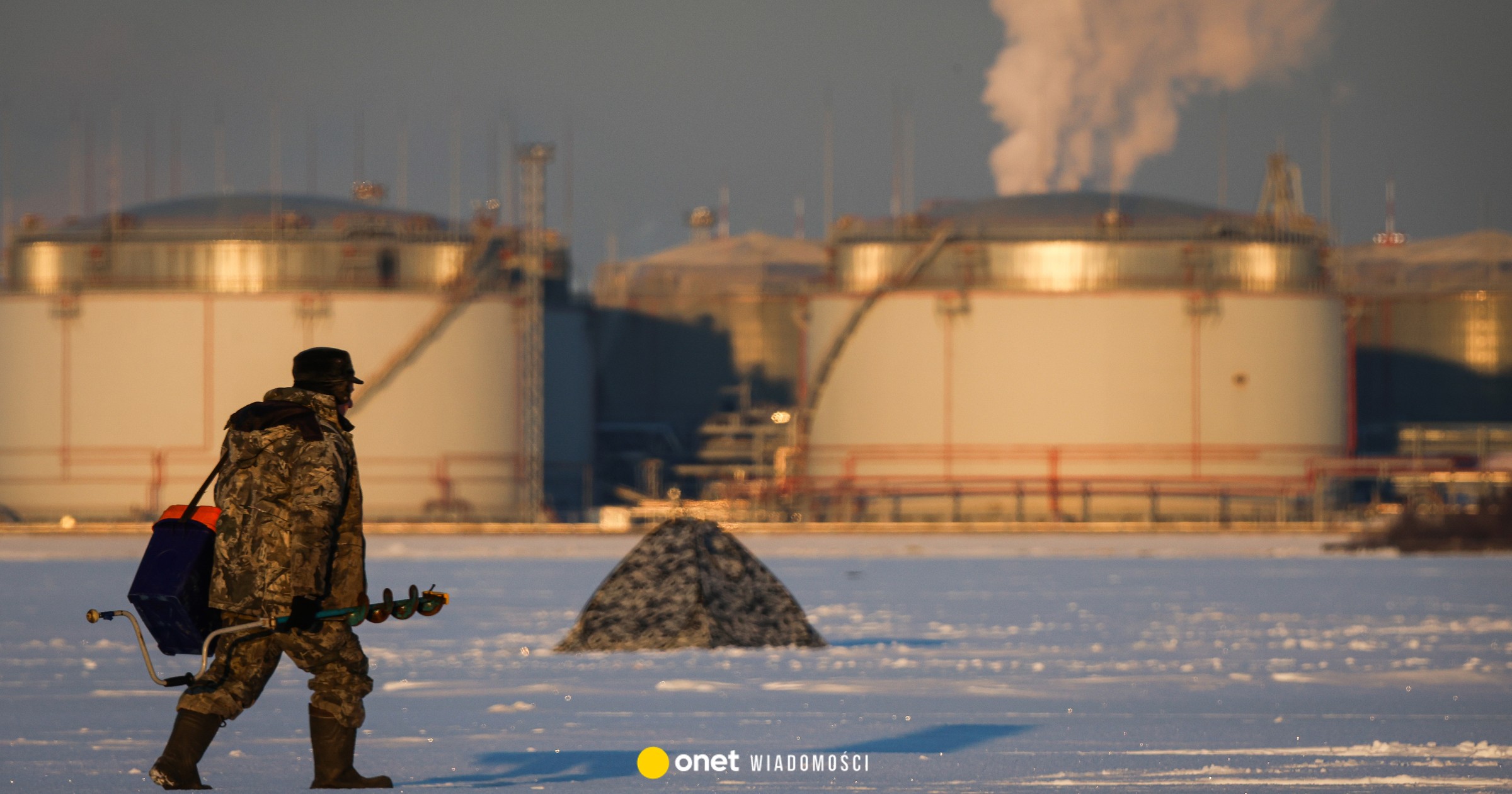
However, this is only the latest Ukrainian attack on Russian oil transshipment ports, the Kremlin's largest source of income. Two days before the attack on Ust-Luga, Ukraine also attacked the port of Primorsk. Previously, Ust-Luga was attacked at least twice, and Primorsk once.
Ukraine also attacked other Russian oil transshipment terminals. However, Ust-Luga and Primorsk are particularly important to Russia due to the amount of oil that flows through them. According to the think tank Center for Energy and Clean Air Research 20 percent passes through this first port. Russian oil exports, and by the second – 22 percent.
Kiev's justification for these attacks is obvious: if Moscow cannot export oil, it will not be able to finance its brutal war. For the same reason, the Ukrainian military also attacked Russian tankers forming the shadow fleet. And he doesn't intend to stop there.
“The Armed Forces of Ukraine will continue to attack key enemy facilities both in the temporarily occupied territories of Ukraine and in the territory of the Russian Federation until armed aggression against Ukraine is completely stopped,” the military said in a statement issued after the April 7 attack.
Kiev's approach has proven successful so far: over the last few weeks, no ships have docked in Ust-Luga and Primorsk, and even now the capacity of these ports is significantly limited. On April 10, only two ships arrived in Primorsko, but after that no unit will appear there until April 27. Some more ships have appeared in Ust-Luga, but their number remains well below the usual level.
Dangerous side effect
Despite Ukraine's strategic success, attacks on Russian ports have caused massive sea congestion in the Gulf of Finland. Ship trackers show clusters of ships – mostly tankers – anchored in this small body of water.
This is because ships waiting to receive Russian oil must remain in place. Of course, legally operating ships can be quickly diverted to other ports and assigned to other duties, but shadow fleet ships operate outside the official shipping system and are unwilling to call at other ports for fear of being detained. So they had to wait until Ust-Luga and Primorsk were repaired.
As a result, dozens of ships are stuck in the Gulf of Finland – around 40 in Estonia's exclusive economic zone alone, the rest are stuck in Finland's exclusive economic zone. It's an extraordinary sight — rule-breaking ships, many of them sanctioned and barely seaworthy, are anchored off Europe's Baltic coast awaiting repairs to Russian ports.
— From a security point of view, it is better to stop ships in the anchorage area than to allow them to drift, says Regina Palandi-Paju, deputy director for coordination of national security and defense in Estonia. — But of course, possible environmental pollution remains a concern and we are monitoring the situation closely. So far, we have not recorded any significant impact on the environment, he adds. However, if a leak occurs from one of the ships during a long stay, Estonia and Finland will have to clean it up.
The paradox of today's order
No one knows how long this wait will last. However, until Russian ports are fully operational again, Finland and Estonia are doomed to the presence of these undesirable guests. Both countries they can only hope that in the meantime none of the ships break down, leak harmful substances or try to take advantage of the situation.
I'm not going to help Moscow by suggesting what these ships could do – the Kremlin certainly doesn't need help in this regard. However, the large number of aging Russian-linked vessels amassed in Western waters is a worrying situation.
It is also a short description of today's world order. Russia violated the United Nations Charter by invading Ukraine and financing its illegal war by exporting oil on ships that violate maritime regulations. In response, most UN member states did not provide Ukraine with even the support it was entitled to under the UN Charter. So the country's military has gotten creative, resorting to measures that go beyond what is permitted under international law.
All this has resulted in an armada of rule-breaking people roaming the waters of two of the dwindling number of law-abiding countries. Both Finland and Estonia should be commended for their unwavering adherence to these principles. Let's hope they won't regret it.