A world -famous psychiatrist warns: “We have a wreath” every daily activity

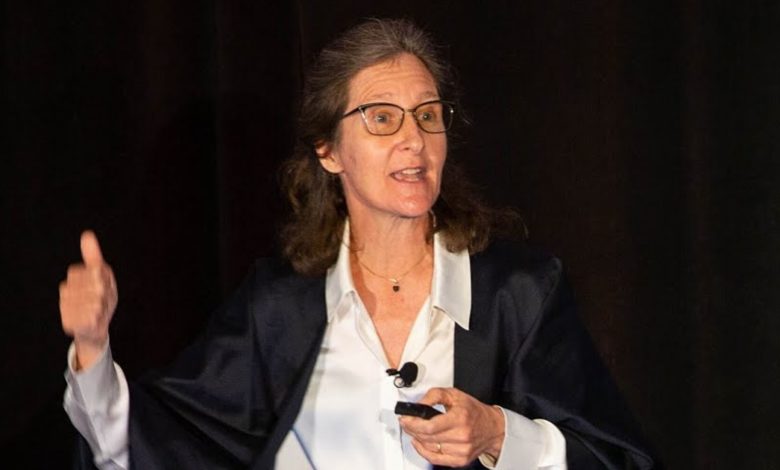
* Prof. Anna Lembke is a psychiatrist and head of the Double Diagnosis Medicine Clinic at Stanford University. He specializes, among others in an opioid addiction epidemic in the United States. She is the author of numerous publications on addiction mechanisms, and in 2021 her latest book “Slaves of dopamine. How to find balance in the era of abundance”
Prof. Anna Lembke was a guest of the Impact'25 event, which took place in Poznań on May 14-15, 2025.
Jan Manicki: The modern world can promote addictions. Do we have a growing problem with this?
Anna Lembke*: One of the biggest changes that have occurred in the last two decades is that we have become dependent on one substance to addiction to many. Most of my patients today abuse various substances, and also show addiction to digital products such as pornography, social media or video games. This is a significant change: from mono -varied to multi -talented.
We all have the same reward in the brain, shaped for millions of years of evolution. So we all have the potential to get addicted. Today it is greater than ever, because we have almost every daily activity “we have” wreath ” – food, games or entertainment.
This is the result of capitalism – everything has become stronger in action and more easily available. Today we are primarily consumers. We organize all our lives around what we buy, eat, drink. Cultural narratives are also changing along with this.
Are we looking for pleasure to avoid pain at all costs?
Yes. We also hear that if someone feels discomfort, something is wrong with him. Maybe he is mentally ill because he is not happy all the time? This type of narratives are common in the environment, which we have created ourselves.
Who is behind this narrative?
The dominant ways of thinking in society change organically. Take, for example, the Freudian concept that the source of all mental problems in adults is some childhood trauma. This theory has dominated our thinking for the last hundred years. This feedback – the economic and social system produces a narrative, and the narrative strengthens the system.
Smartphones like syringes. “The notification itself can be a reward”
In your book you compared smartphones to syringes because of their addictive potential. What makes them so dangerous?
All technology is a product of the human mind – it works so effectively on us because it reflects the way we think. That is why it absorbs us so easily.
The main threat is social media?
Yes. Social media does not need advertising because they sell themselves. This is a feature of every addictive agent. One contact with him is enough and you want more.
Digital drugs?
As people, we have a strong need to contact others. Social media squeeze only elements responsible for the activation of the reward in the brain. Without effort, we can talk to millions of people, browse idealized images. If something bored us, we go further. Sex is also a good example. He once required a relationship and time. Today, just go to onlyfans. Everything is easy, accessible, endless – as if someone gave us endless amounts of cocaine. The effects are obvious.
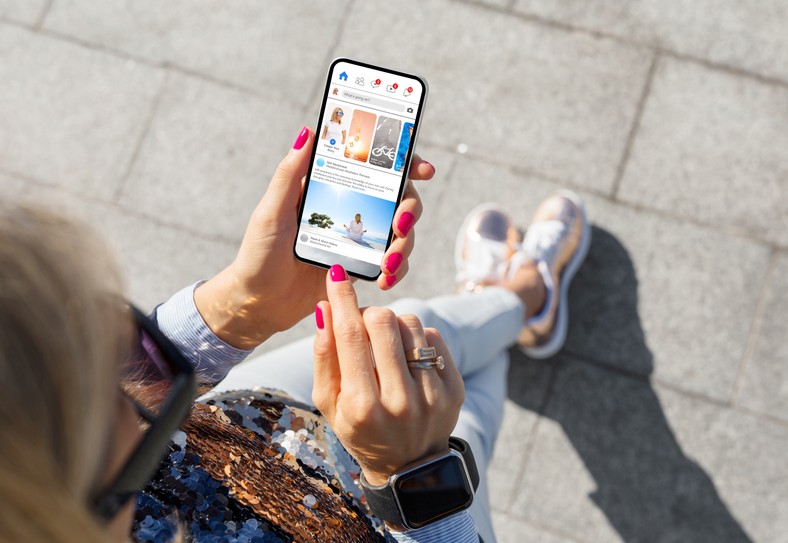
Social media enable contact with other people, but also carry serious threats
In the Polish study on FOMO (Fear of Missing Out, fear of missing) we read that 21 percent teenagers aged 15-19 in ours are addicted to smartphones, and 19 percent of them intensively use social media. Are it alarming numbers?
They are certainly not a surprise. The percentage of addicts at the level of 20-25 percent, if we look at all addictions, from mild to heavy, is something that I would expect. In the case of alcohol or drugs, strongly addicted percentage is usually about 10 percent. I suspect that it may look similar here.
Hoked on the Feed study conducted in Poland, Romania and Hungary, in turn, says that Social media users are tired of them, but they still use them. There is also a phenomenon of “blind scrolling”. Since we stop seeing what content we consume, where is the reward mechanism?
It is similar with drug addiction, alcohol or gambling. At the beginning a given activity is pleasant or brings relief, but with time when it stops working like this, people can't stop anyway. In the case of “blind scrolling” at the beginning we have a pleasant stimulus that activates the prize arrangement. But the more often we do it, the more often our brain goes into a state of chronic dopamine deficit. Then we are no longer looking for pleasure, but we avoid pain – also related to withdrawal.
Reports indicate that both in the USA and in Europe, young people most often use YouTube, Tiktok and Instagram. Specific platforms are more addictive than others?
Yes, because they were designed. Companies carry out A/B tests and analyze the data to check what increases the time of use. They improve algorithms to suggest content that previously attracted the attention of users, but with a admixture of new products that launches the “prize search” mechanism. In addition, there is a system of ratings: like, sharing, numbers of followers – all this drives the desire to achieve “better results”.
We still want more?
Rolling endlessly makes us never feel “filling”, we always want a little more. And finally: notifications – sounds, vibrations, red dots – they also start a dopamine triggering system in the brain. The notification signal itself can be a kind of reward.
Big Techów owners know how addictive their products are?
Yes of course.
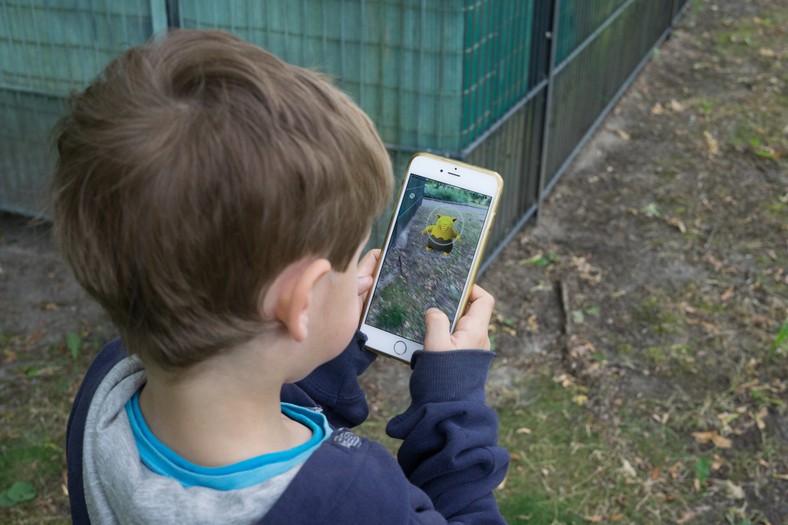
Children are particularly susceptible to social media addictions
Adam Alter writes in the book “Addictions 2.0” that they apply the principle taken from drug dealers: “Never take your goods.” They forbid even their own children to use their products. Can you be responsible?
Yes, but we need cooperation. Enterprises that derive profits from their products should primarily help create security, especially for children. It would be good if they also reveal analytical data to researchers so that we could better understand which groups of users are most exposed to addiction. It is also worth looking at elements that increase addictive potential, even algorithms in social media. Effective age verification is also necessary.
In theory, most portals have been from 13 years old.
It is worth thinking about whether this threshold is suitable at all. In my opinion, not, but we should base this decision on solid research.
No smartphones in schools. Anna Lembke: This will not work in this way
In Poland continues Debate about smartphones in schools. Some European countries have completely banned them. According to the National Center for Education Statistics 77 percent Educational institutions in the USA introduced such bans. Should we go this way?
I have been saying for 15 years that you need to remove smartphones from schools. At the beginning I was treated like a bizar, but now it is changing. I think that data about the ban on using smartphones in 77 percent. Schools in the USA are misleading because “ban” is interpreted differently. In one school, this may mean that students are not to use the phone in the class, and in another – that they cannot have it with them at all. I am a definite supporter of this second option.
The UNESCO report “Technology in Education” says that the very proximity of the device is distracting students. Maybe then completely prohibit bruting smartphones to school?
It would be the perfect solution. If your parents are worried about safety, you can give your child a phone with a flap, without the Internet. The key is that the ban is top -down and enforced. If the decision is left to teachers or students, it will not work.
When everyone is cut off from the phone, Fomo also automatically disappears, because nobody misses anything. In such an atmosphere, children feel better, teach better, they are more involved.

A growing problem is the use of smartphones by students
And what about counterarguments that students need smartphones during classes or that in adult life they will have to use them anyway?
It's absurd. Today's children grow up with technology – they don't need to spend more time in front of the screen. In addition, schools adapted to smartphones, even requiring students to scan QR codes or use the application, not the other way around.
Can you withdraw from this digitization of schools?
Yes. In addition, if we are already talking about using technology during lessons, children can use laptops. The smartphone is problematic because it is easier to hide it and it is more difficult to control what the child is doing on it.
Should teachers be responsible for this control?
We must determine when and why children have access to electronic devices. Perhaps we should create special, educational versions of hardware or software, as at legal exams, where you can write on laptops that do not have access to the Internet.
Anna Lembke: This is one of the biggest challenges of the present day
You write in the book that it is best to treat addiction, starting with the complete withdrawal of dopamine. It would be best to get rid of the smartphone. Can it be done in today's world?
Many therapies start with abstinence. Even with severe addictions, e.g. on opioids, we first set aside a substance, although we also often introduce pharmacological treatment. In the case of cigarettes, we use patches that still contain nicotine, but in a less harmful form. This is a strategy for reducing damage, not pure abstinence, but the beginning of the change.
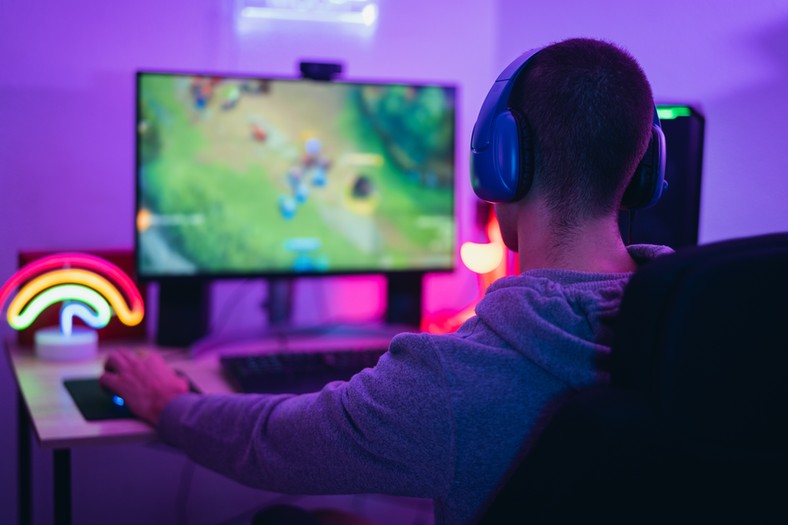
Technology can help in the fight against addictions, but it is addictive
What about discomfort?
In the treatment of addictions, the withdrawal syndrome cannot be avoided – it is always painful, but temporary. If someone survives this stage, after some time the mood improves, fear decreases, it is better sleeping. When people feel it, they begin to see the meaning of change. Then I don't have to convince them, they see it.
What are the biggest challenges in the treatment of addiction in the coming years?
I hope that as a society we will find a way to reduce this problem – although it will take a decade. Addiction is one of the main challenges of the present day, but I am an optimist.
Can – paradoxically – new technologies like artificial intelligence or virtual reality help?
We dealt with the problems of survival, now we fight excessive consumption. Technology can help and you need to study the possibilities it gives. But it also makes it addicted, so we must approach her with great caution.