Viktor Orban admits that he does not know who is behind the sabotage against the Serbian-Hungarian gas pipeline

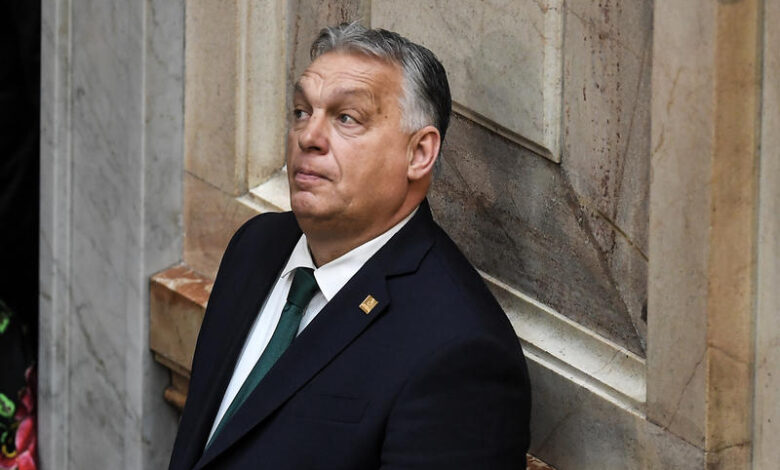
Hungary's ultra-nationalist Prime Minister Viktor Orban admitted on Monday that he did not know who could have planted the explosives discovered in Serbia, close to the border with Hungary, after Serbian intelligence services denied they had any clues pointing to Ukraine, which Budapest has accused of being responsible.
“At the moment we don't know who wanted to commit the sabotage against the TurkStream pipeline, the Serbs are currently investigating it,” said Prime Minister Viktor Orban in a press conference held in the Kiskundorozsma district of Szeged (a city in southern Hungary), located near the border with Serbia, where the pipeline enters the country, reports the EFE and Agerpres news agencies
The Hungarian Prime Minister referred to the discovery of two large packages of explosives in the north of Serbia, near the border with Hungary, near the “Balkan Stream” pipeline, a branch of the “TurkStream” pipeline, which supplies both countries with Russian natural gas, an incident that Serbian President Aleksandar Vucic informed on Sunday.
The announcement had a strong impact not only in Hungary, where the electoral campaign for the crucial April 12 elections entered the straight line, but also beyond the country's borders.
Initially, the Hungarian government spoke of a “terrorist attack” and, on the same day, attacked Kiev, after holding an extraordinary and urgent meeting of the Defense Council, during which the decision was made to deploy soldiers along the Hungarian section of the gas pipeline.
“This attempted terrorist attack fits perfectly into a series of actions by which the Ukrainians are constantly trying to cut off gas and oil supplies from Russia to Europe,” said Hungary's foreign minister, Peter Szijjarto.
“Ukraine's claims represent a mortal threat to Hungary. Hungary's energy security is not a game,” said Viktor Orban, the EU leader closest to Moscow, on social media.
Also, the Kremlin considered it “very likely” that the investigation into the case would indicate “traces of involvement on the part of the Kiev regime”, as the spokesman of the Russian presidency, Dmitri Peskov, said on Monday.
“It's not true that it was the Ukrainians”
The director of the Serbian Military Security Agency (VBA, Serbian counterintelligence), Duro Jovanic, categorically rejected these assumptions.
“It is not true that the Ukrainians tried to organize this sabotage,” said Jovanic, quoted by Radio Free Europe, revealing at the same time that the explosives found – specially packed, hermetically sealed, along with detonator capsules – are of American manufacture.
“Judging by the markings on the explosives, it is unequivocal that the manufacturer is from the USA,” which “says nothing” about the alleged author of the attempted sabotage, Jovanic said, promising to publish the results of the ongoing forensic analysis as soon as it is completed.
For its part, Kiev declared that it had nothing to do with this incident.
“We categorically reject attempts to falsely implicate Ukraine in the incident related to the explosives found near the TurkStream gas pipeline in Serbia. Ukraine has nothing to do with it,” said the spokesman of the Ministry of Foreign Affairs of Ukraine, Gheorghi Tihii, on Sunday on his account on the X platform.
“It is most likely a false flag operation by Russia, as part of a strong interference by Moscow in the Hungarian elections”, a suspicion also expressed by the leader of the Hungarian opposition party Tisza, the conservative Peter Magyar, whom the polls indicate as the clear favorite in the voting intentions of the Hungarians.