
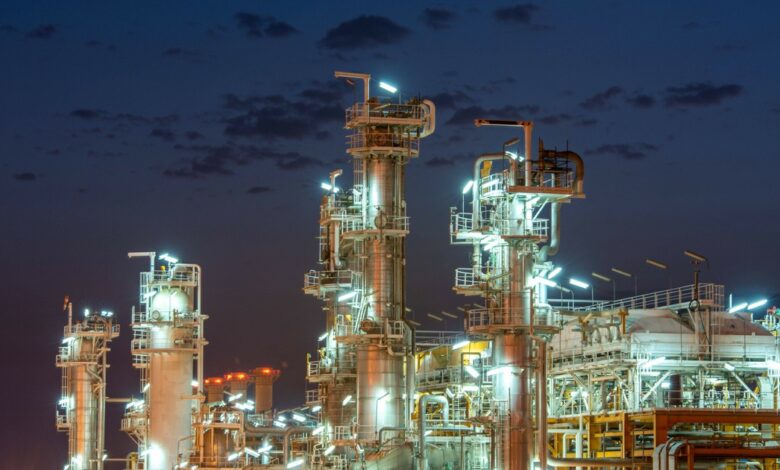
Israel struck Asaluyeh, Israel Katz, Israel's defense minister, said on Monday, adding that the attack was a “serious economic blow.” Situated on the Persian Gulf, Asaluyeh is the main center of the vast petrochemical complex serving the South Pars deposits. Iranian media report on Israeli-American attacks also on other energy targets in the country.
See also: Investors in tension after Trump's threats. The “fear index” is rising
A blow to the energy heart of Iran
The Israeli attack targeted the Jam and Damavand petrochemical plants, which are key elements of Iran's energy and export grid, Iran's state news agency Tasnim reported. In turn, the Iranian Fars agency reports that in Asaluyeh there were several explosions.
Asaluyeh
|
Anadolu / Contributor / Getty Images
Israel's defense minister described these facilities as “critical assets responsible for approximately half of Iran's petrochemical production” and emphasized that Tel Aviv had hit Iran's largest petrochemical complex.
In March, Israel attacked Iran's key energy source, the South Pars field, and its infrastructure, prompting Tehran to launch retaliatory attacks on energy targets across the Middle East. South Pars/North Dome is the world's largest gas field, which Iran shares with Qatar.
Attack on energy infrastructure in Iran
The attack on Asaluyeh came after Israel struck a petrochemical plant in southwestern Iran's Khuzestan province last week.
Israel's defense minister assessed that Together, both complexes are responsible for approximately 85 percent. Iranian petrochemical exports and that they were immobilized. He said the attack was a “major economic blow” that would cost Iran “tens of billions of dollars” in lost petrochemical profits. Israel claims that these profits are used to finance the Iranian army.
Iranian media reported that Israeli and US troops attacked a petrochemical complex in Marvdasht in Fars province in the south of the country on Monday.
Iran's Tasnim news agency reported that the attack resulted in numerous explosions, and that companies supplying electricity, water and oxygen to petrochemical plants suffered the most. The refinery part was not damaged.
See also: Bad news from the Middle East after the attacks. “Production suspended for a year”
Donald Trump's ultimatum. Iran-US negotiations in doubt
On the night from Tuesday to Wednesday, at 2.00 Polish time, the ultimatum given by US President Donald Trump to the Iranian authorities to unblock the Strait of Hormuz expires. Otherwise, as he said on Sunday, Iran will “lose all its power plants and bridges.”
According to Reuters, Iran and the US have received a plan to end hostilities. The two-stage plan calls for an immediate ceasefire followed by a comprehensive agreement.
CNN reported on Monday, citing a White House representative, that Donald Trump did not agree to a 45-day ceasefire in the war with Iran.
In turn, Iran reportedly rejected the idea of a ceasefire and emphasized the need to permanently end the conflict.
Source: CNN, PAP


