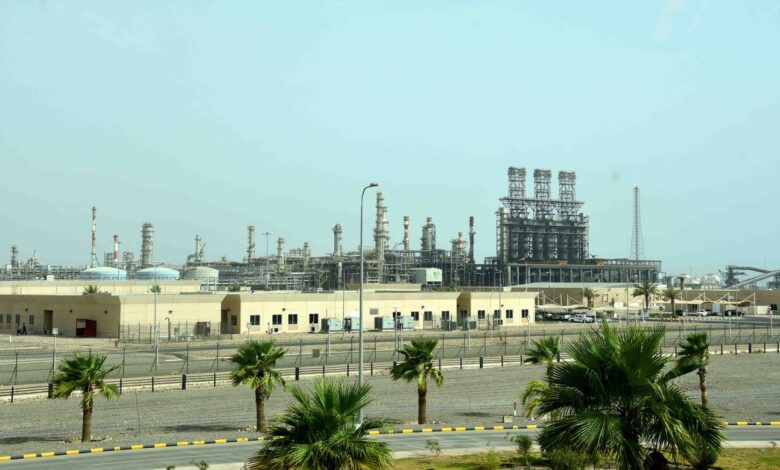
The closure of the Strait of Hormuz and the subsequent rise in global oil prices has boosted revenues for countries such as Iran, Oman and Saudi Arabia, as other countries without alternative shipping routes fear billions of dollars in losses, a Reuters analysis shows.
While much of the world is dealing with rising inflation and economic damage from rising energy prices, for Middle Eastern oil producers the impact depends on geography.
Although Iran controls the strait through which 20% of the world's oil production passes, Saudi Arabia, the United Arab Emirates and Oman have alternatives to this route through pipelines and ports. Instead, oil from Iraq, Kuwait and Qatar is stuck in their countries of origin due to the lack of other ways to send it to international markets.
Iran made a lot of money from the strait blockade
Some analysts argue that the war launched by Israel and the United States against Iran has strengthened the regime in Tehran.
“If Hormuz has been closed, it can be closed again and again, and that is a major threat to the global economy. The genie has been let out of the bottle,” said Neil Quilliam of the Chatham House think tank.
The International Energy Agency describes the conflict as the world's biggest shock to energy supplies, saying 12,000,000 barrels of oil are blocked every day and 40 energy infrastructure facilities have been damaged.
Reuters analysis shows that Iraq and Kuwait's oil revenues in March fell by 75% compared to March 2025. In contrast, the revenues obtained by Iran – 37% and Oman – 26% increased. For Saudi Arabia, the increase was only 4.3%, and the UAE lost 2.6% of its receipts, as price increases failed to fully offset the volume exported.
Saudi Arabia's safety net
Saudi Arabia collected higher revenue from transit fees for state-owned company Aramco. The kingdom's longest oil pipeline crosses the country from east to west, over a distance of 1,200 kilometers, and was built in the 80s, during the Iran-Iraq war, precisely to avoid the Strait of Hormuz.
The pipeline links oil fields in the east to the Red Sea port of Yanbu and has a capacity of 7,000,000 barrels per day. Aramco uses 2,000,000 barrels for the domestic market and the rest goes for export. Capacity in Yanbu remained at around 4.6 million barrels per day despite the March 19 attack.
Even though oil exports fell 26% in March compared to the same period last year, price increases offset this and receipts were even $558,000,000 from March 2025
Despite the advantage conferred by the east-west pipeline. Quilliam believes Saudi Arabia is vulnerable to further strikes from Iran or its Yemeni allies, the Houthi militias, which could target energy infrastructure and vessels passing through the Bab el-Mandeb strait, which links the Indian Ocean to the Red Sea.
The dire situation for Iraq and Kuwait
The United Arab Emirates managed to partially offset the blockade of the Strait of Hormuz through the Habshan-Fujairah pipeline, with a capacity of 1.5-1.8 million barrels per day. However, the drop in receipts in March was $174,000,000, especially since the attacks in Fujairah made exports difficult.
Hardest hit were Iraq, whose revenue plummeted 76% to just $1.73 billion, followed by Kuwait with a 73% drop to just $864,000,000 collected in March.
On the other hand, the countries in the area either have financial reserves or can easily borrow from the financial markets to deal with the deficit that has arisen.
“Apart from Bahrain, the Gulf countries have enough fiscal space to handle the shock, with government debt at a moderate level, below 45% of GDP,” believes Adriana Alvarado, an expert at Morningstar DBRS. However, in the longer term, the impact is difficult to estimate.