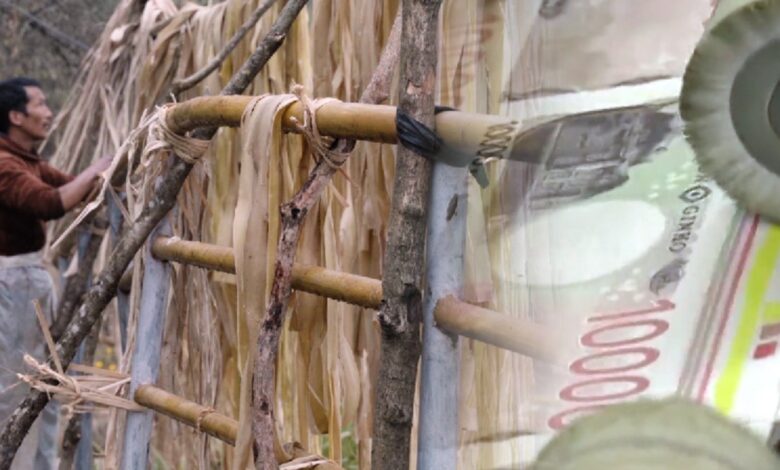
High in the mountains of one of Asia's poorest countries, farmers turn bushes into paper used to produce Japanese money.
Most of Asia has moved to online banking, but Japan still uses the yen as cash for almost half of its transactions. For centuries it relied on domestic crops, but a few decades ago supplies ran out, so it turned to Nepal, where a low-value shrub called argeli grows wild.
This new demand from Japan is making the shrub a market crop and helping to revitalize village economies across Nepal.
“New roads are being built and we have even installed the Internet,” says Tikaram Khatiwada, a farmer.
Read also: They earn less than four zlotys a day. Farmers' drama in Pakistan
Japanese banknotes are made from Nepalese argel
|
Business Insider
Why do we still use paper banknotes?
With polymer banknotes gaining popularity, why do some countries still use paper money? And what will happen to Nepal's new profitable business in a future where there is no more cash?
Ramesh Rai has been collecting argeli for 25 years. For centuries, the shrub was used in Nepal to produce paper for government documents and religious texts, but foreign demand was limited.
The situation changed in the 1980s, when Japan experienced a shortage of mitsumata, a plant used to produce yen. Supply began to decline as farmers left the industry to pursue other interests.
Looking for a new source, Japanese paper supplier Kanpou discovered argeli growing abundantly in Nepal and considered it as a potential lifeline for yen production.
“Japan was saved,” says Tadashi Matsubara, president of Kanpou.
Like Japanese mitsumata, Nepalese shrubs are hardy and can be harvested every few years, ensuring a steady supply.
“Argeli grows quickly and abundantly,” explains Ramesh Rai, a farmer.
Since 2015, Kanpou has sent specialists to Nepal to help farmers increase yields and improve the quality of the harvest.
— Japanese standards are quite strict regarding the amount of ingredients and contamination with foreign substances. The company taught Nepalese farmers how to more easily strip off the outer layer of bark using steam, rather than doing it by hand. They also use new machines to remove the top layer of bark, leaving only the inner part that is used to make paper, Tadashi explains.
– Thanks to this, we get rid of 75 percent. pollution, adds Gobin Rai, one of the farmers.
After several rounds of soaking, workers can more easily peel the remaining outer bark by hand. Workers spread the bark in the sun. If it's cloudy, it may take two days to dry.
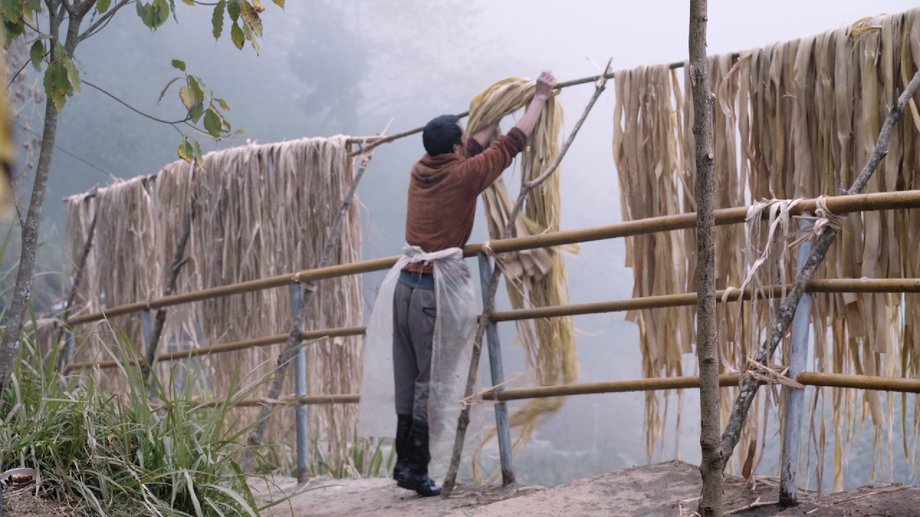
Workers spread the bark in the sun. If it's cloudy, it may take two days to dry
|
Business Insider
This is an important step to prevent mold growth and reduce the weight of the argela during transportation. When the company started training farmers, Japan rejected 20 percent. her argeli, but currently…
– Almost 99 percent our production meets the highest standards – replies Tadashi.
Nepal increased production from 30 t in 2012 to 150 t per year. Ramesh can earn up to $2,800. annually. This is twice as much as he previously earned from growing corn and potatoes.
He can sell his argeli for five times more than before it appeared on the Japanese market. The collected argeli enters Japan through the ports of Kathmandu and Kolkata in India.
Cash is important in Japan
The Japanese National Printing House turns the raw material into banknote paper. The yen are printed in sheets and equipped with security features such as holograms. Machines cut individual banknotes, which are then packaged.
Each year, this mint produces approximately 3 billion banknotes for the Bank of Japan. The country has long valued physical currency. The first copper coins appeared in 708, but in the 9th century, metal shortages and counterfeits forced the country to trade in rice and silk.
In the 12th century, Chinese coins were adopted and were widely trusted throughout East Asia.
In the early 17th century, Japan began minting its own gold, silver and copper coins to stabilize trade and regain control of its economy.
In the mid-19th century, after centuries of isolation, Japan recognized that it needed a modern currency to keep pace with Western powers such as Great Britain and the United States. In the 1870s, Japan began printing yen from the mitsumata bush.
— This was the period when many countries around the world began to issue paper money. People began to organize into structures that became nation states, says Bill Maurer, director of the Institute for Money, Technology and Financial Inclusion at UC Irvine.
This is Bill Maurer, who has been researching currencies for 25 years.
— One way to announce your existence as a nation state is through elements such as a flag or anthem, but also banknotes or currency
– Bill reminds.
In the 20th century, wars and bank failures in Japan prompted many people to keep their savings in cash.
— People hold cash for anonymity and privacy reasons. People who have experienced war trauma also do this, because cash always works. When the power or grid goes out, the banknotes will work, Bill explains.
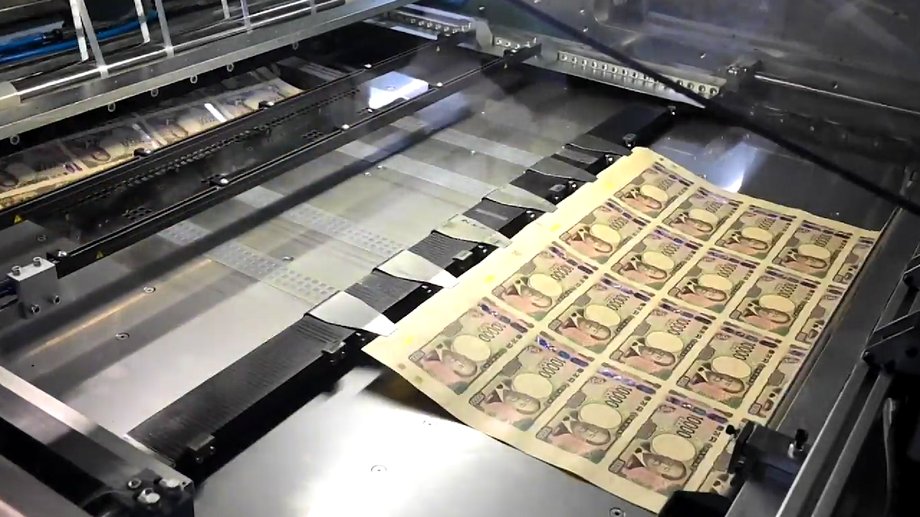
The Japanese value cash
|
Business Insider
Are banknotes made of paper? Not necessarily
Throughout the world, paper has been the default material for making banknotes for centuries, typically made from cotton and linen.
In 1988, Australia broke this pattern by becoming the first country to issue plastic banknotes to combat counterfeiting and extend the life of the cash.
Over the next few decades, dozens of other countries replaced paper with polymer.
Each of them has its advantages and disadvantages. People who design polymer banknotes almost forget that people use them, and people are forgetful, sloppy and throw them in the washing machine. They keep them in their wallet in the glove compartment of their car and expose them to extreme temperatures, which can cause them to melt
– he adds.
Despite this, polymer banknotes are two and a half times more durable than paper banknotes. They are also harder to counterfeit thanks to security features such as transparent windows, holographic foils and color-changing metallic foils. Paper banknotes also have their advantages in terms of security.
“Each type of banknote made from an organic substrate has a specific texture, which is useful because most cash handlers detect counterfeit notes by touch, not sight,” he explains.
This tactile sensation, combined with Japan's long tradition of paper production, has led the country to remain committed to paper by introducing a new banknote in 2024. The banknotes have three-dimensional holograms and special markings that help visually impaired people.
The new banknotes are made of Nepalese argel.
— The reason for choosing argela is that paper made from the pulp of the bark of this plant has a similar texture. It gives the same tactile sensation as traditional paper used in Japan – explains Bill.
Before the banknote production market reached these villages, many people from the region left their homes to find work in India or the Middle East.
Those who stayed had to trek to distant markets to sell their goods.
— There used to be a lot of scarcity here. There was not much farming. There weren't even roads. There is a lot of work now, says Ramesh.
Now, with growing demand for argeli and new roads funded by the Nepalese government, the villages are seeing growth again.
By growing only argela, Ramesh is able to employ about 50 people, most of whom are local residents.
— We're making big profits now. There was a time when people didn't even want to work here. I had to bring workers from Panchthar or Jhapa. Now local residents work here. They are happy and that makes me happy, he adds.
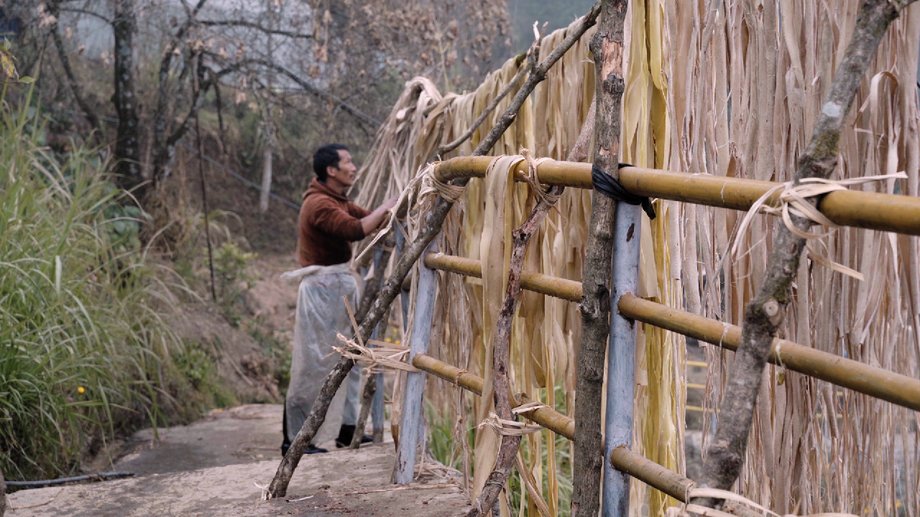
Now, with increasing demand for argeli and new roads funded by the Nepalese government, the villages are seeing growth again
|
Business Insider
How long will the boom last if Japan gives up cash?
The rate of cashless transactions in Japan has more than tripled over the past decade, reaching around 43% by 2024, and the government aims to raise it to 80%.
We deeply share these concerns with Nepali producers
says Tadashi.
Kanpou is working to get argeli farmers to produce other products for Japan.
“We're currently focusing mainly on wasabi,” he adds.
Farmers like Tikaram Khatiwada say they are ready for a drop in demand for argeli. He's already prioritizing other crops he can harvest more frequently, such as kiwi.
However, the demand for cash will probably not disappear completely. Nearly one third of Japan's population is over 65 years old. Older generations grew up in a cash-based economy and many people still prefer to use cash.
Near zero interest rates in Japan mean that bank savings yield almost nothing.
It is very important for the country's security to have well-functioning cash circulation in the event of conflict, trauma, hurricanes, floods or other crisis situations. Therefore, even if the country becomes less dependent on cash, which is unlikely, the central bank will likely still encourage people to hold some cash
– explains Bill.
“I want the world to know that Nepalese people work tirelessly for Japan and its economy,” says Tadashi.