Is home photovoltaics already available? passé? This is definitely too much to say, but in the era of a less favorable system of settlements with operators for prosumers (we wrote more about it here) and more and more frequent negative prices on the energy market, experts agree that investing in your own PV installation is starting to pay off with the highest possible own consumption instead of feeding electricity into the grid. Meanwhile, increasing your own self-consumption is only possible thanks to storage.
The rest of the article is below the video:
Read also: Photovoltaic fires. These steps will increase your security
Photovoltaics with energy storage. New subsidies
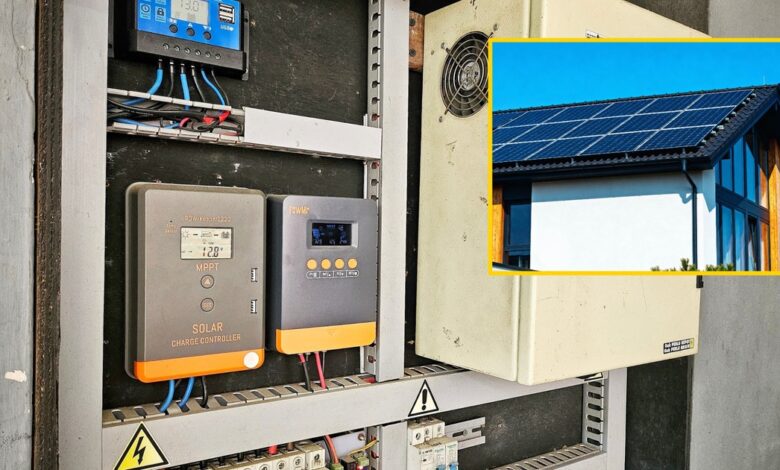
Home batteries allow you to transfer excess energy from the hours of peak sunlight to the evening, thus actually increasing your self-sufficiency. household. In addition, they also help networks that were increasingly loaded at times of peak PV production, which resulted in, among other things, exceeding the voltage and automatic shutdown of inverters that were able to supply energy.
Energy storage as a complement to PV installations for prosumers was already promoted in the last edition of the Moje Prąd program (from September 2024 to October 2025). As of March 30, its continuation has been in operation – a transitional program of the National Fund for Environmental Protection and Water Management (NFOŚiGW) financed from KPO funds. The budget of the program called “Home energy storage. Subsidies for renewable energy micro-installations and energy storage” is PLN 335 million, and the call for applications will last until April 24. The maximum grant will be PLN 28,000. PLN, of which up to PLN 7,000 for photovoltaics. PLN, and for energy storage – up to PLN 16,000. zloty. Up to 5 thousand PLN will also be available for heat storage.
The program will refinance the costs of investments carried out from August 2024 to October 2025. The Ministry of Climate and Environment argues that the installation of warehouses will increase auto-consumption and improve the stability of the entire system. “A larger number of energy storage facilities means less load on the network during peak hours, lower costs of its stabilization and more stable energy prices for consumers,” says the ministry in the announcement regarding the launch of the recruitment process.
Home electricity storage. Illustrative photo
|
Rene Notenbomer / Shutterstock
When the transitional program expires, the National Fund for Environmental Protection and Water Management is to launch another one, entirely intended to support energy and heat storage facilities. This time, the funds will come from the Modernization Fund, an EU instrument financed from revenues from the ETS system. According to information from the Globenergia website, the program will start at the end of the second quarter or in the fall of this year. Its budget will amount to approximately PLN 1 billion.
Is photovoltaics without storage no longer profitable?
Dr. Franciszek Buchta, an expert in system development planning and connection of renewable energy installations to the grid, talks to our editorial office about the use of prosumer energy storage.
– With a net billing system, photovoltaics itself becomes unprofitable. The prosumer settles accounts with the operator based on energy prices – in simple terms, he sells energy at market prices and buys it back at retail prices. However, during peak production of solar sources, when surpluses are fed into the grid, prices are low and, in addition, the grid exceeds permissible voltage levels, which shuts down installations. Warehouses, as a place to store electricity for personal use, come in handy then, explains the specialist.
The minimum capacity of storage units that will be eligible for a subsidy is 2 kWh, but Dr. Buchta points out that for many prosumers, the real profitability of the investment starts with much higher values.
– For a single-family house that has e.g. heat pumpa really useful storage unit should have a capacity of approximately 30 kWh. Together with the replacement of the inverter, the cost of such an investment today amounts to approximately PLN 60,000. PLN, subsidy up to PLN 16,000 PLN for prosumers settling in the net billing system is therefore a real support – says.
Photovoltaics with energy storage is intended to increase autoconsumption
He reminds that for people settling accounts in the older net metering system (the so-called discount system in which settlement with the network is quantitative – to put it simply, up to 80% of the energy previously fed into it can be withdrawn from the network) the maximum subsidy will be only PLN 8,000. zloty.
— This system is often more beneficial for prosumers, and the need to expand the installation (in the case of a net metering system – editor's note) with an energy storage facility is caused by the installation being shut down due to exceeding the permissible voltage – explains Dr. Buchta.
The expert points out that storage is most useful when electricity consumption is high, and ultimately prosumers should strive for the greatest possible energy self-sufficiency.
– Energy consumption in households with photovoltaics and storage should be as internally balanced as possible. The installation power, storage capacity and consumption should be selected so that the amount of energy drawn from the network is as small as possible every year, he explains. Energy storage in the net billing system can also be useful for managing summer surpluses, which can be fed into the grid during times with lower production from renewable energy sources and higher prices, and then collected in winter, when more electricity is needed, e.g. to power a heat pump.
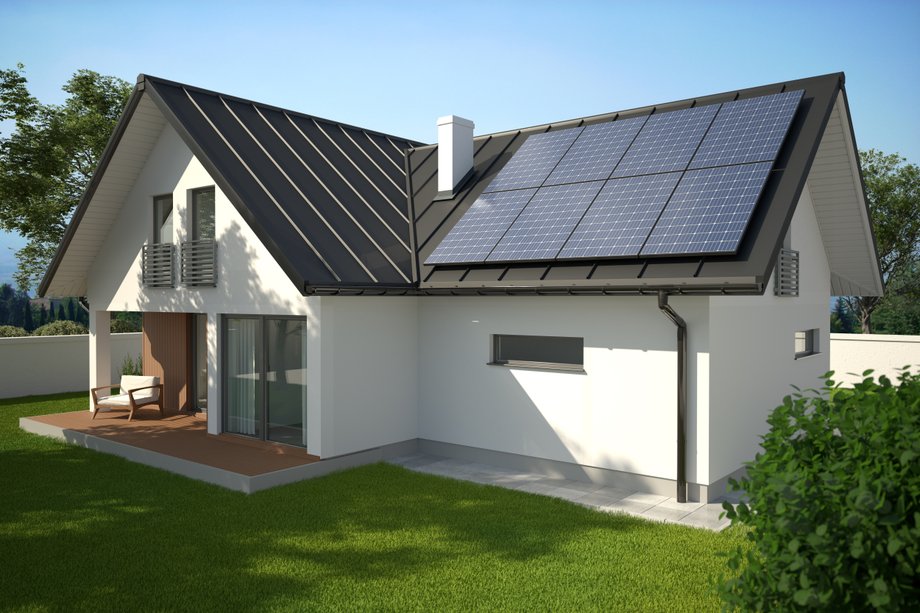
Households with photovoltaics and energy storage should increase their own electricity consumption
|
Studio Harmony / Shutterstock
Read also: The energy market is already feeling the effects of the war. The president of a leading Polish renewable energy company says what customers can count on
The construction of energy storage facilities up to 30 kWh does not need to be reported and does not require a special permit. The related requirements arise once this capacity is exceeded; Dr. Buchta emphasizes that it is necessary, among others, to: fire safety arrangements. However, expansion of the warehouse by adding additional “modules” is possible.
– With really high energy consumption, such an expansion may make sense; for most households, a capacity of 20-30 kWh should be sufficient. Adding additional kilowatt hours, of course, also means additional expenses – reminds the expert.
Energy storage without photovoltaics. How could they work?
Both the transitional program of the National Fund for Environmental Protection and Water Management and its planned successor are aimed at prosumers who have or will have a PV installation.however, in the debate on the role of energy storage, there are more and more voices that it is worth supporting their installation also in households without their own source – e.g. for residents of multi-family blocks. In such a situation, the storage could “interact” with the dynamic energy tariff and charge when renewable energy production is high and prices are low (as on a sunny summer day), and discharge when electricity becomes more expensive.
Dr. Franciszek Buchta points out that for such a connection to function successfully, automation is necessary – the warehouse should respond independently to changing prices on the energy market. – In such a system, warehouses without their own PV installation would make sense – he says.
He also adds that storage facilities are needed for large energy sources, e.g. photovoltaic farms. – Unfortunately, distribution system operators often refuse to connect hybrid installations combining PV with storage. This needs to be changed – we have too little balancing and regulatory capacity in the system, and warehouses partially satisfy these shortcomings – he sums up.