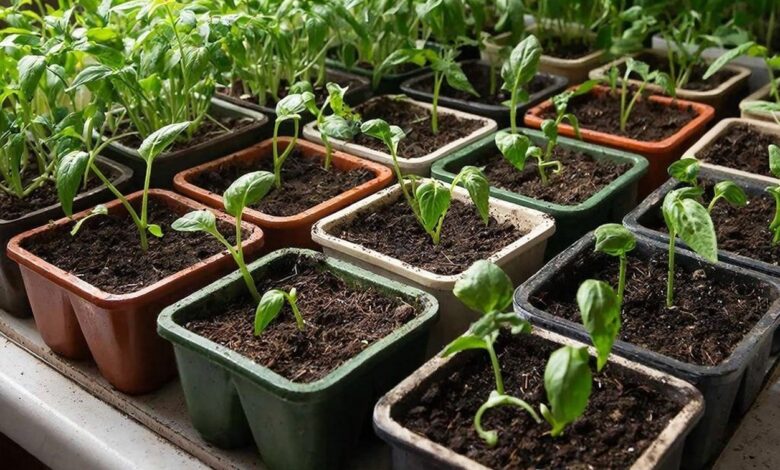
If your pepper seedlings grow slowly, the leaves are small, pale, or the edges begin to curl inward, do not rush to write them off. Most often, the problem is not in the seeds, but in the lack of one key element, especially during the active growth stage.
For healthy development, peppers need three conditions: moderate watering, long daylight hours and warm, but not hot, temperatures. Water rarely but thoroughly so that the soil has time to dry out between waterings. The light should be at least 12 hours a day, and the temperature should be from 23 to 26 degrees Celsius. Pepper is sensitive to cold and excess moisture. If these conditions are violated, it stops growing and becomes vulnerable to disease.
If, even if all the rules are followed, growth remains weak and the leaves lose their rich green color, it’s time to apply the first fertilizing. The best choice is monopotassium phosphate. Add 1 gram of fertilizer to 1 liter of warm water and stir well until completely dissolved. Water carefully at the root, 20–25 milliliters for each glass. The solution should not get on the leaves and stem to avoid burns. 10–15 minutes after fertilizing, you can spray the plants with clean water.
Potassium monophosphate contains easily digestible phosphorus and potassium. Phosphorus stimulates the development of the root system and the formation of future flowers. Potassium strengthens the immune system and helps the plant better tolerate stress when planted in the ground. Do the first feeding 10–14 days after picking. The second – 5–7 days before planting in open ground or a greenhouse.
Within 5–7 days you will notice: new leaves will become larger and darker, the stem will be stronger, and growth will be noticeably more active.