The escalation of the conflict in the Middle East directly influences the military strategy of Ukraine, which several external partners have asked to limit attacks on Russian refineries, amid rising fuel prices.
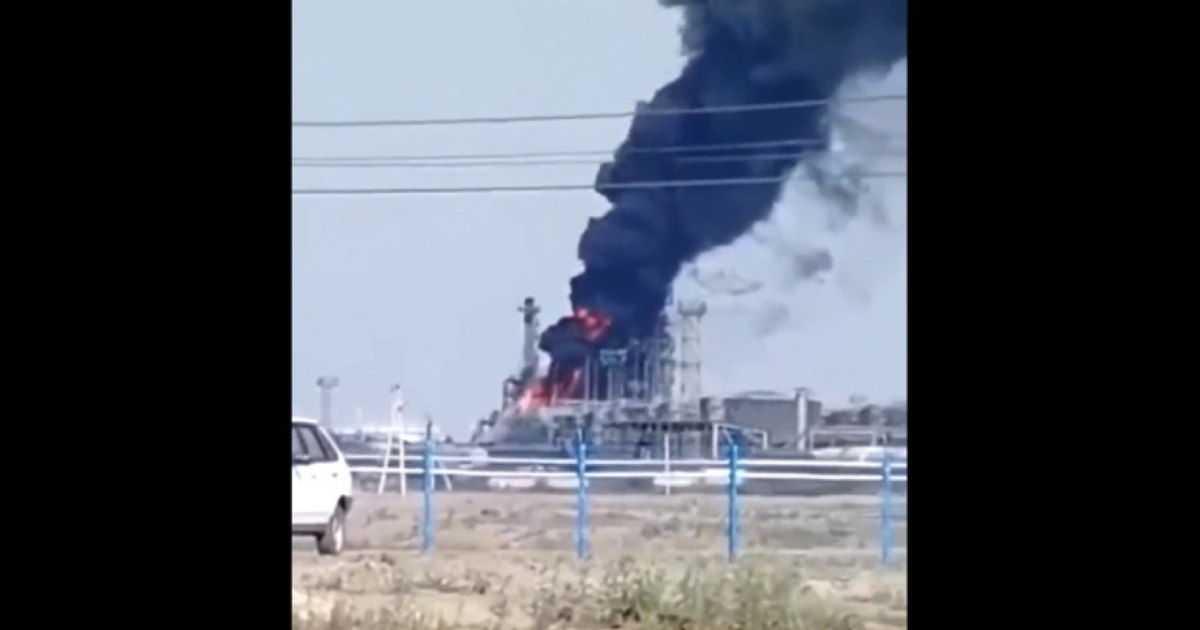
Russian refinery on fire. PHOTO: archive
In an interview with Bloomberg agency, Kirilo Budanov, the head of the Presidential Chancellery in Kyiv, said on Saturday, April 4, that international allies have asked Ukraine to reduce or even suspend drone attacks on Russian oil refineries, amid the accelerated increase in global fuel prices generated by the US-Israeli war in Iran.
Tensions in the Middle East caused a sharp jump in the price of oil, which had been on a six-week high, as energy facilities became constant targets of attacks. The situation worsened with Iran's decision to close the Strait of Hormuz, one of the most important maritime routes for the international export of crude oil, through which about a fifth of the world's production transits.
In this volatile context, Kirilo Budanov explained that Ukraine was asked to temper the offensive on Russian oil infrastructure.
“Let's answer this question diplomatically. We are getting certain signals to that effect,” he said when asked directly, without elaborating on which states made these requests and what is Kiev's official position.
How Ukraine responds
Kirilo Budanov did not directly answer the question of whether Ukraine is considering changing its offensive strategy in response to the demands of the allies, but expressed optimism about a possible quick end to the war in Iran, according to the same source.
Since the beginning of the war, Ukraine has consistently carried out drone attacks on Russian refineries, considering these facilities as legitimate military targets since they fuel the Kremlin's war machine both financially and logistically, and in recent weeks, the frequency of these attacks has increased, with Russia reporting a record number of Ukrainian drones in its airspace.
The strikes on refineries, along with the confiscation of oil tankers from the phantom fleet and damage to pipelines, have reduced Russia's export capacity by around 40%, with international agencies describing the situation as “the worst oil supply disruption in Russia's modern history”.
Facilities affected again recently include the Saratov refinery, one of the country's oldest, and the Kirishi refinery, responsible for producing more than 6 percent of Russia's total refined oil volume.
The intensification of these attacks coincides with a period when sanctions on Moscow have begun to be eased as a side effect of the Iran conflict, after the United States on March 12 issued a temporary license allowing states to purchase Russian oil stranded at sea in a bid to stabilize global energy prices.
In the first two weeks of the standoff in Iran, Russia reportedly earned an additional 6 billion euros (about $6.9 billion) in revenue as oil prices broke above $100 a barrel for the first time since the 2022 invasion of Ukraine.