The rate of Iranian attacks in the Middle East has stabilized after a sharp decline at the start of the war, new data shows, reports The Telegraph, according to Yahoo News.
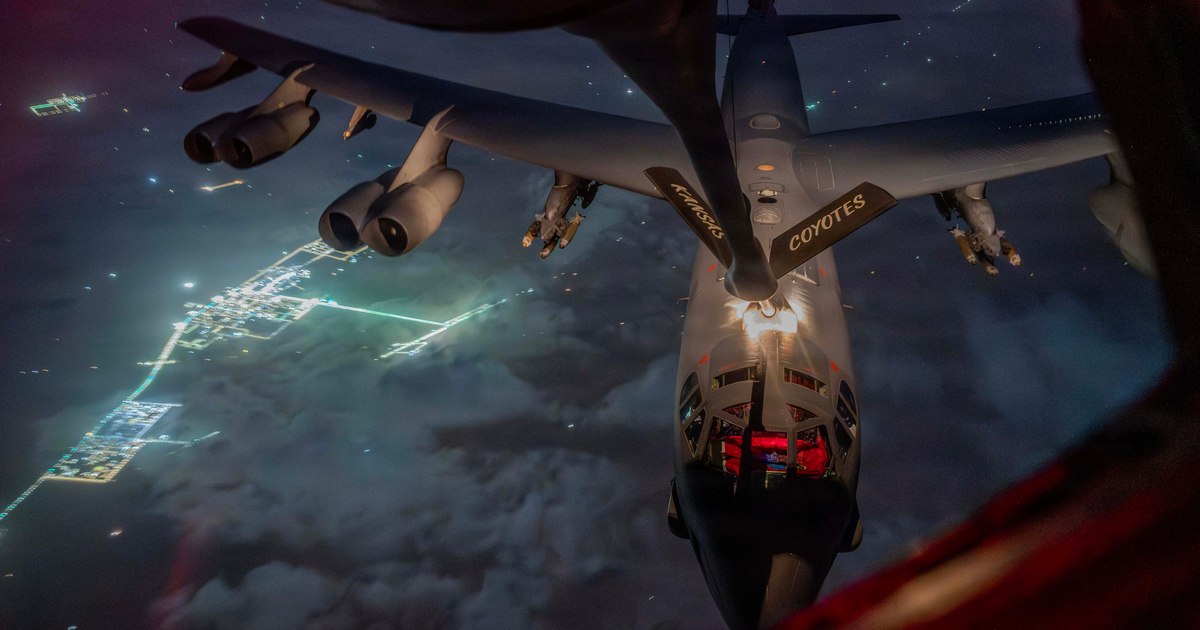
American B-52H bombers used in the war with Iran PHOTO PROFIMEDIA
According to experts, this trend is an indication that Tehran is adapting to sustained attacks by the US and Israel, managing to hide its launchers, conserve its arsenal and be selective in its choice of targets.
At the start of the conflict, Iran launched hundreds of ballistic missiles. Within days, the average number of attacks dropped significantly as US and Israeli forces destroyed launch sites.
On Tuesday, US Defense Secretary Pete Hegseth said that “American firepower is increasing” while Iran's is “declining”.
Despite the initial decline, the number of Iranian attacks has now reached a plateau. Analysts warn that the US could face diminishing returns as Iranian forces adjust and hide their launchers.
The trend also suggests Iran is conserving its remaining arsenal, saving its more sophisticated missiles and focusing on precision strikes on high-value targets.
Data collected by the Silverado Policy Accelerator, a think tank, shows that on the first day of the war, three-day averages recorded 567 drones and 215 missiles launched by Iran. The figures are based on data released by the Israel Defense Forces (IDF) and the governments of the Gulf states.
A week into the conflict, on March 6, the average number of strikes had dropped to 40 rockets and 155 drones as US and Israeli forces destroyed large numbers of launchers and other military assets. By March 15, the IDF reported that 70 percent of Iran's ballistic missile launchers had been destroyed. On March 26, US President Donald Trump said that about 90 percent of the regime's launch and missile systems had been disabled.
Dmitri Alperovitch, Silverado's founder, explained that while “there have been some spikes,” the number of Iranian missiles has averaged “more or less” between 30 and 35 per day since March 11. Drone launches remained steady between 65 and 70 over the same period.
“At the moment it seems to be a steady pace,” he told The Telegraph. “I think their pitching ability was affected early on, but they're probably holding on to what they've got.”
Hegseth also stressed that the U.S. has “more and more options,” pointing to 200 dynamic strikes conducted Monday night in which pilots received real-time in-flight information.
Israeli military close to neutralizing half of Iran's ballistic missile launchers. The danger, however, persists
“I think if US targeting changes and becomes more dynamic, next week will be crucial to see if it leads to a steady decline in releases,” Alperovitch commented.
Philip Ingram, a defense analyst and former colonel in British military intelligence, also believes that Iranian forces are likely protecting some remaining mobile launchers with a “shoot-and-scoot” strategy.
“If you get into a position where the Iranians are carefully hiding the launchers and the missiles, then it's very difficult to attack them,” Ingram explained to The Telegraph. “It's a game of diminishing returns. In the beginning there were many targets and they were easy to hit; now there are fewer and the Iranians are better at hiding them. They will have to spend more time identifying their location and making sure they have the right aircraft and weapons to destroy them.”
Iran is eyeing high-value targets
Although Iran strikes less frequently, it appears to target high-value targets in particular. Last week, Iranian forces destroyed a US E-3 Sentry air warning and control aircraft at Prince Sultan Air Base in Saudi Arabia. In recent weeks, Iran has targeted US radar systems, critical Gulf oil and gas infrastructure, and energy facilities in Israel.
Kelly Grieco, a senior researcher at the Stimson Center in Washington, explained that the Islamic Revolutionary Guard Corps (IRGC) appears to have made a “deliberate choice” to change its strategy, opting for “smaller, more precisely targeted strikes on specific high-value targets.”
Grieco criticized US Central Command for focusing too much on hit volume as a measure of success. She told The Telegraph: “The other side of the story is that, clearly, a relatively constant number [de rachete și drone] they may be released every day – with some variation – but they fall within a register. This may simply be residual capability that Israel and the US cannot find and destroy, and it may be increasingly difficult as the adversary adapts. If this is the residual amount, it is still very problematic, keeping the Strait of Hormuz closed, destroying expensive aircraft and disrupting the way of life in the Gulf.”
Benjamin Friedman, policy director at Defense Priorities in Washington, believes that Tehran is keeping its missiles “to continue to cause damage and prolong the conflict.” He added that Iran's ability to maintain constant attacks “shows the limits of modern warfare”, showing that air power alone cannot completely suppress an adversary.
Only senior IRGC officials likely know the size of Iran's arsenal, so no one can accurately predict when the stockpiles will be depleted. “I really don't know how long it will take – but one thing is certain: it is unlikely that they will be able to restore and rebuild the missiles under current conditions,” Friedman said.