Despite sustained U.S. and Israeli bombing of Iran's military infrastructure, a significant portion of the country's missile and drone capabilities remain intact, according to recent U.S. intelligence assessments disclosed to CNN by sources briefed on the findings.
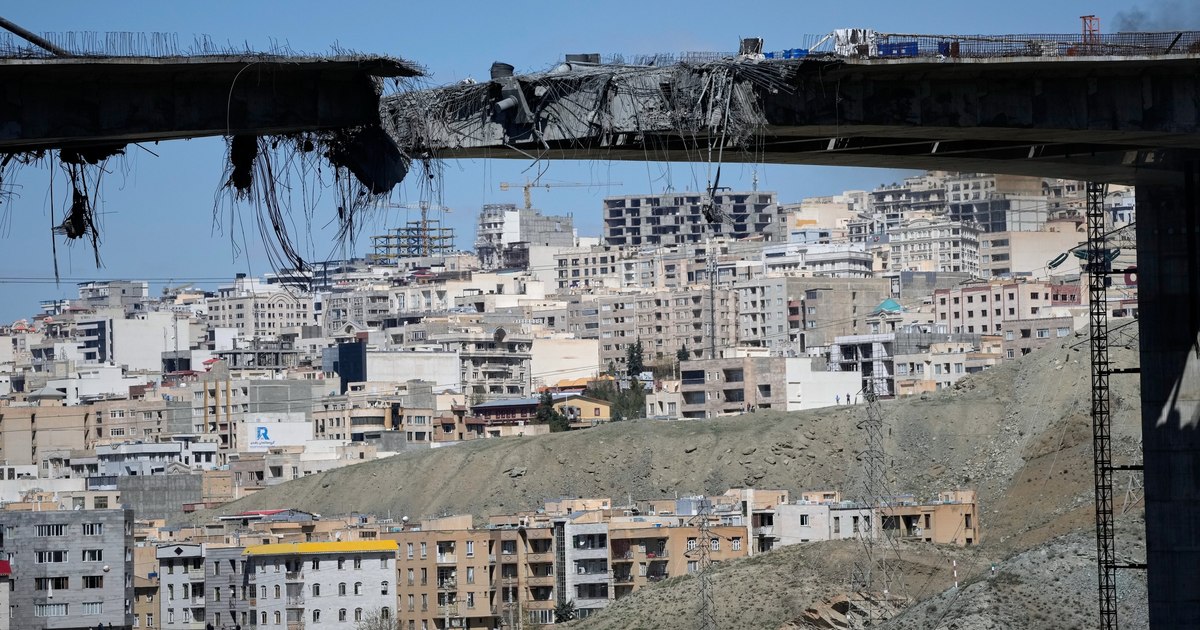
The US hit a bridge in western Tehran PHOTO profimedia
About half of Iran's missile launchers are still operational, and Iran still has thousands of kamikaze drones — about 50 percent of its drone arsenal, three sources told CNN. The assessment suggests that Iran continues to pose a serious threat to the region, with the ability to wreak utter chaos throughout the region in the near future,” one of the sources said.
The total number of remaining launchers may also include systems that have become inaccessible, not necessarily destroyed, such as those buried underground by US and Israeli bombing. U.S. intelligence assessments in recent days also indicate that a significant amount of Iran's coastal defense cruise missiles remain intact, maintaining the country's ability to threaten maritime traffic in the Strait of Hormuz.
Those conclusions paint a more nuanced picture of Iran's capabilities compared to public statements by US officials, including President Donald Trump, who said in an address to the nation on Wednesday that “Iran's ability to launch missiles and drones is dramatically reduced, and its weapons factories and launchers are destroyed, with very few left.”
According to the US Central Command (CENTCOM), more than 12,300 targets in Iran had been struck by Wednesday. The sources say these operations have degraded Iran's military capabilities.
However, Iran maintains a sizeable stockpile of missiles, according to assessments.
Pentagon officials have publicly highlighted the decrease in the frequency of attacks, rather than the total destruction of capabilities. Defense Secretary Pete Hegseth said on March 19 that “ballistic missile attacks against our forces are down 90 percent since the beginning of the conflict, and single-use attack drones, so-called kamikaze drones, are down 90 percent.”
In response to the reports, White House spokeswoman Anna Kelly dismissed the reports, saying that “anonymous sources are desperately trying to attack President Trump and downplay the incredible work of the United States military in achieving the goals of Operation Epic Fury.”
“Here are the facts: Iranian ballistic missile and drone attacks are down 90 percent, their navy has been destroyed, two-thirds of their manufacturing facilities are damaged or destroyed, and the United States and Israel enjoy overwhelming air dominance over Iran,” she said. “The terrorist regime is militarily decimated and its plight is getting worse by the day – their only hope is to strike a deal with President Trump's administration and give up their nuclear ambitions for good. Otherwise, they will be hit harder than ever.”
Why Iran Retained Missile Launch Capability Despite US Bombing: The Islamic Republic Stored Them in Impenetrable Mountains
Another administration official added that Iran's ballistic missiles are being destroyed rapidly.
Pentagon spokesman Sean Parnell also disputed the reports, calling them “completely erroneous.”
“The United States military has dealt a series of devastating blows to the Iranian regime,” Parnell said. “We are well ahead of schedule in meeting our military objectives: destroying Iran's missile arsenal, annihilating its navy, eliminating proxy forces and ensuring that Iran can never obtain a nuclear weapon.”
Israel's estimates
Israeli officials estimate a smaller percentage of operational Iranian launchers — about 20 percent to 25 percent — excluding those buried or rendered inaccessible in underground facilities. Iran's extensive tunnel networks have protected critical assets and complicated targeting operations.
Two sources noted that Iran has made effective use of mobile launchers, firing and relocating quickly, which creates monitoring difficulties, similar to the challenges the US has faced in Yemen against the Houthi rebels.
The US and Israel have stepped up attacks on the entrances to the tunnels and the equipment needed to access them. Annika Ganzeveld of the American Enterprise Institute explained that these include bulldozers and other heavy machinery.
The intelligence services' assessments come as the US pushes to reopen the Strait of Hormuz, a vital route for global trade. Coastal missile systems, which remain largely intact, continue to pose a threat, especially since they can be hidden underground.
Although Iran's conventional navy has been largely destroyed, the separate naval forces of the Islamic Revolutionary Guard Corps (IRGC) still possess significant capabilities. One source said the IRGC still has “hundreds, if not thousands, of small craft and unmanned naval vehicles.”
CENTCOM announced the other day that more than 155 Iranian ships were damaged or destroyed, but analysts point out that it is not always clear which naval forces are being referred to.
The IRG navy is largely responsible for harassing maritime traffic in the Strait of Hormuz, Ganzeveld said. “There are certainly elements that remain – proxy forces as well as drones – and Iran has recently demonstrated that it still has the ability to target ships in the strait.”
As the conflict drags on, questions remain about the timing of achieving American goals. Trump suggested the operations could be completed in two to three weeks, but a source familiar with the intelligence assessment expressed skepticism.
“We can keep destroying them, I have no doubt about that, but you're completely out of touch with reality if you think it's going to be over in two weeks,” the source said.