The case of the downed plane raises multiple challenges for the US / The essential actions that American pilots follow when they fall into hostile territories

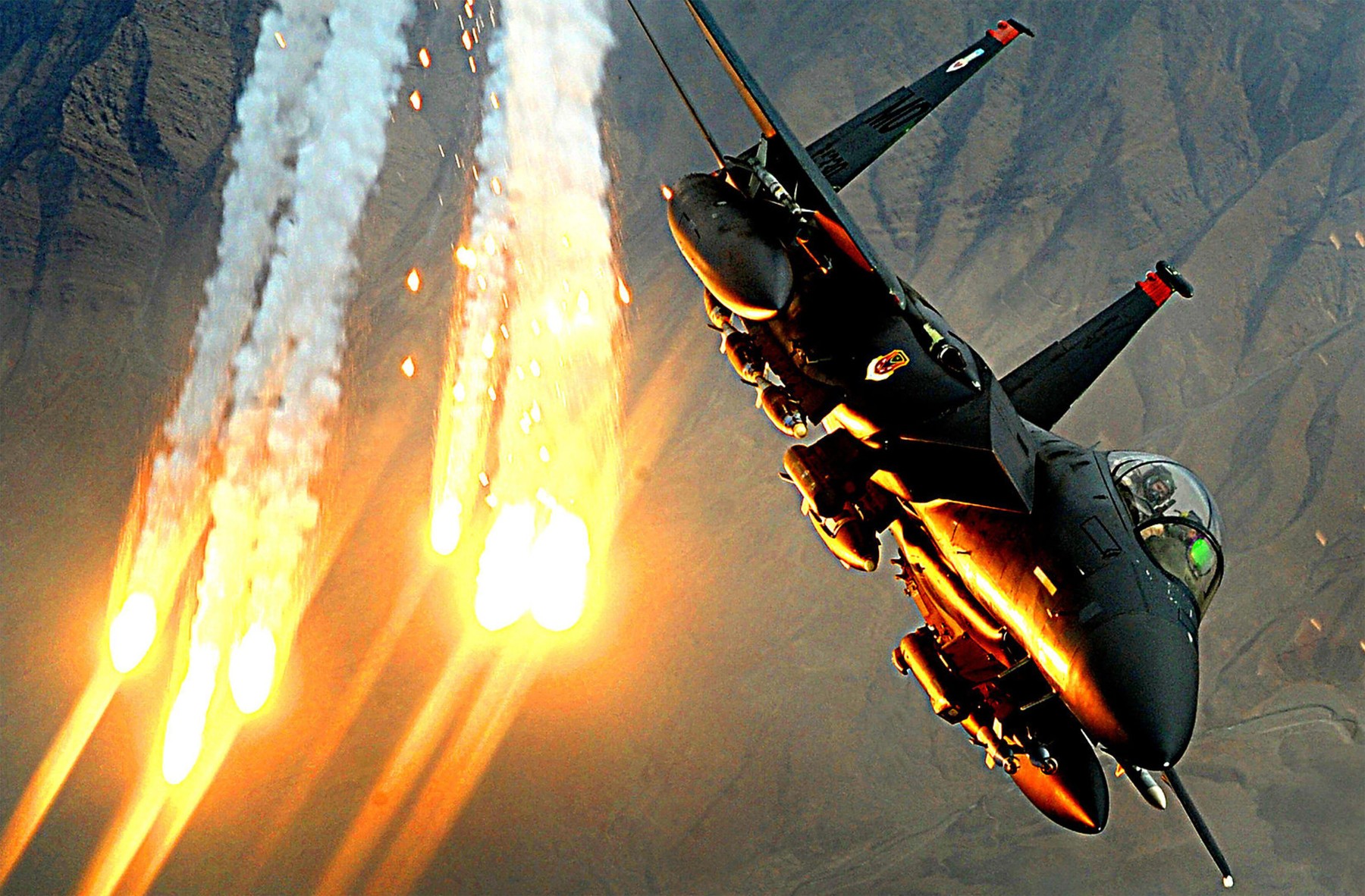
An F-15E fighter jet on Friday became the first US warplane downed by Iranian forces since the start of the Middle East conflict, and while one crew member has been found, the condition of the other is still unknown, according to information provided by US officials to CBS News, Reuters and The New York Times (NYT).
The aircraft is generally operated by a crew of two, a pilot and a weapons systems officer. Both ejected, but so far only one of them has been rescued from Iranian territory, according to US and Israeli officials.
The NYT wrote that the downing of the plane and the search-and-rescue mission, launched quickly to prevent Iranian forces from finding the crew before US troops, pose major military and diplomatic challenges for the United States.
Just a few days ago, Pentagon chief Pete Hegseth claimed that Iran's defenses were so damaged by US and Israeli strikes that Washington was sending B-52 bombers to Iran, heavy aircraft considered vulnerable to anti-aircraft systems.
Iran demonstrates ability to shoot down US planes
The US military has lost at least 16 MQ-9 Reaper drones over Iran since the war began on February 28, and in the first part of the conflict three F-15 fighter jets were shot down in Kuwait by “friendly fire”, so-called cases when there is accidental fire by own or allied forces. So far, however, Iranian forces have failed to shoot down a US fighter jet.
Although not a fifth-generation stealth fighter, the sophisticated F-15E Strike Eagle is faster and more agile than bombers, which in theory makes it a more inaccessible target for Iranian attacks.
White House press secretary Karoline Leavitt confirmed that President Donald Trump had been briefed by relevant officials about Friday's incident.
Footage shared on social media and verified by CBS News showed a refueling plane and two U.S. military helicopters flying at low altitude in Iran's southwestern Khuzestan province, making maneuvers typical of search-and-rescue missions.
CBS News national security analyst Aaron MacLean explained that several of the videos, including some independently verified by the publication, showed the aircraft flying low in broad daylight over hostile territory, something the US military would only do for good reason in such a situation.
BREAKING: One of the US crew members from the downed F-15E jet in Iran has been rescued, according to CBS News.
The search and rescue mission is still ongoing.
“One crew member from the US F-15E fighter jet downed over Iran was rescued by American forces, two US officials… pic.twitter.com/MLBnzONZr7
— Collin Rugg (@CollinRugg) April 3, 2026
Procedure of US military pilots in such situations
Military pilots are trained to follow principles called Survival, Evasion, Resistance and Escape (survival, avoidance of capture, resistance and exit), or SERE, when US forces planes are shot down in hostile territory, according to the NYT.
William J. Fallon, former head of the US military's Central Command, said the first step is to catapult to safety with the help of a parachute.
Once on the ground, according to the admiral, the pilots must find a safe place to avoid capture by enemy forces and must use their equipped radio communication systems to relay their location to US forces. Then the military will do everything possible to find them.
For search and rescue operations in the event that US warplanes are shot down, the Army's Central Command maintains several operational forces near Iran, including in Iraq and Syria.
“The key factor, in my opinion, is time and day. It's probably close to sunset, and that's good because we usually have an advantage at night with our search and rescue people,” explained William J. Fallon.
If captured by enemy forces, pilots must resort to endurance training to cope with the extreme stress, interrogation and possible torture during captivity.
Food, wounds and enemy operations, other crucial factors
The admiral pointed out that training only helps up to a point. Issues related to food, possible injuries, and the operations of enemy forces can make survival on the ground difficult.
Additionally, since the United States has no troops on the ground in Iran, the recovery effort will involve overflights over hostile areas and will be influenced by anti-aircraft fire and potential weather changes.
Another factor that can influence the success of a rescue effort is that Iran has extensive isolated areas across its territory, which can increase the military's chances of being able to hide, Fallon noted.
It would be to the pilot's advantage to be in a dark area with plenty of cover, such as a dense forest, and away from heavily populated centers.