17-year-old student's successful business: buys warehouses for $100 and sells thousands of euros on eBay “treasures”

At just 17 years old, a teenager from New Jersey managed to turn his curiosity and passion for old objects into a surprisingly profitable business. It all started when, one day, he attended an auction of units of abandoned objects, fascinated by the idea that real treasures could be hidden in the containers left behind by other people.
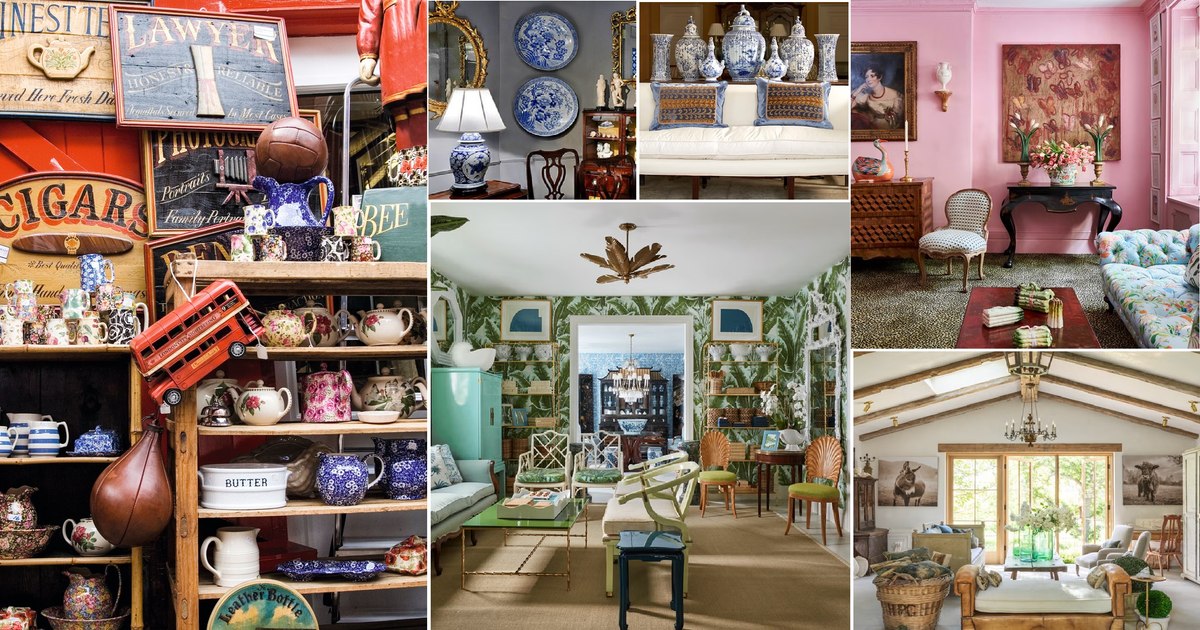
Containers left behind by other people could hide real treasures. Archive collage
Michael Haskell was 17 years old and had a rare talent for turning curiosity into profit. On a frosty afternoon, he parked his old Hyundai in front of a huge warehouse on Staten Island, taking a handcart to explore the maze of hundreds of identical warehouses. “Any of these could be a gold mine”he said to himself, looking at the rusty locks, writes the NYT.
He stopped at warehouse no. 3361 and unlocked the lock. A musty smell greeted him, and inside he saw cages, cedar chests, old pocket books, bar stools and Art Deco lamps. “I bought the warehouse for $140; copper sells for $6 per kilogram, so these lamps go to scrap metal. It all boils down to squeezing every dollar out of the deposit”, he calculated, his eyes shining with anticipation.
While other teenagers spent their evenings playing Fortnite or basketball, Michael dedicated his time to abandoned warehouses. Two years ago, inspired by the reruns of the series “Warehouse War”had discovered that he could buy warehouses at public auctions and sell them for a profit.
His travels took him to storage rental establishments such as CubeSmart, Extra Space Storage and Manhattan Mini Storage in and around New York. From the garage of his home in Bergen, New Jersey, filled with old magazines, vinyl records, World War II artifacts, rare stamps, VHS tapes, and vintage fishing rods, Michael sold the goods through his eBay account, “Mike's Unique Treasures,” making over $7,000 a month. After school homework, the nights were dedicated to packing items for customers all over the country.
Technology was his ally. He would take photos of objects and enter them into Google Lens to assess their value, and sometimes use a mechanical saw for old furniture with no potential for sale.
He gave $450 and won 50,000
His first big hit was a $450 warehouse in Brooklyn belonging to Andrew Crispo, a controversial 1980s art dealer. There he found a Man Ray painting and some Walt Kuhn drawings, later sold for nearly $50,000. This realization turned the hobby into a serious business, and his family began to fully support him.
In addition to financial value, each deposit brought life lessons. Some units revealed sad stories: divorce papers, empty vodka bottles, abandoned designer clothes. Other units offered fascinating items: a unit related to rapper Bobby Shmurda, one belonging to a Piscataway politician, or a collection of antique Chinese vases. Michael scrutinized each piece carefully: “It's Qing, not Ming,” he explained, pointing to a vase that many would mistake for an extremely valuable one. Sometimes, together with his mother, he checks tax documents, preparing income statements.
Who are the 10 youngest billionaires in the world and how did they make their fortunes
In a facility in Union City, Michael discovered a Purple Heart badge. Although it could sell for several hundred dollars on eBay, he decided to keep it, feeling it would be disrespectful to the sacrifice of an unknown soldier. This showed Michael's empathy, contrasting with the entrepreneurial nature of his business.
Money invested in the S&P
Throughout his work, Michael discovered dramatic and fascinating stories. Andrew Crispo's warehouse was a mixture of valuable art and dark history: After Crispo had become famous in the 1980s for his eye for unknown painters and infamous gallery parties, he was indirectly implicated in a murder case and died in poverty in 2024, leaving behind valuable objects but also disturbing stories. Michael sold the artwork through Bonhams auction house, reinvesting the money in the S&P 500. However, he kept a Yoruba ceremonial staff for the upcoming auction.
Michael was always looking for his next “Crispo” and even used a program developed with the help of ChatGPT to identify units belonging to people who were talked about in the press. Thus he discovered a unit connected to the rapper Bobby Shmurda. After paying $90, he found only a few items of modest value: weights, a plasma TV and a pair of speakers. Even though he didn't find spectacular treasures, the experience was a lesson for him about hope, failure and the stories of people.
Prada dresses, Hermès scarves and jewelry
Some speakers fascinated him with human and historical details. In Hackensack, a closet had belonged to a high society woman, and it was filled with Prada dresses, Hermès scarves and jewelry, as well as personal documents that showed her difficulties. On the Upper East Side, a closet had belonged to a relative of the first black mayor of Richmond, California. Michael looked at old photos, imagining the adversity George Carroll faced, comparing his inspiring life to Crispo's tragic fate.
In Long Island City, a seemingly mundane establishment showed the passion of a soul musician, André Anthony Waters, who dreamed of glory in the 70s-80s. Dusty tapes, master recordings, and old photos offered Michael a lesson in unfulfilled dreams and personal sacrifice. “In this warehouse you can see his hopes and dreams”he commented, mixing respect for the past with the pragmatism of continuing his business.
Every day, Michael combined the life of a student and that of an entrepreneur. In school, he took math tests and wrote essays on poets like Lucille Clifton, but his mind was always on the next closet, the next treasure, the next story. His teachers admired him: “What Michael does shows the true entrepreneurial spirit and the involvement of education in real life”said his history teacher.