The executive director of the International Energy Agency warns that the impact of the lack of activity in the Strait of Hormuz will be felt and anticipates energy rationing.
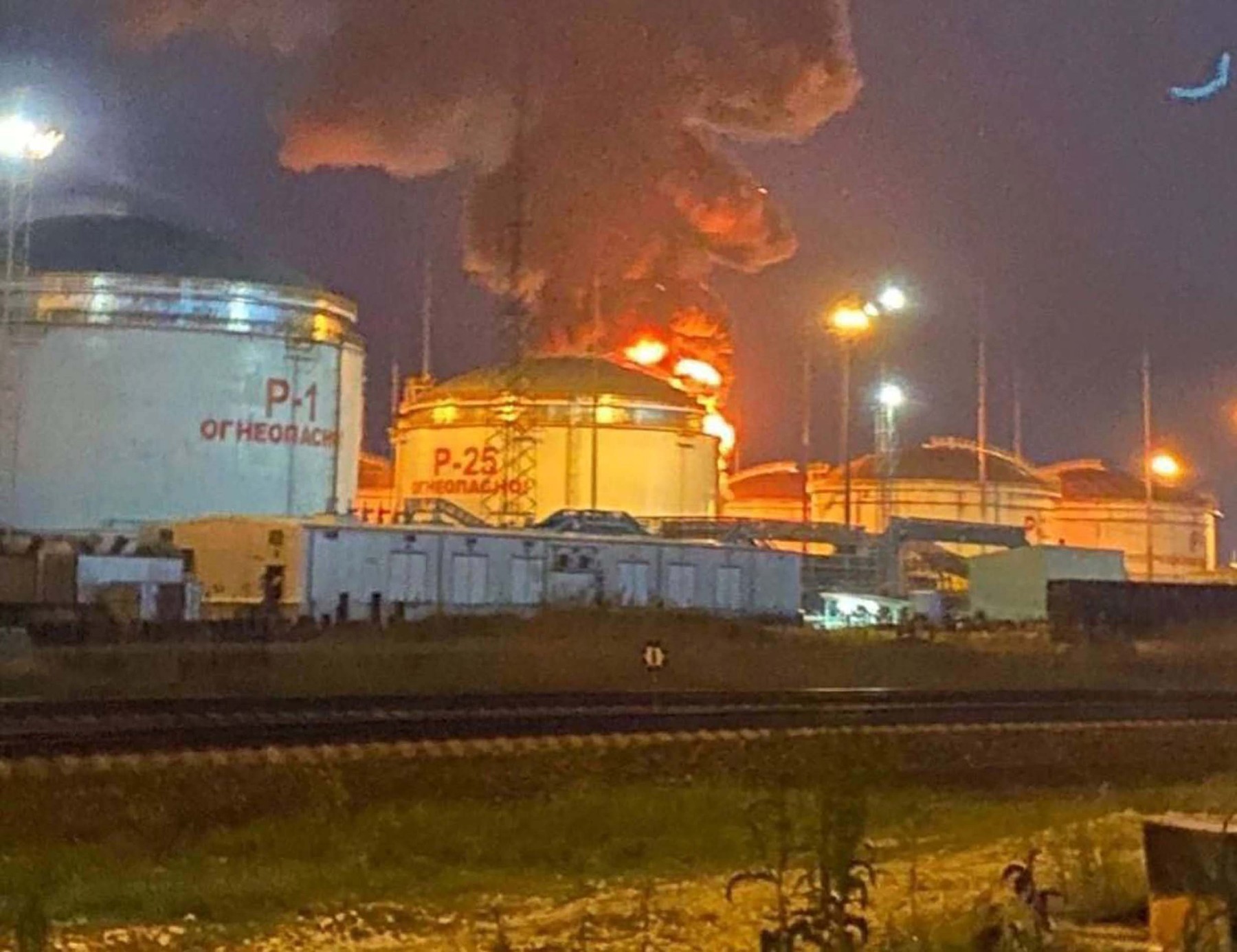
The energy crisis generated by the war in the Middle East threatens to intensify next month. Following US and Israeli attacks on Iranian energy facilities and Iran's response to block the Strait of Hormuz, International Energy Agency (IEA) executive director Fatih Birol warned that April would be “much worse than March”.
During his appearance on the podcast of Nicolai Tangen, the managing director of the Norwegian sovereign wealth fund, Birol explained that in March shipments from the Middle East with oil, liquefied natural gas and other energy products were still arriving at the ports, but that “in April there is nothing.” This shutdown suggests April's crude supply losses could double from the previous month, with direct consequences for inflation and global economic growth.
To get an idea of the scale of the impact, Birol recalled the oil crises of 1973 and 1979, in which about five million barrels per day were lost each time, totaling about 10 million barrels per day. Currently, 12 million barrels per day are being lost, “which is the equivalent of more than two oil crises combined.”
The IEA executive director also warned that this unprecedented disruption could force energy rationalization measures in several countries.
The impact is not limited to oil and gas. Birol warned of effects on other raw materials essential to the global economy: petrochemicals, fertilizers, helium and sulfur – all critical to industry, agriculture and technology production.
In response to the crisis, the IEA announced on March 11 the release of 400 million barrels of oil from the strategic reserves of its 32 member countries, the agency's largest intervention to date.
However, Birol warned that this measure, although significant, will not solve the underlying problem. “We're simply helping to ease the pain and buy time, but I'm not saying it's the ultimate solution,” he explained.
The AIE monitors the markets daily to assess the need for further interventions. “If we think there is a need, either for crude oil or for refined products, we could step in and I will make suggestions to governments accordingly,” Birol said.
The agency's director pointed to shortages of jet fuel and diesel fuel, which currently mainly affect Asia but are expected to expand “in April or maybe early May in Europe.”
The key lies in reopening the Strait of Hormuz, the nerve center of this crisis, as it concentrates a significant part of the geopolitical risk. Under normal circumstances, about 20 million barrels of oil and gas pass through this maritime corridor every day, supplying markets in Asia, Europe and the United States. Its effective closure by Iran has practically paralyzed transit, and the only solution to the crisis, according to Birol, is to reopen it.
Earlier, in statements to this publication, Birol pointed out that the scale of the disruption and its impact on supply chains make this crisis “the biggest threat to global energy security in history”.
The 400 million barrels released by the IEA provided some relief, but uncertainty remains. The pressure on Asia is the most intense due to its dependence on Middle Eastern crude, while Europe and the United States could experience a more severe impact in the coming months if the situation continues.