Why did Putin target nuclear power plants? “It's a signal for the EU”

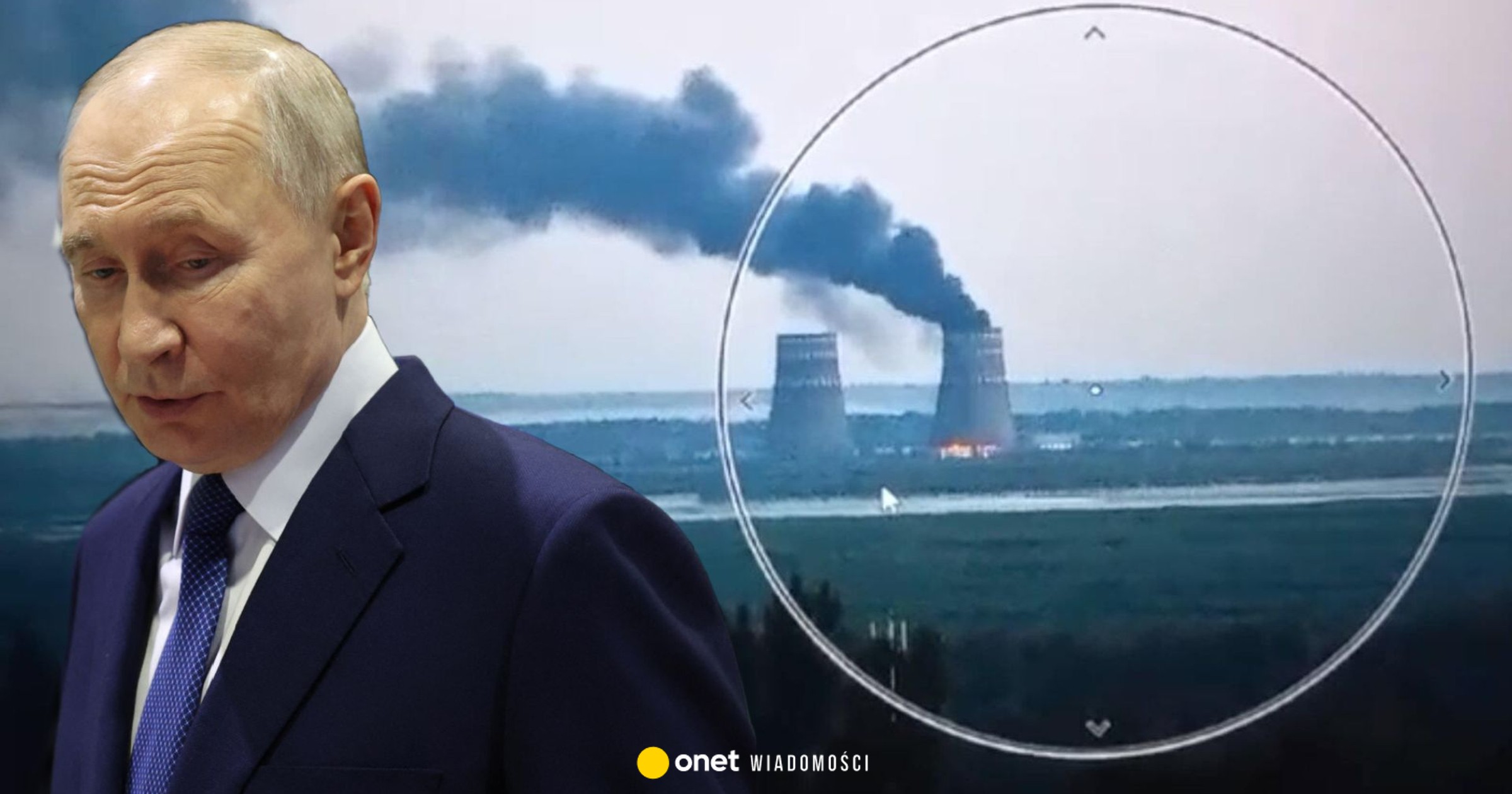
Why has Russia now turned to “non-nuclear nuclear blackmail”? Is it possible to decommission all nuclear blocks? Can impacts on nuclear power plant substations lead to serious accidents? And how should the European Union react to this, near whose borders Russia is trying to provoke a nuclear incident? Below you will find answers to all these questions.
Russia's nuclear blackmail is proof of its weakness, he is convinced colonel of the SBU reserve (Security Service of Ukraine), military counterintelligence expert Mykhailo Prytula.
This is nuclear blackmail in a non-nuclear form. Russia understands perfectly well that a complete blockade of Ukraine does not give it anything strategic. Ukraine has already survived the winter without electricity – society is adapting, the country will survive. The real goal is different – to create a sense of constant proximity to nuclear catastrophe. This is a signal not only to Ukraine, but above all to the European Union: “Any escalation – and you will have an accident at a nuclear facility near your borders.” This means that it is a pressure tool, not a military necessity
– says Prytuła in a comment for Espreso.
According to him, Europe, the United States and Ukraine jointly proposed a peace agreement to Russia, but Putin decided to spoil everything and demonstrate his power. Not so much in front of Ukraine or Europe, but in front of our own surroundings.
Putin must show strength in front of his vassals. Because power is wavering. So he needs to show that Akela (a reference to the leader of the wolf pack from Rudyard Kipling's The Jungle Book) is still strong. He cannot launch a nuclear attack because it would cross all the red lines and would be met with a response. That's why he's trying to play a different game: he's trying to break the contracts, show that he was allegedly attacked by 91 drones, he's trying to hit Oreshnik. Now it's time for nuclear blackmail in a non-nuclear form
– explains the military man.
According to him The situation in Venezuela became a catalyst for Russiabecause the Russian dictator's entourage begins to understand that the circle (of Russia's real and alleged allies) is narrowing and they are losing income.
— Putin lost Venezuela and it was a painful blow to him. Venezuela has competitive oil resources, and the main goal of Russia's influence in the country was to destroy Venezuela as an oil country that supplies large amounts of oil to world markets to sell its own. The special services of the Soviet Union were still working on it. And suddenly this long-term work, this financial flow that went primarily to the elites of the Russian Federation, stopped. This is a strategic failure for Putin, says Prytuła.
Russian-style business involves blocking roads for Venezuelan oil, Iranian gas and gas from Qatar. And here Putin is losing Venezuela, gas and oil [z Caracas] are unlocked, he will lose Syria in the near future. There is no money for the elites. Putin looked like a traitor in the eyes of his secret services because he lost what had taken decades to build. Therefore, he must show some extraordinary event, that he is still strong, that he can exert influence, that he can strike some extraordinary blows. This is the behavior of a country that has already lost the war but still hopes to win through fear. When you don't have the army to win – you start trading in disasters. And this is always the last stage of empires
– sums up the military man.
How should EU and NATO countries react?
Despite the fact that Russia's nuclear threats are directed not only at Ukraine but at the EU, neither Europe nor NATO is ready to give a decisive response to them.
— Diplomatic pressure – especially in a situation where ignoring the norms of international law is no longer just Putin's prerogative – does not work. Russia simply ignores it, says Mychailo Honchar, president of the Center for Global Studies Strategy XXI, in an interview with Espreso.
It was necessary to do what our Western partners turned away from like the devil from holy water and, unfortunately, still turn away. What they were asked to do from the very beginning of the Russian invasion. I remember the great appeals of foreign Ukrainians and various experts-politicians on March 4, 2022, to close the airspace, create a “shield” [wspólną ochronę przeciwlotniczą] at least over the western part of Ukraine [w znaczeniu geograficznym, czyli łącznie z obwodami rówieńskim, odeskim i mikołajowskim, gdzie znajdują się trzy ukraińskie elektrownie atomowe]
– he adds.
— [Zachód] He repeatedly rejected this idea because it would mean war with Russia and us [państwa zachodnie] After all, we are not fighting against Russia. Unfortunately, the situation has not changed substantially. We see the state of semi-collapse [półupadku] NATO is currently located. We see the behavior of the United States, Honczar continues. — Right now, it all comes down to what they say [państwa zachodnie]will give Ukraine more air defense means. That's good too, but it's not enough, especially considering how slowly it's all delivered. The situation on January 9 this year was telling – we had a deficit of means to shoot down Russian missiles, a deficit of interceptors. Therefore, what Western partners can do quickly is primarily to provide air defense assets, but it should be done online, in real time, he concludes.
Russian attacks on substations of nuclear power plants
According to Mikhaiła Prytula, the HUR warning should be taken very seriously: This is a signal of a change in the logic of Russia's actions. At the same time, attacks on high-voltage substations of nuclear power plants are nothing new.
— The Russians have previously attacked substations related to the supply of energy to nuclear power plants. In particular, on November 23, 2022, for the first time they simultaneously hit all large Ukrenergo substations around all nuclear power plants. Was there a classic power failure then? The emergency protection of nuclear power plants activated and the power units stopped, says Olga Koszarna, co-founder of the social organization Anti-Crisis Expert Nuclear Center of Ukraine.
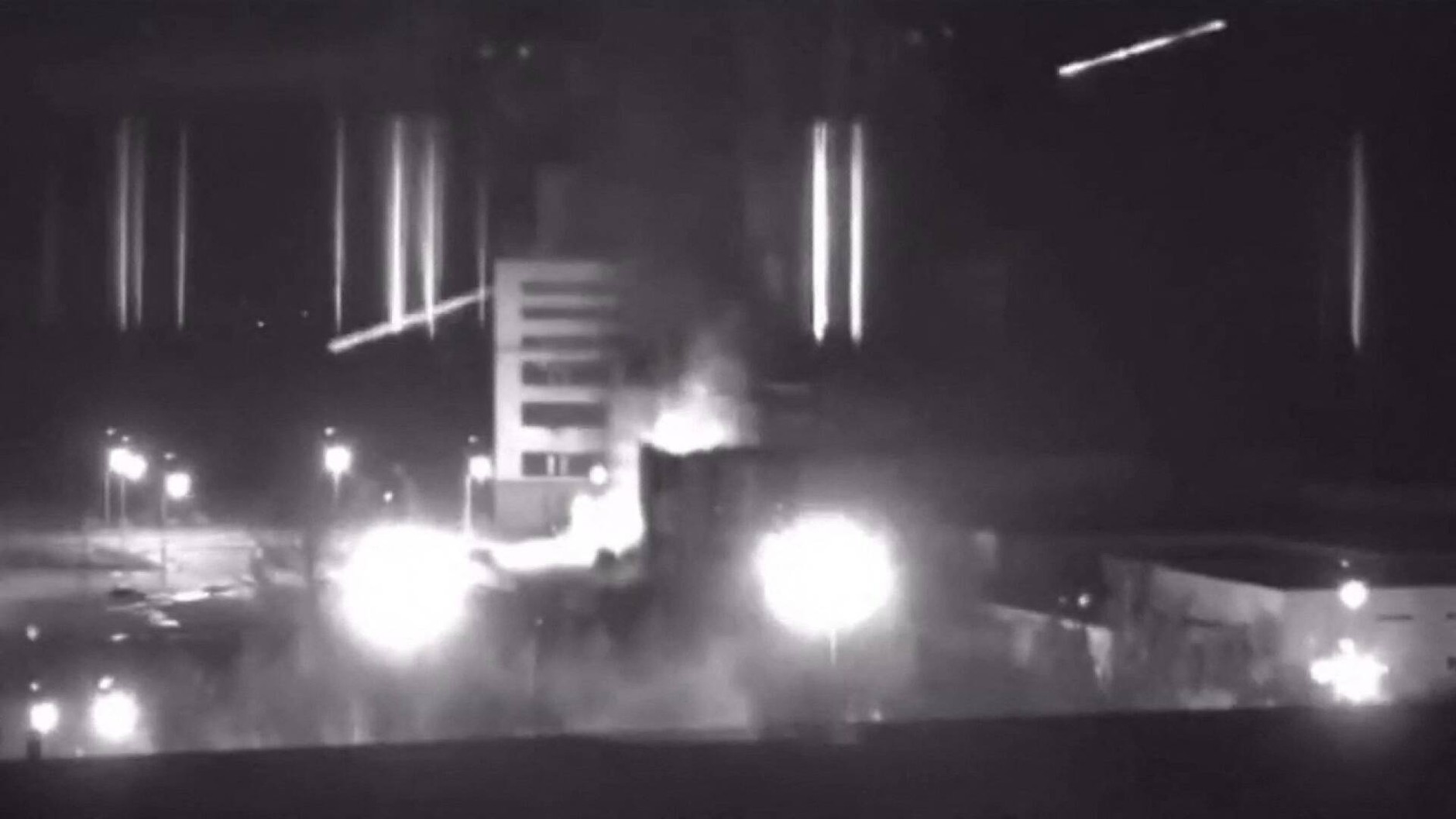
A screenshot of a recording from the Zaporozhye nuclear power plant during a fire that broke out after Russian-Ukrainian clashes, Ukraine on March 4, 2022.AA/ABACA / PAP
According to her, at that time, about 6,000 megawatts of power “fell out” of the combined energy system, the Ukrainian energy system broke up into separate “islands” and disconnected from the European energy system.
— Then, within 14 hours, Ukrenergo reconnected to the interconnected energy system and synchronized with the European one. Then, our specialists, together with the main intelligence directorate and Ukrenergo, developed an algorithm for preparing Ukraine's energy system for such missile attacks, says Olga Koszarna. — When the launch vehicles take up positions in the Caspian Sea, our energy engineers have about an hour and a half to prepare the power units of nuclear power plants. In 2023, our specialists even received a patent for this algorithm. Since then, there has been no classic blackout with the collapse of the energy system, although the Russians tried to cause it, he adds.
Is a nuclear accident possible as a result of Russian attacks on substations of nuclear power plants?
— There were many individual attacks on substations of nuclear power plants, but a massive and systematic attack, posing a risk of a nuclear accident in one of the power units, occurred on August 26, 2024. Therefore, we assumed that they would repeat it sooner or later, says Mykhailo Honchar. — Given the successes we've had [Rosjanie] they achieved during previous attacks, when they virtually destroyed 90 percent. thermal energy and more than half of hydropower, decided to try, so to speak, to finish the job. In this case, Russia has two goals: to cause an energy collapse and dysfunction of Ukraine's integrated energy system and, if possible, to provoke a nuclear accident at one of the nuclear power plants as a result of an unpredictable algorithm for shutting down the power unit in an emergency situation, the military explains.
Ukrainian power units have several levels of protection. If the power plant suddenly loses connection to the grid, protection is activated automatically.
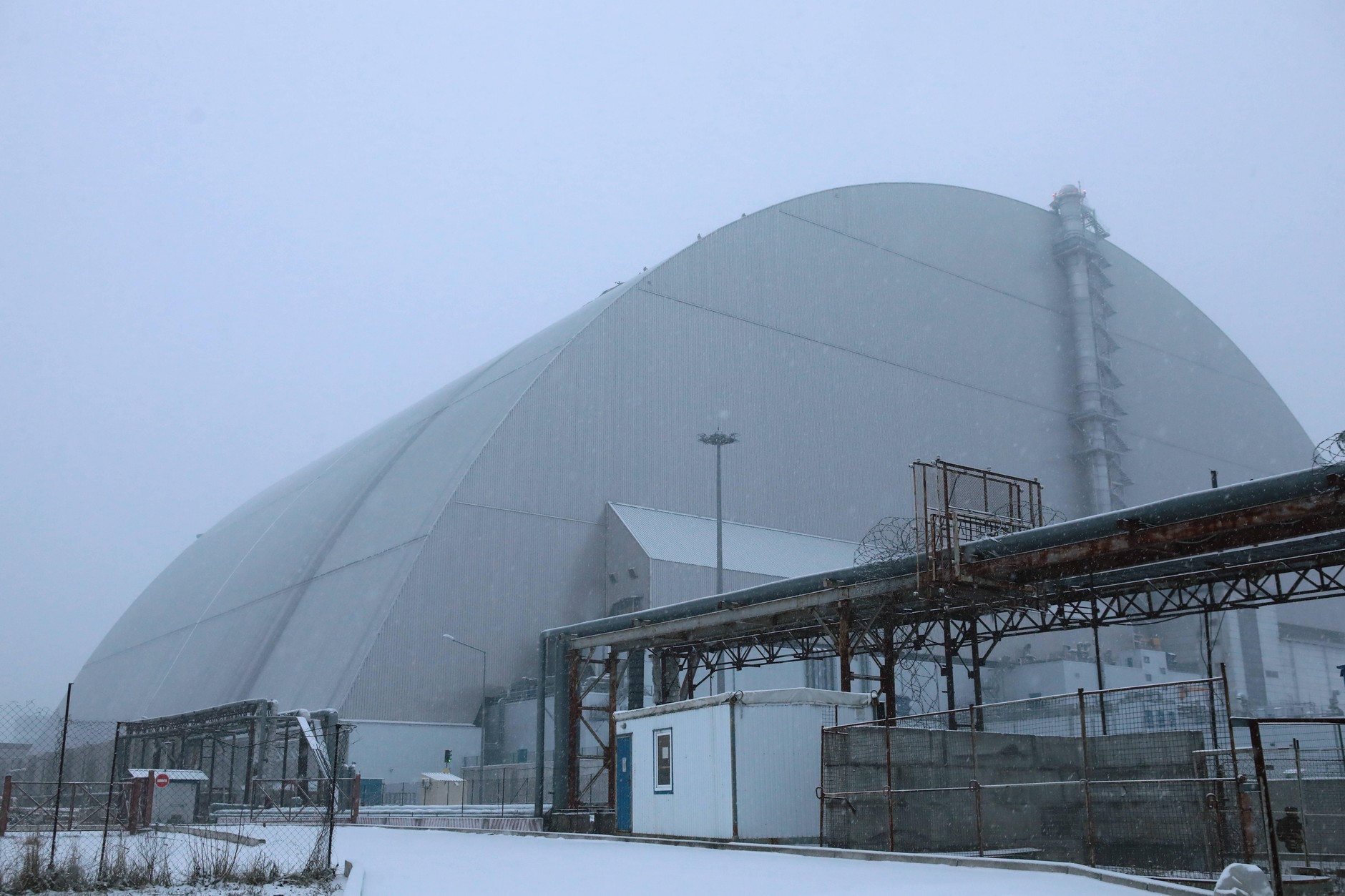
New casing of the Chernobyl nuclear power plant protecting the remains of reactor number 4 destroyed in the 1986 disaster, Ukraine, February 14, 2025.TARASOV / PAP
— The nuclear reactor safety systems installed in our nuclear power plants are significantly different from theirs [rosyjskich] systems thanks to the modernizations that were carried out in Chernobyl, and especially after Fukushima, together with our American partners from Westinghouse. However, this does not mean that the Russians will give up their intentions. Especially since they now notice the increased effectiveness of missile strikes, explains Prytuła.
However, the military is convinced of the reliable protection of Ukrainian nuclear power plants.
They are built to withstand even the fall of a large aircraft onto the reactor. Therefore, Russia's attacks will not lead to a nuclear catastrophe. All this only looks realistic in Putin's public statements, but it is just a PR stunt. There will be no disaster, nothing will happen. As for blackouts, we've become somewhat used to them – they won't scare us
– sums up the colonel.
Why is the situation more difficult now than in 2022?
— The problem is that the attack tactics have now changed: Russia first sends dozens of drones and then five-six missiles to one target, says Olga Koszarna. — Moreover, in 2022, Ukraine had large power reserves. Some coal- or gas-fired thermal power plants were not operating because we had a surplus. Now that large hydro and thermal power plants have been destroyed, we do not have the maneuvering power that was used to fully balance the energy system. This means that the situation is worse now than in 2022–2023. According to data provided by the president [Wołodymyra Zełenskiego]currently 69 percent power is provided by nuclear power plants, he adds.
In addition to the occupied nuclear power plant in Zaporizhia, there are three more power plants of this type in operation in Ukraine: Rivne, Khmelnytsky and South Ukraine, with a total capacity of 7.6 gigawatts. At the same time, power unit No. 2 at the Khmelnytskyi NPP has not been operating at full capacity since March 2022 due to a turbine failure (instead of the planned 1,000 megawatts, it is operating at 600 megawatts).
Meanwhile, according to data provided by Volodymyr Zelensky, Ukraine currently has a capacity of 11 gigawatts and needs 18 gigawatts. Another 2.4 gigawatts could be imported from Europe, which means that even with maximum imports, it will still have a power deficit and, as a result, interruptions in electricity supplies. In such a situation, even a slight reduction in the power of a nuclear power plant has a noticeable impact on the situation in the energy systemnot to mention the situation in which one of the reactors has to be stopped due to damage to the transmission facilities.