Interview with Victor Armășelu, vice president of Samsung Electronics Romania and Bulgaria: Samsung Vision 2026 – Technology as a non-intrusive partner

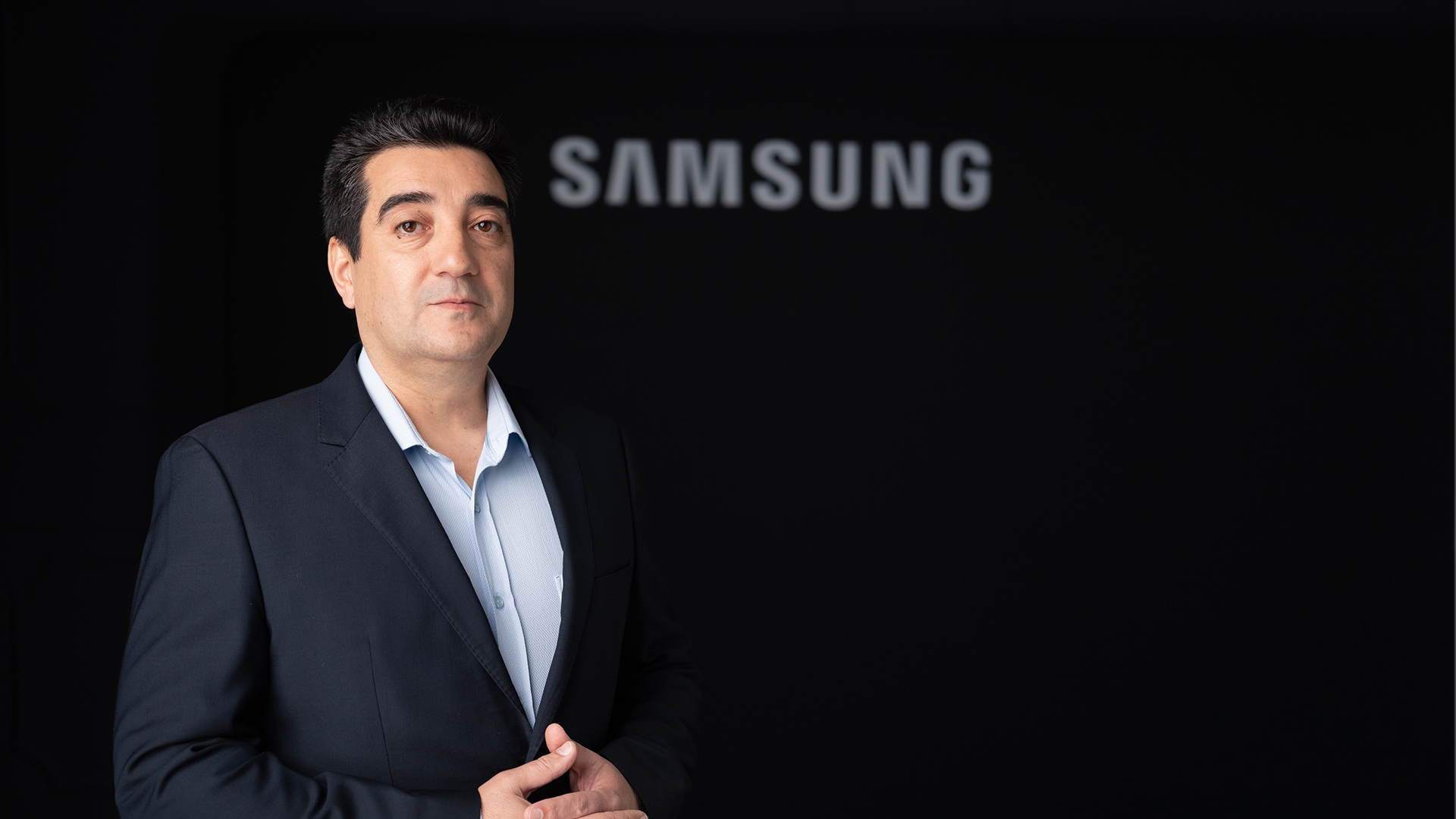
Two decades of global leadership are not built through a single decisive moment, but through a coherent strategy and the ability to anticipate change. For Samsung, moving from a product-centric approach to one focused on experience and ecosystem was essential. At CES 2026, this direction took shape in the “Entertainment Companion” concept, which transforms the TV from a simple screen into an intelligent partner, adapted to the context and consumption habits.
Samsung marks 20 years as a global leader in the TV market. What was the impactful moment or decision that brought the brand to this position?
Victor Armăselu: Our two-decade leadership was not generated by a single defining moment, but by a consistent strategy built over the long term. The fundamental decision was the transition from a strictly product-oriented thinking to an experience- and ecosystem-based strategy. We understood that a leader must anticipate how content consumption evolves, constantly investing in display technologies such as Micro LED or Micro RGB, but always emphasizing how the TV becomes part of everyday life.
What does the concept of “Entertainment Companion” presented by Samsung at CES 2026 actually mean for the user?
Victor Armăselu: The concept marks a major change: the TV stops being a passive object and becomes an active and empathetic partner. For the user, this “Companion” means a constantly adapting experience, from relevant recommendations to automatically adjusting settings depending on the context. It works like a behind-the-scenes director: it understands whether you're watching a movie, a match or playing a game and adjusts the picture and sound accordingly. In essence, it's a more personal and intuitive experience that depends less and less on manual user intervention.
How does the role of the TV change in a home where content is already everywhere: on the phone, tablet or laptop?
Victor Armăselu: In a context where content is fragmented between multiple devices, the TV redefines its role and becomes the center of the digital experience in the home. It's no longer just a bigger screen, but the place where content makes sense, offering a level of immersion that other devices can't replicate. The TV evolves from a simple consumer device into the central hub of the home, where you can control other devices in the ecosystem directly from the screen.
The concept of “Your Companion to AI Living” is very broad. How does it translate into a real, everyday experience that the user feels immediately?
Victor Armăselu: AI Living means technology starts working proactively and contextually, no longer requiring constant intervention. In everyday life, this translates into an ecosystem that understands context and adapts in real time. The TV recognizes consumption patterns, automatically adjusts audio-visual settings and seamlessly integrates with other connected devices and appliances in the home to create a unified experience.
What's the first thing the AI does in a Samsung TV that the user notices without knowing it's AI?
Victor Armăselu: The most visible, but also the most “discreet” effect, is the automatic optimization of the image and sound. The user does not need to manually adjust the settings; the TV does this on its own based on content, ambient light or previous preferences. The role of AI is to simplify the interaction so that the user only notices that the experience is simply “better” without having to decipher the technical mechanisms behind it.
Samsung talks about a fully connected ecosystem. What is that moment when the user really feels the difference compared to using separate devices?
Victor Armăselu: The differentiating moment is when the technology works fluidly, without interruptions between devices. Through the SmartThings app, your TV, phone and home appliances communicate with each other to create a cohesive experience, whether we're talking about entertainment or home control. This transition from isolated devices to an integrated ecosystem is the central pillar of AI Living.
Technologies such as Micro RGB or the 100% coverage of the BT.2020 spectrum are impressive. How do they translate into the actual viewing experience, beyond the specs?
Victor Armăselu: Beyond the specifications, these technologies mean a visual experience much closer to reality. Micro RGB technology allows extremely accurate colors and a high level of detail to be reproduced, making images more vivid and natural. For the user, the difference translates into a more immersive experience in movies or gaming, which brings you closer to what you see in reality.
If we look at the next 3–5 years, what will TV look like? Is it still just a screen or is it becoming something else?
Victor Armăselu: The TV will increasingly become a smart device perfectly integrated into the environment and ecosystem of the home. It will continue to evolve as a display technology, but the real differentiation will come from its ability to understand context and anticipate user needs. It will act as a central point of the digital experience in the home, facilitating non-intrusive interaction with the rest of the connected devices.
Please tell me what the future of modern television is in one short sentence.
Victor Armăselu: The TV becomes an intelligent, intuitive and non-intrusive partner, integrated into the home ecosystem, which personalizes and simplifies the everyday digital experience.
Article made in partnership with Samsung