All the details about the Chinese trolleybuses introduced on three lines in Bucharest on Monday. What travelers should know before using them

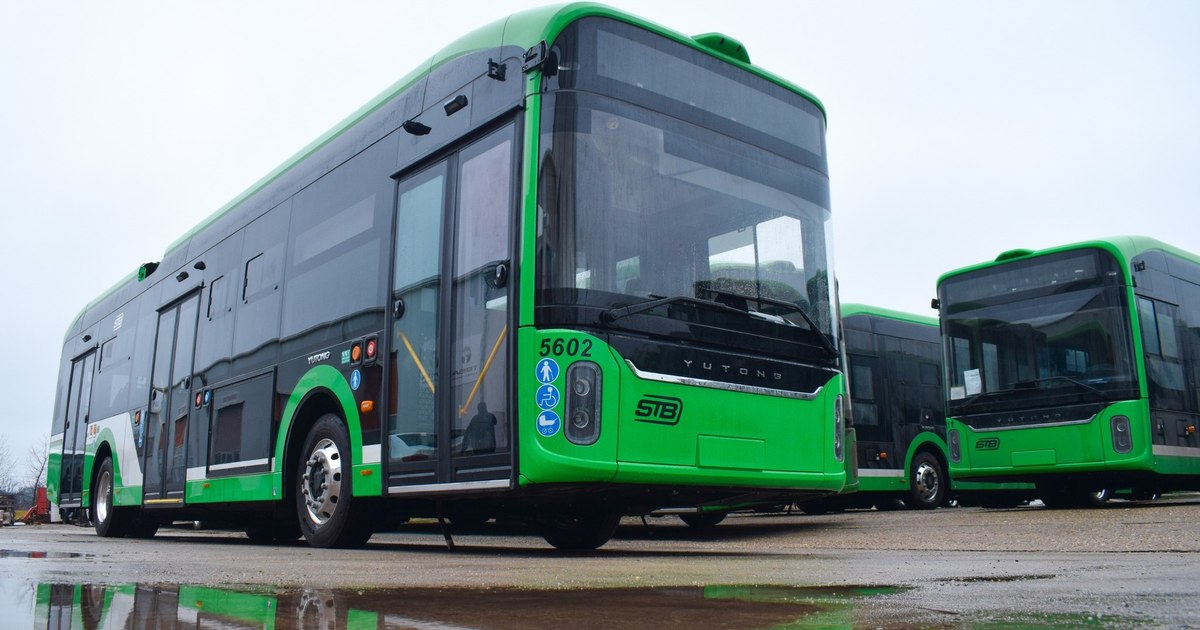
Starting from Monday, March 30, the Bucharest Transport Company will put into circulation on lines 86, 93 and 97 the 22 Yutong U12 trolleybuses, produced in China and purchased by the Capital City Hall thanks to funding granted through the National Recovery and Resilience Plan (PNRR).
Yutong U12. PHOTO: Facebook / Bucharest City Hall
Yutong is one of the world's largest manufacturers of buses and trolleybuses, headquartered in Zhengzhou, Henan Province, China. By 2024, the company had sold more than 190,000 electric vehicles globally, and by 2023 it had recorded more than 700 units sold in Europe alone. The internationalization strategy mainly targeted the European continent and Latin America, regions where Yutong vehicles are already running in several important cities.
The Yutong U12, the model delivered in Bucharest, was presented to the public for the first time at Busworld 2019 in Brussels, as a product designed explicitly for the requirements of the European market, both from a technical and aesthetic point of view. It is a 12-meter trolleybus, designed for dense urban traffic, with an emphasis on energy efficiency and passenger comfort.
Yutong is not on its first trolleybus contract outside China. The company has delivered dozens of battery-powered trolleybuses to Ciudad de Mexico, including a batch of 130 vehicles in July 2020, including 50 18-meter units, a world first for trolleybuses of this size exported outside of China. In the field of electric buses, the company's portfolio is even more consistent: 88 Yutong E12 units are running in Bergen, Norway, the same model is present in Roskilde, Denmark, and in Qatar the company honored in 2022 the largest purchase order of electric buses in the history of the industry, 741 vehicles, in the context of the World Cup.
Autonomy of 20 km
Like the Solaris trolleybuses, which recently entered the STB fleet, the Yutong U12 will have a minimum autonomy of 20 kilometers without power from the overhead power grid thanks to a Rechargeable Electric Energy Storage System (SRSEE), based on traction batteries managed by an on-board computer. The system automatically recharges when the vehicle is connected to the grid, without driver intervention.
Thanks to this equipment, the vehicle can take over routes or sections of route where the aerial infrastructure is missing or temporarily interrupted due to works, without the need to replace it with a diesel bus. That is precisely why the Intercommunity Development Association TPBI decided to introduce the new vehicles exclusively on lines where there are such non-contact sections.
Propulsion is provided by a three-phase short-circuited rotor synchronous motor, operated with an inverter and controlled by a microprocessor system. All the essential systems on board, propulsion, braking, climate control, monitoring, are integrated through a CAN communication network, which allows real-time monitoring of the vehicle's condition and rapid intervention in case of problems. The full warranty is 6 years.
What passengers find on board
The transport capacity is 93 passengers simultaneously, of which 32 on seats. The vehicles are equipped with air conditioning through an own HVAC system, designed for the specific climatic conditions of Bucharest.
Bucharest-Ilfov, one metropolis? The plan that is gaining ground among experts
On board there are passenger information monitors, a wheelchair ramp and dual USB sockets, both Type A and Type C, for charging phones and other personal devices, one at each set of seats.
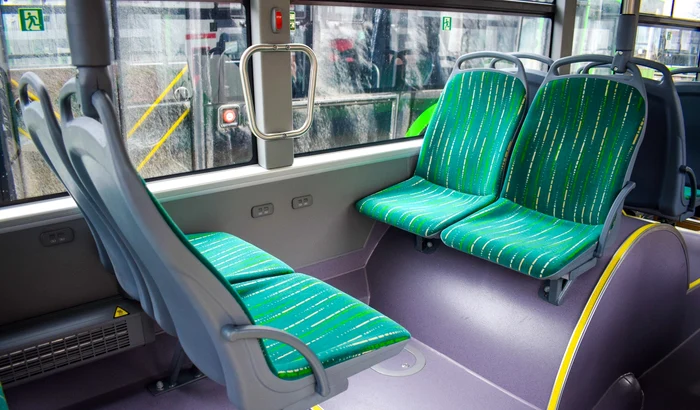
PHOTO: Facebook / Bucharest City Hall
The trolleybuses cost 70.4 million lei
The City Hall of the Capital launched the tender at the beginning of February 2025, for a contract valued at 71.5 million lei. Only one bidder, Anadolu Automobil Rom SRL, the authorized distributor of Yutong on the Romanian market, signed up for the public procurement procedure, which won the contract. The final price of the 22 trolleybuses is 70.4 million lei without VAT, i.e. approximately 3.2 million lei per vehicle. The purchase was fully financed from non-reimbursable funds through PNRR.
The vehicles arrived in Romania in January, were initially stored in Ciolpani, then moved to the Bucuresti Noi depot, where they passed the mandatory tests before homologation.
Route changes
The introduction of the 22 trolleybuses is accompanied by a reorganization of several lines. The 13 vehicles allocated to line 86 allow its reconfiguration between the Cartier Pajura and Baicului terminals, on a route that crosses Bucurestiui Noi Boulevard, Griviței Street, Lascăr Catargiu Boulevard, Dacia Boulevard, Strada Traian, Pache Protopopescu Boulevard, Mihai Bravu Boulevard and Ferdinand I Boulevard. As a result, shuttle lines 685 (Baicului – Traian) and 686 (Pajura – Clăbucet District) has been suspended since Monday.
Line 85 will be extended from the Aura Buzescu station to the National Arena, thus operating along the entire corridor between the National Arena and the North Station. Travelers who need a connection to Strada Vatra Luminoasă, Piața Romană or Calea Griviței can transfer at Îscoala Iancului, from lines 85 or 90 to line 97.