
After the invasion of Iran by the United States and Israel, the world is afraid of a fuel and energy crisis. Okay. 20 percent global crude oil supplies and approx. 20 percent LNG supplies flow through the Strait of Hormuz, around which hostilities are taking place. The prices of both raw materials have gone up, and although we do not yet know the full consequences of the war, the increases will be felt by the entire economy to varying degrees. However, this is not the first such case. We have experienced five major fuel crises in the last fifty-plus years, and they have occurred even more frequently in modern history.
The rest of the article is below the video:
Read also: Europe is struggling with high fuel prices. These ways dominate
Fuel crises. Beginnings in the 19th century
Their origins date back to the 19th century. American economist James D. Hamilton writes about the “first oil shock” during the Civil War, when oil-based products were used for lighting. Growing demand and insufficient supply led to increases comparable to those that occurred approximately 110 years later during the famous oil crisis.
In the 20th century, the oil & gas industry grew rapidly. In 1900, world oil consumption amounted to 25 million tons of oil equivalent; in 1950 it was already 505 million tons, a decade later 1,030 million tons, and in 1970 – 2,237 million tons. In the United States alone, between 1945 and 1947, the number of registered cars increased by 22%. Minor price shocks related to the geopolitical situation occurred, for example, during the Korean War or the Suez Crisis (1952-1953 and 1956-1957), but the real shock occurred only in the 1970s.
Oil crisis of 1973. Embargo after the Yom Kippur War
This is, of course, the famous oil crisis, when, after the outbreak of the Israeli-Arab war (later called the Yom Kippur War, after the Jewish holiday on which it began) in October 1973, Arab countries from the Organization of the Petroleum Exporting Countries (OPEC) announced an embargo on its sale to Western countries and a reduction in production.
Global oil prices jumped from approximately $3. per barrel in October 1973 to less than 12 in early 1974. After taking into account inflation, in today's prices the price of the raw material has increased from just over USD 25. in the summer of 1973 to $68. in the first months of 1974, many Western countries began to run out of gasoline. The world plunged into recession.
OPEC embargo
|
Business Insider Poland
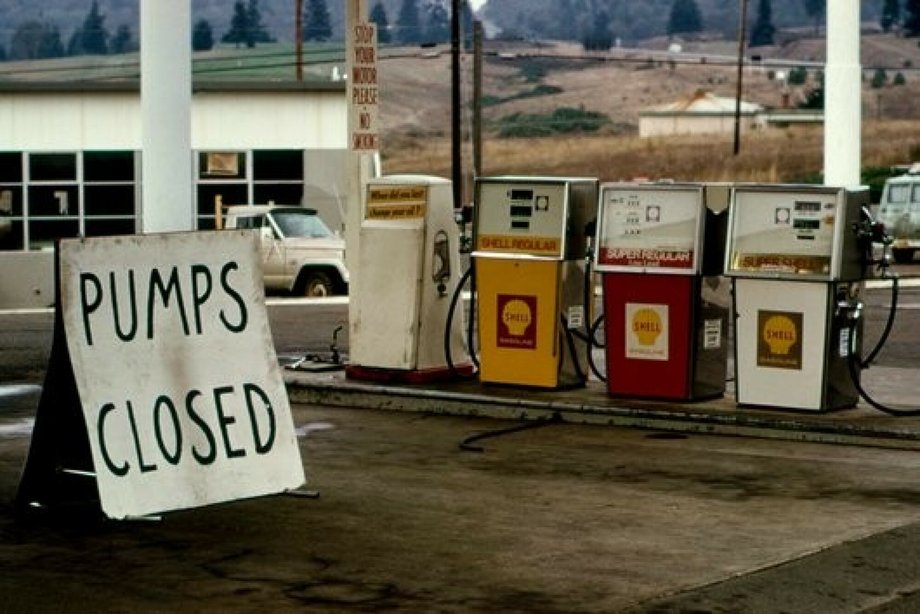
US gas station closed by the 1973 fuel crisis.
|
Science Photo Library/EAST NEWS/East News
We still feel the consequences of the oil crisis today – because it clearly showed the dependence on imported raw materials, it became one of the stimuli for energy transformation and the development of renewable energy sources. For France, it was also an impulse to build its own nuclear power plants.
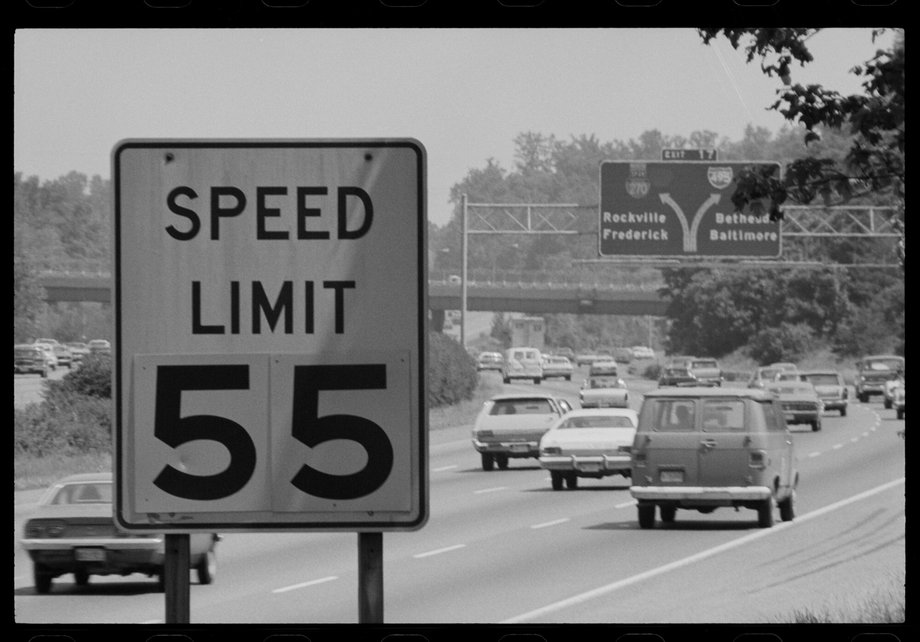
Speed limits introduced in the US as a response to the 1973 oil crisis.
|
GG Vintage Images/UIG Art and History/East News / East News
Fuel crisis after the revolution in Iran
Less than six years have passed and the world has had to face the so-called the second oil crisis. This time the spark came from Iran, where in early 1979 the Islamic revolution overthrew the pro-Western dictatorship of Shah Mohammad Reza Pahlavi and established the ayatollah regime that still rules today.
The new authorities limited oil production and terminated contracts with Western customers. The price of the raw material almost tripled, in April 1979 it was approximately USD 39.50 per barrel. In today's money, from $68. per barrel in January 1979 – the moment the Shah was overthrown – oil prices rose to over $150. in April 1980
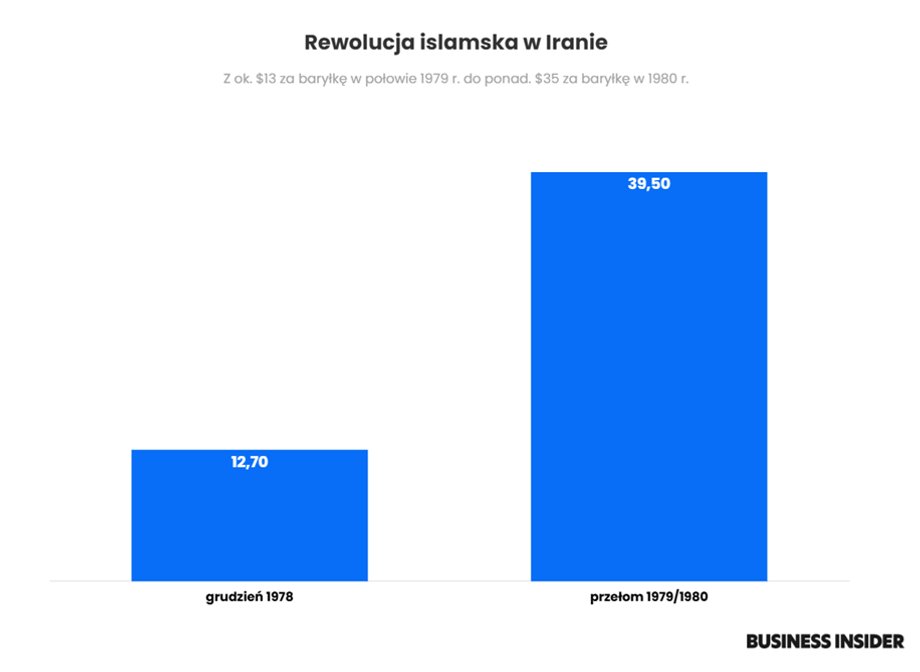
Islamic revolution in Iran
|
Business Insider Poland
Fuel crisis. First Gulf War
It is no coincidence that the third major fuel crisis in the second half of the 20th century also occurred in the Middle East. In August 1990, Saddam Hussein's Iraq attacked neighboring Kuwait under the pretext of preventing lower oil prices and extracting it from Iraqi fields. This led to the outbreak of the so-called the first Persian Gulf War, in which a coalition of countries led by the USA sided with Kuwait.
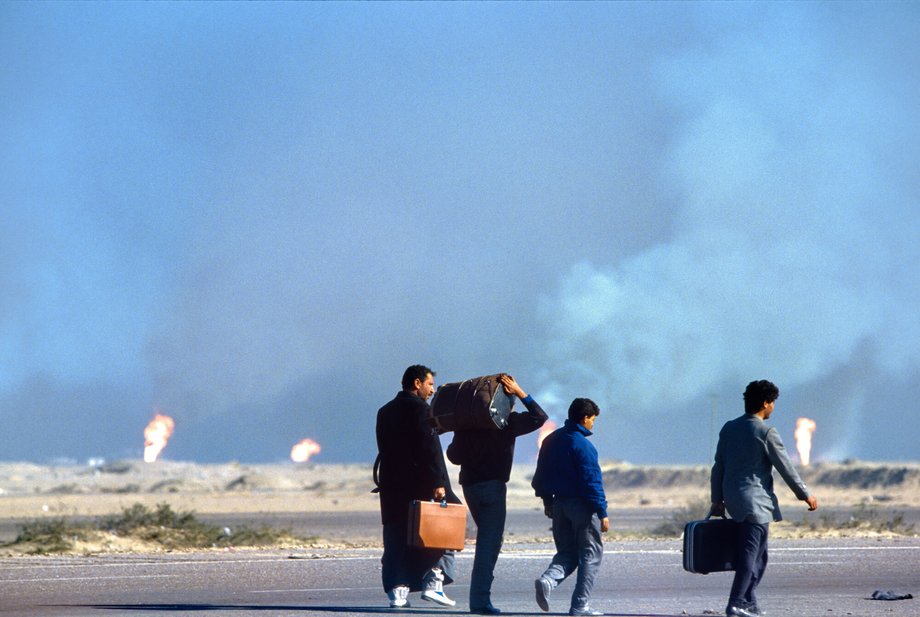
Civilians during the first Persian Gulf War
|
Marc Simon/AKG Images/East News / East News
Both sides of the conflict were responsible for approximately 9%. world oil production. Back in August, the price per barrel was $28; in mid-October it was already over $40. At today's prices, prices have increased from $65. in August to over 90 in September.
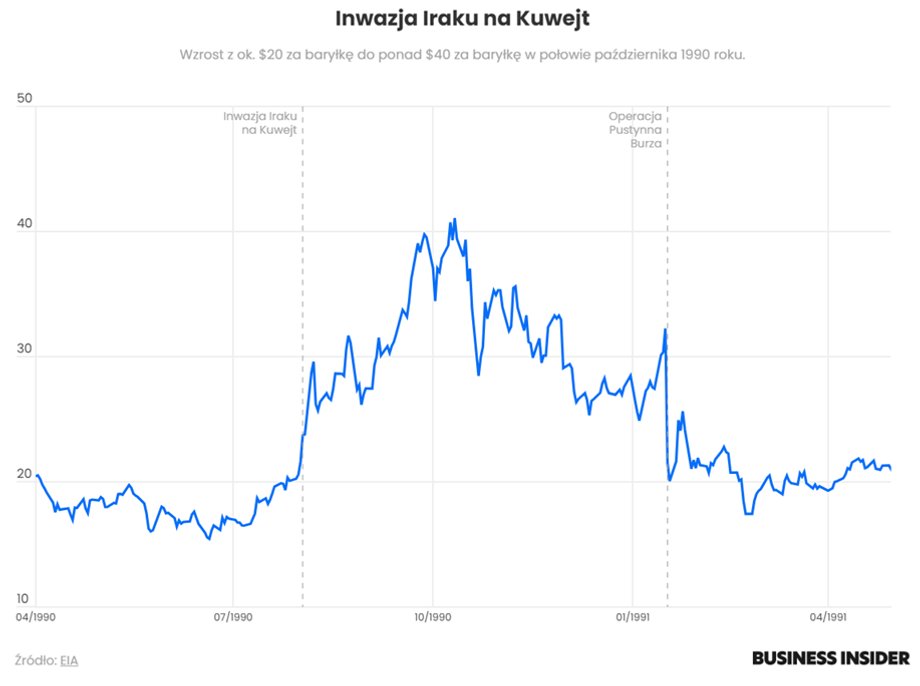
Iraq's invasion of Kuwait
|
EIA / Business Insider Polska
Fuel crises in the 21st century
Another global fuel crisis occurred several years later, in 2008. Several factors came together, including: limiting exports from Venezuela, the weaker condition of Iraq, which was still licking its wounds after the last conflict, and the seizure of production plants and oil pipelines by armed groups in Nigeria. Oil according to the American West Texas Intermediate index increased in price (in today's prices taking into account inflation) from approx. USD 144. per barrel in December 2007 to over $200. in mid-2008
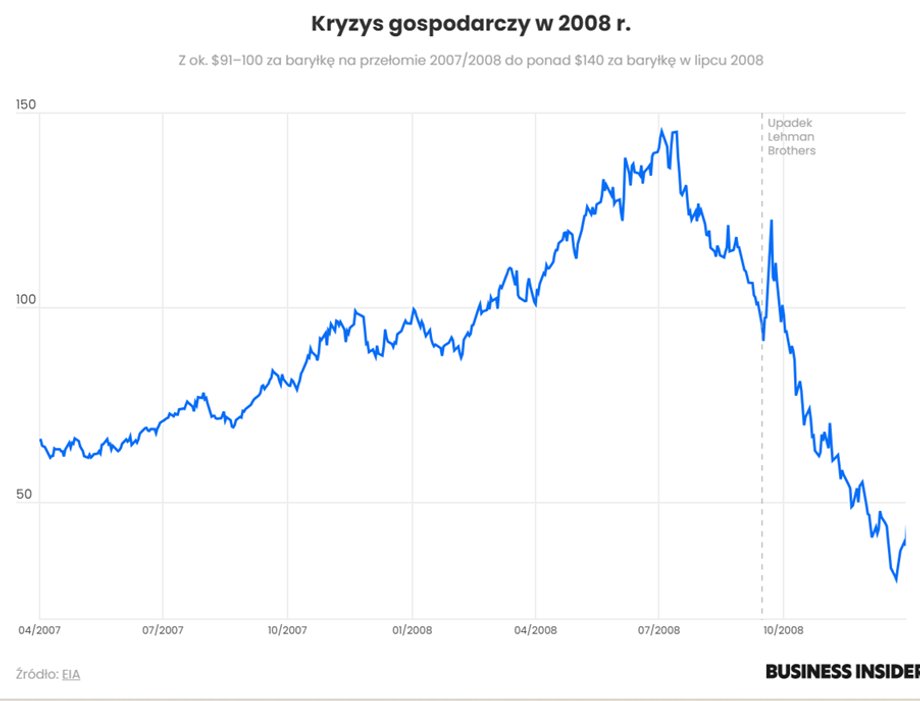
Economic crisis in 2008
|
EIA / Business Insider Polska
The world also faced increases in prices of energy raw materials, including crude oil, a few years ago after Putin's Russia attacked Ukraine. The Brent index went up from $97.13. per barrel at the beginning of February 2022 to $117.25. in early March.
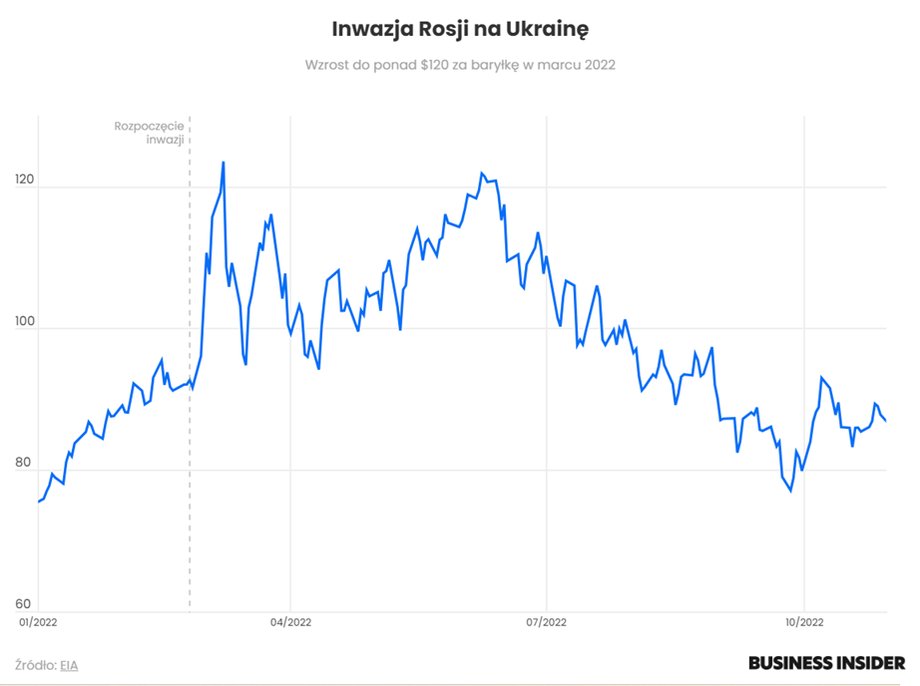
Russia's invasion of Ukraine
|
EIA / Business Insider Polska
Due to the crisis, the International Energy Agency published official recommendations on reducing oil consumption. “Immediate actions in developed economies” would reduce demand by 2.7 million barrels per day in three months. The recommendations include such actions as reducing the speed limit on highways by at least 10 km per hour, introducing up to three days of remote work, traveling by high-speed rail instead of by plane, encouraging cycling and increasing the share of electric cars.