Ukraine stifles Russia's ability to profit from Middle East war: Ukrainian drones hit oil export terminals for third time

The Middle East war has made Russia the unlikely beneficiary of the US-Israel conflict, handing it an economic lifeline after Iran's blockade of the Strait of Hormuz led to a surge in oil demand. But with Ukraine's latest attacks on some of its most important export platforms, Ukraine is stifling Russia's ability to take advantage of tensions and recover economically to replenish its war funds, an analysis by The Telegraph found.
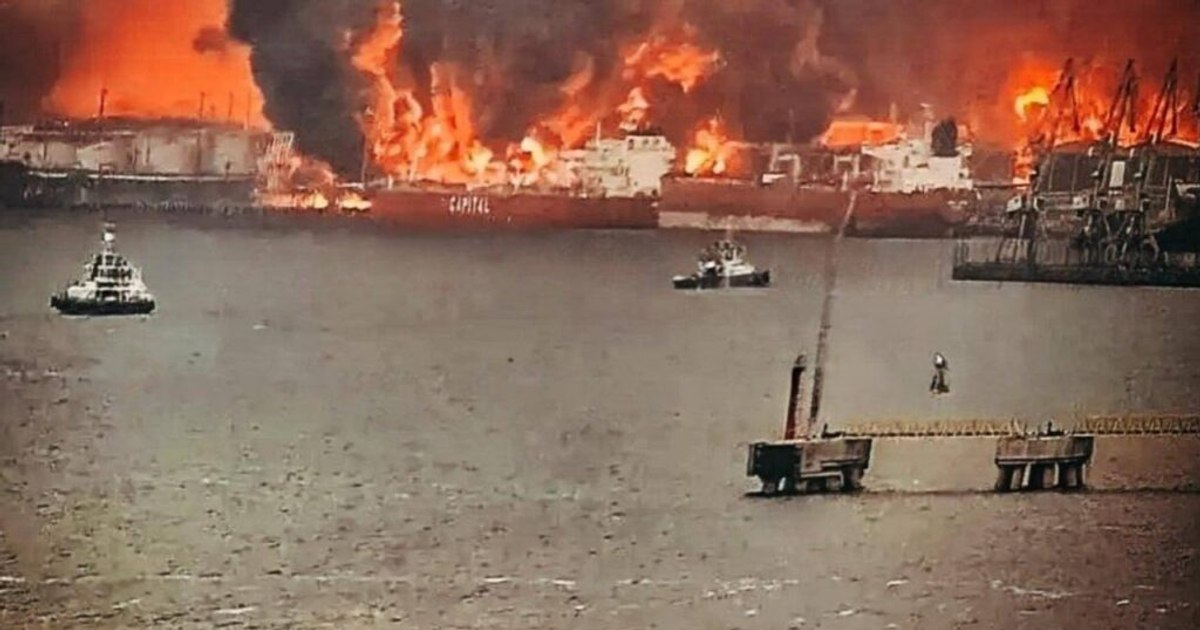
Smoke rose so high it could be seen from Finland as flames engulfed Russia's Ust-Luga oil port in an attack seen as Ukraine's most significant strike on Russian soil this year.
Wednesday's attack destroyed tanks of crude oil and petroleum products as well as critical charging infrastructure at this strategic Baltic Sea installation, turning the sky orange and marking a dramatic escalation of Kiev's campaign against Russia's energy sector. The drones reportedly traveled more than 1,000 kilometers, passing several layers of air defenses in Briansk, Smolensk, Pskov and St. Petersburg before hitting their targets.
The Ukrainian attacks come at a paradoxical time for Moscow. Although rising oil prices and global tensions generated by the conflict in Iran could have brought record revenues, Ukraine is acting to limit Moscow's ability to take advantage of the situation.. Before the war broke out on February 28, Russia's oil and gas revenues had fallen 47% from the previous year, and analysts questioned how much longer Vladimir Putin could financially support the conflict.
The war waged by the US and Israel against Iran changed the equation. Russia ended up earning about $760 million a day from energy exports, racking up nearly $24 billion in a single month. With global demand on the rise, sanctions eased and unaffected by the Strait of Hormuz blockade, Moscow has become an unexpected beneficiary of the energy crisis as markets, suddenly deprived of oil flows, rumbled.
Oil and gas account for more than 60% of Moscow's exports and almost a third of its state revenues, so this remarkable turnaround has proved a boon for Russia's economy and wartime ambitions.
This recovery has fueled fears in Kyiv and Western capitals. Ukraine feared that the energy shortage could force a rapprochement between the West and Russia, strengthening the Kremlin's position both on the battlefield and at the negotiating table. The Kremlin resumed the typical offer addressed to Europe regarding the supply of Russian oil. The Belgian prime minister even called for the “normalization” of relations in order to “regain access to cheap energy”.
But Ukraine's offensive on Russian energy infrastructure seems to have changed the calculations again. Recent attacks, including the one in Ust-Luga, have directly hit Moscow's ability to turn the favorable context into additional revenues.
A major refinery in southern Russia is on fire after a Ukrainian drone attack
According to Reuters, around 40% of Russia's oil export capacity has been shut down this week following drone attacks, pipeline damage and tanker seizures. It was the worst oil supply disruption in Russia's modern history.
Just days before, the Ust-Luga and Primorsk terminals, which together handle 1.7 million barrels per day, were forced to suspend operations after a wave of attacks. Although Russian authorities played down the damage to Primorsk, the main oil export platform in the Baltic Sea, satellite images showed several destroyed tanks and thick plumes of black smoke.
And the Ukrainian attacks show no signs of slowing down. On Thursday morning, Ukrainian drone forces confirmed a strike on the Kirishi refinery, located about 100 kilometers from St. Petersburg, responsible for 6.6 percent of Russia's total refining capacity. A few hours later, a naval drone targeted a sanctioned oil tanker near the Bosphorus Strait, loaded with one million barrels of crude oil.
This strategy is part of a larger campaign by Ukraine, which has been going on for more than two years, to weaken the Kremlin financially. In the first two months of 2026, Ukraine carried out more than 40 attacks on Russian territory, most of them targeting energy infrastructure, double the number of the previous year.
Maksym Beznosiuk, a strategic policy expert, explains Kiev's change in tactics: the focus is no longer just on refineries, but on the entire system used to “process, transport and export crude oil”.
“This is a serious development as higher global oil prices would otherwise give the Kremlin more room to absorb wartime costs,” he told The Telegraph.
Behind these attacks is an increasingly sophisticated arsenal. Ukraine uses Neptune and Flamingo missiles, long-range FP-1 and Liutyi drones, but also hybrid systems such as Palianytsia, Ruta and Peklo. The FP-1 drones, produced by the Fire Point company, are said to be responsible for about 60% of the strikes deep inside Russian territory.
Three attacks in five days
Ukrainian drones struck on the night of March 26-27, for the third time in five days, the two largest Russian oil export ports in the Baltic Sea, Ust-Luga and Primorsk in the Leningrad region, Ukrainian Telegram channel Exilenova+ reported.
Ust-Luga exported 32.9 million tons of oil products in 2025, and Primorsk 16.8 million tons. The Primorsk port pipeline system has a capacity of up to 75 million tonnes per year and handles most of Russia's Urals crude oil exports, including via the “ghost fleet”. Ust-Luga is the second largest port in Russia, after Novorossiysk.