Social networks, prohibited for children under 15. Vote given in the National Assembly of France


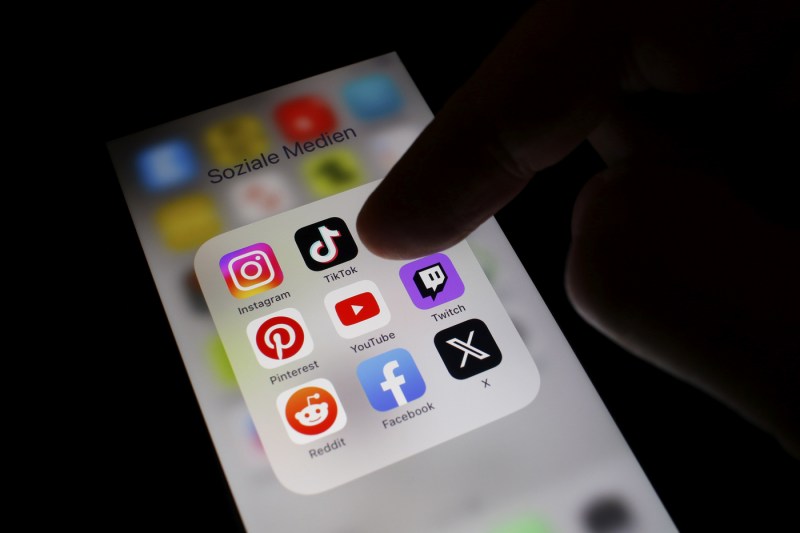
Social networks Photo: Christopher Tamcke / imageBROKER / Profimedia
The National Assembly of France on Monday approved with an overwhelming majority the key article of a proposed law that prohibits the use of social networks for people under the age of 15, a measure aimed at protecting the health of children and adolescents, supported by the government and President Emmanuel Macron, writes AFP, taken over by Agerpres.
The full text is to be adopted later this evening.
Deputies gave the green light to an amendment which states that “access to an online social service provided by an online platform is prohibited for minors under fifteen years of age”.
The article thus drafted, which provides for entry into force in September 2026, was adopted with 116 votes for and 23 against.
Another amendment, adopted by a narrow margin of votes, states that social network providers “guarantee that minors are not exposed to excessive commercial pressure” and prohibit “the promotion of products or services likely to affect the physical or mental health of minors” on social networks intended for minors.
The rapporteur of the bill, Laure Miller (Renaissance, centre-right), expressed her regret at the adoption of this latest amendment, which she considers “inconsistent with European Union law”, thus presenting the risk of being “rejected by the European Commission”.
An older project
As early as June 2025, President Emmanuel Macron has spoken out in favor of such a decision, claiming that he hopes to obtain a similar decision at the European level.
“I will give a few months to ensure mobilization at the European level. Otherwise, I will negotiate with the Europeans to be able to do this in France,” the French president said on Tuesday.
The government has launched a campaign to press other European countries to follow suit, with Digitalization Minister Clara Chappaz leading the charge.
There is a problem. “France cannot act alone because member states have lost most of their powers” in regulating social platforms, Thibault Douville, a professor of French digital law, told Politico.