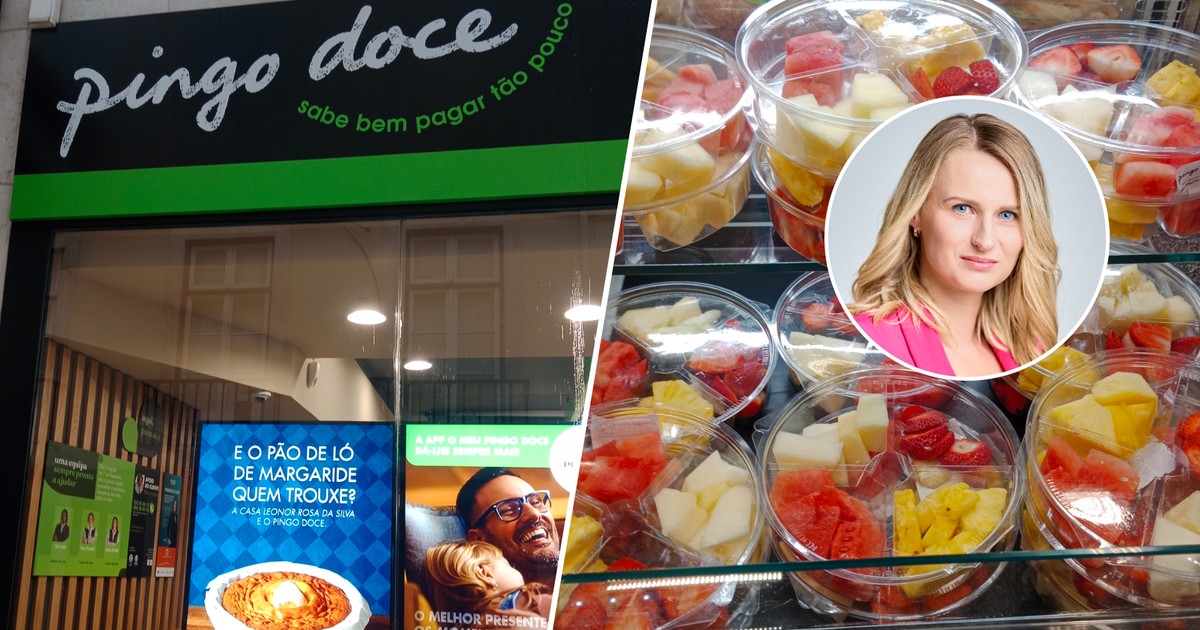
At first glance, everything looks familiar: shelves, store layout, quick shopping on the go. However, after just a few moments in Lisbon's Pingo Doce, it is clear that this is the case a completely different experience than in Poland. The differences concern not only the style of shopping, but above all prices – which, when converted into Polish zloty, can surprise both positively and negatively.
The video below shows what the interior of the Pingo Doce store in Lisbon looks like.
Everyday shopping at Biedronka is routine for many Poles: quick entry, a specific list and quick exit. What matters is price, promotion and efficiency. This time, however, this well-known pattern moves to Lisbon – and it quickly turns out that although the owner is the same, the shopping experience is completely different.
I found myself in the very heart of the old city Pingo Doce – a chain belonging to the Portuguese giant Jeronimo Martins. Theoretically, it is “the same family” as Biedronka. In practice – a completely different story.
Pingo Doce is theoretically “the same family” as Biedronka
|
Business Insider Poland
Read also: The free loan sanction threatens high costs. Borrowers lose in courts
For breakfast or lunch, go to the store
Even before visiting the store, I had the opportunity to visit the Lisbon area with a Polish guide (and Business Insider readers will soon learn her story), who said that for the Portuguese “breakfast is sacred”, so there are many places to eat this meal in this Iberian country. Even in the store. The Portuguese equivalent of the Polish Biedronka offers its customers not only a space for shopping, but also a cafe, a canteen (for eating meals heated on site) and even a restaurant. What's more, the guide assured that it is not an “embarrassment” to arrange a business lunch at Pingo Doce. The store I looked at didn't offer this option, but I know from the stories of editorial colleagues who visited Lisbon in previous years that in-store restaurants are common in other locations.
Prices at Pingo Doce can surprise you
|
Business Insider Poland
See also: Short-term rental. The tax office is changing the rules, big changes are coming
Prices at Pingo Doce. How much does shopping cost in Lisbon?
The most interesting element of the visit is the prices. With the euro exchange rate at approximately PLN 4.27, it is easy to convert Portuguese purchases into Polish realities – and you can quickly see where things are more expensive.
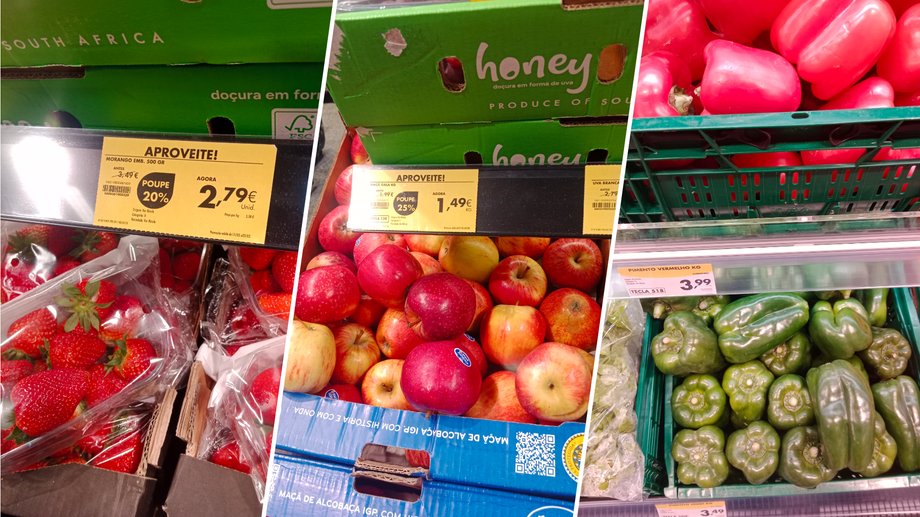
Already at the stand with vegetables and fruits the first surprise appears. A kilogram of apples costs 1.49 euros (approx. PLN 6.36), onions 1.39 euros (approx. PLN 5.94), and red peppers as much as 3.99 euros (approx. PLN 17.04). Strawberries on sale – EUR 2.75 per 500 g (approx. PLN 11.74), while the regular price reaches EUR 3.49 (approx. PLN 14.90). This is the level that for a Polish customer it may be noticeably higher.
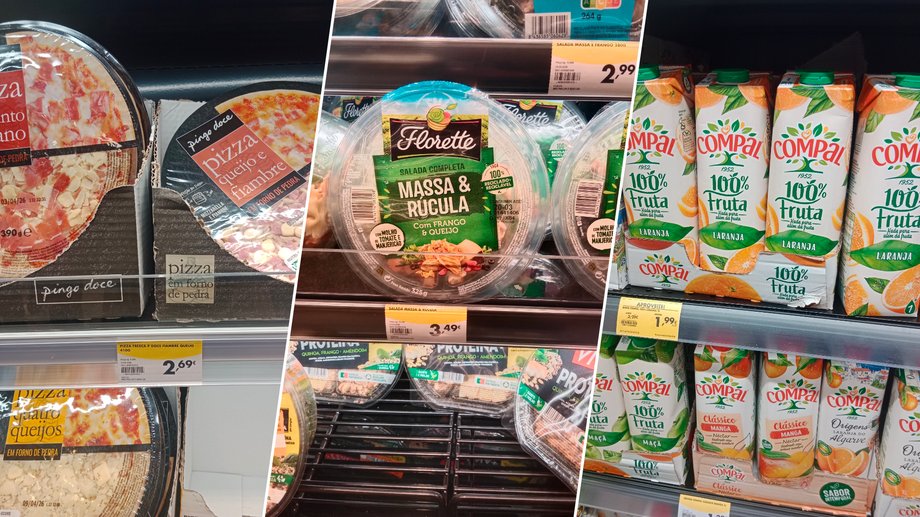
Things get even more interesting with finished products. A packaged sandwich costs EUR 1.39 (approx. PLN 5.93), a ready-made pizza costs EUR 2.69 (approx. PLN 11.49), and a baked chicken weighing approximately 450 g – EUR 3.58 (approx. PLN 15.29). In Poland, such products are still not standard in discount stores, and when they do appear, they often cost more.
An American salad (200 g) costs EUR 3.99 (approx. PLN 17.04), which may seem high – and you must remember that in Portugal, such products are part of the daily diet, not an occasional addition.
Prices in Portuguese Pingo Doce
|
Business Insider Poland
Worth reading: Apartment prices are rising faster in metropolises. The suburbs offer choices
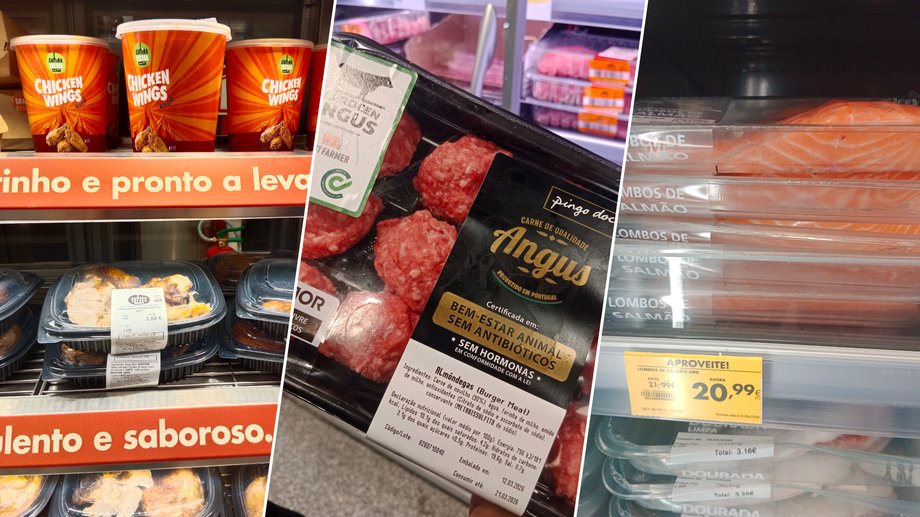
Meat and fish show a mixed picture. Minced meat (500 g) costs EUR 4.78 (approx. PLN 20.42), chicken fillet (approx. 491 g) – EUR 3.43 (approx. PLN 14.65). These prices are comparable or slightly higher than in Poland. In turn, salmon fillet for EUR 20.99 (approx. PLN 89.63) or shrimp for EUR 12.99/kg (approx. PLN 55.47) show that seafood is more affordable here than on the Vistula River.
Branded products are clearly more expensive. A Kinder Bueno bar costs EUR 2.19 (approx. PLN 9.35), and its regular price is even EUR 2.99 (approx. PLN 12.76). Nutella 200 g costs EUR 2.99 (approx. PLN 12.76), Lay's chips 150 g – EUR 1.69 (approx. PLN 7.22).
On the other hand basic products look more “Polish”. Milk costs 0.99 euros (approx. PLN 4.23), orange juice 1.99 euros (approx. PLN 8.50), and butter 2.99 euros (approx. PLN 12.76). Water for 0.5 liters costs EUR 0.50 (approx. PLN 2.14), and toilet paper (9 rolls) costs EUR 3.79 (approx. PLN 16.18).
It also deserves attention alcohol. A bottle of Ferreira port 0.75 l costs EUR 6.99 (approx. PLN 29.85), and Ballantine's whiskey 0.7 l – EUR 17.69 (approx. PLN 75.54). Local products are particularly favorable here.
The shelves are full of vegetables and fruits
|
Business Insider Poland
Read: Ostrówek Island in Kędzierzyn-Koźle. The 18th century fortress is looking for an investor
Pingo Doce vs Biedronka. Same roots, different price realities
Although both chains belong to Jeronimo Martins, differences are visible at every step. The discount model dominates in Poland – fast, functional, without unnecessary extras. IN Portugal's shop is part of the lifestyle.
Pingo Doce in the center of Lisbon does not resemble large, free-standing supermarkets. It is integrated into the old town, surrounded by cafes and restaurants. It's tight inside, sometimes crowded, but at the same time very lively.
Importantly, There is no pallet chaos known from Poland here. Instead, more emphasis was placed on aesthetics and product display.
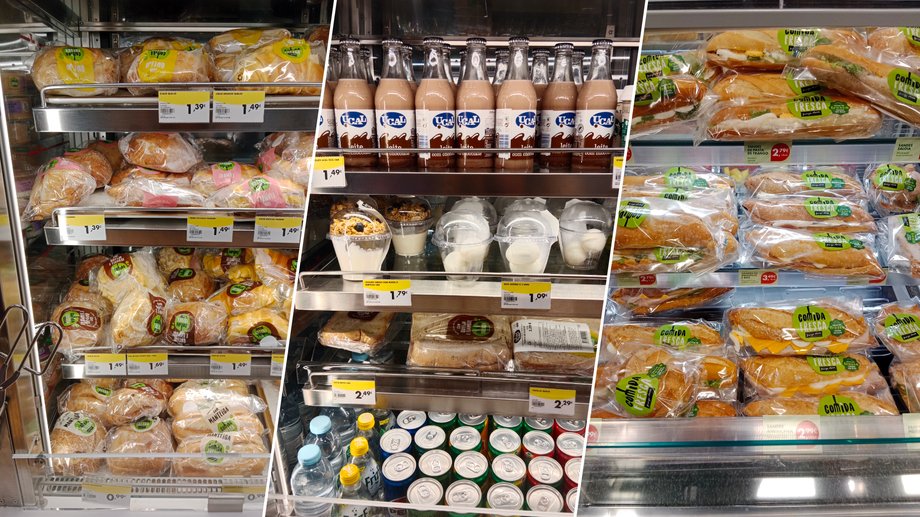
Pingo Doce offers a large selection of products ready to eat immediately on site
|
Business Insider Poland
Products and prices in Portugal. What is more expensive and what is cheaper than in Poland?
The store's offer clearly focuses on freshness. Vegetables, fruit, meat and fish look more like they come from a local market than from a discount store. A large selection of fruit – including ready-made fruit salads – is something that is still missing on a larger scale in Poland.
The infrastructure is also a plus. Many stores have fresh juicers and water dispensers for filling your own bottles. These are solutions that fit into a more “urban” and ecological approach to shopping.
The biggest difference, however, concerns how to use the store. In Portugal, Pingo Doce also serves as a meeting place. In Poland, shopping in a discount store is still mainly a task to be completed. In Lisbon – part of everyday life.
More than a shop. Shopping as part of everyday life
Walking between the shelves, it's hard to resist the impression that the pace of purchases is different. Less rush, more spontaneity. Some people stop for water (0.50 euro, approx. PLN 2.14), others do more shopping, and still others just stop for something to eat.
This makes it Pingo Doce is more than just a supermarket. This a hybrid of a shop and a city canteen — a place that responds to various needs at the same time.
And perhaps this is the most interesting thing about the whole experience. Because although formally it is still “Biedronka” – the same Jeronimo Martins group – in practice it is a completely different world of shopping. One that shows the direction in which trade can also go in Poland.