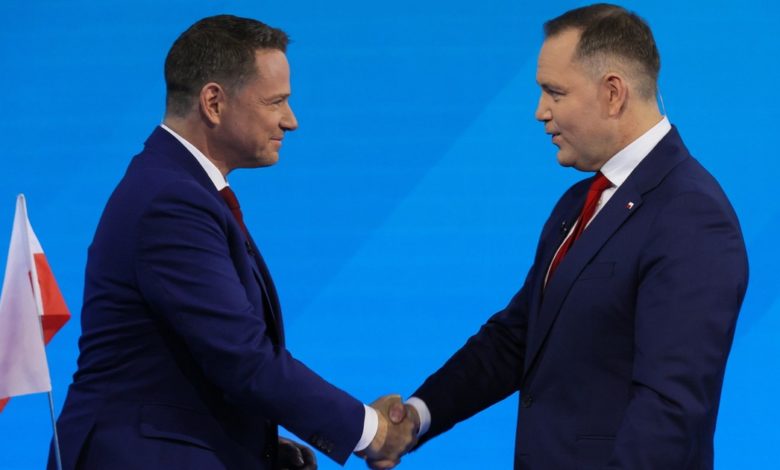
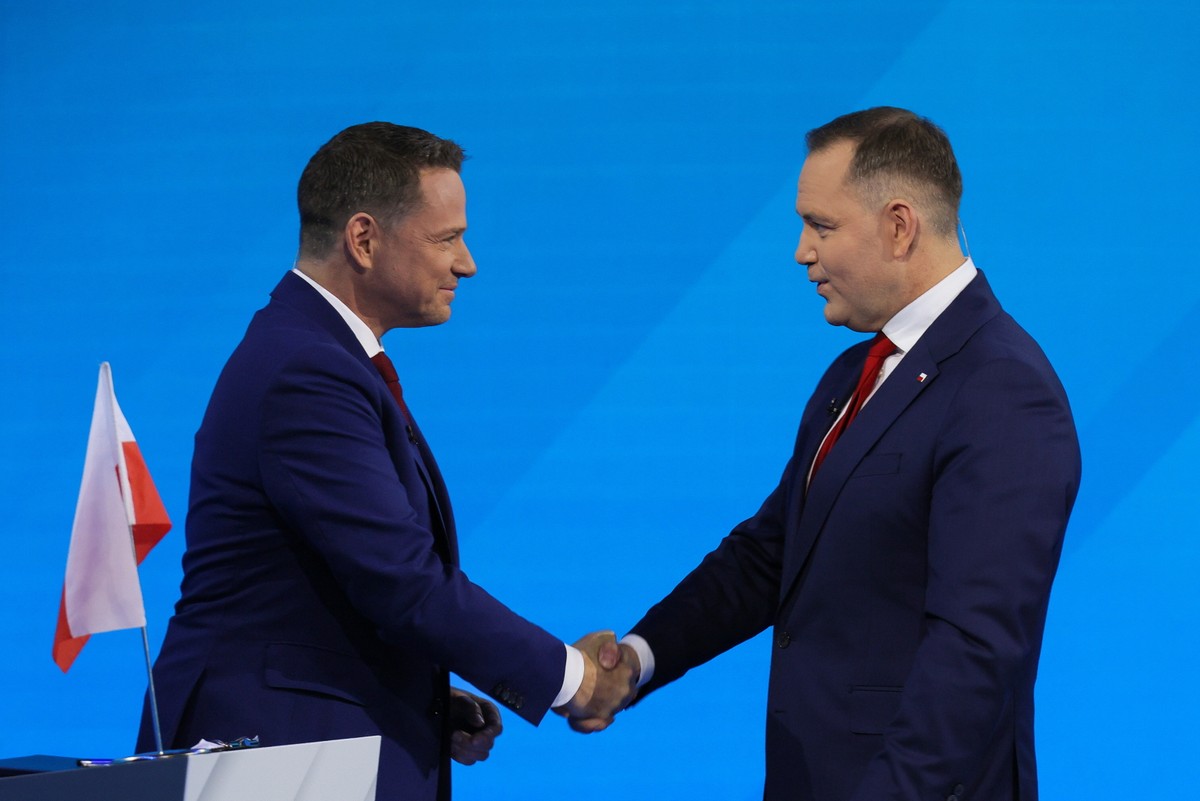
We are at the last simple race for the name of the President of Poland. The surveys to date show that the candidates are heading head. How can this choice affect the economy? The economists of the Credit Agricole bank have published a report in which they suggest that there are three key areas worth a deeper analysis. It is in them that Rafał Trzaskowski and Karol Nawrocki are significantly different.
It is worth noting, however, that from the point of view of assessing the potential impact of the results of the presidential election in Poland on economic perspectives, it is crucial to determine the role that the president plays in the Polish institutional system. Poland is a parliamentary democracy, hence The President's constitutional rights are limited.
Presidential election and judicial reform
The first of the areas is the reform of the judiciary, and in particular the way of appointing judges. As the Credit Agricole economists note Rafał Trzaskowski believes that the justice system requires urgent reform. He does not recognize the legality of judges appointed after 2017 via the politicized National Council of the Judiciary (KRS) and intends to take action to verify or annul these nominations in order to restore constitutional order.
“Its purpose is to rebuild the independent judiciary without undermining the certainty of the law for citizens” – we read.
On the other hand Karol Nawrocki did not provide specific reform proposals. He is in favor of developing a political consensus, and in the case of its absence until February 2026, he postulates a nationwide referendum in the direction of further reform of the judiciary. It is willing to maintain the status quo in relation to judicial nominations made after 2017.
See also: Act or constitutional judges? These projects threaten with a disaster [OPINIA]
“Until now, these reforms have been suspended due to the high probability of veto on the part of the outgoing President Andrzej Duda, supported by the main opposition party – Law and Justice. However, Poland has gained access to EU funds, provided that reforms strengthening the rule of law introduced. Hence the unknown is the unknown, as a possible winner Donald Tusk and the new president will be reacted by the European Commission, “economists indicate.
Add that Possible delays in the payment of EU funds would have a negative impact on economic growth and zloty exchange rate – especially in the context of the economic situation abroad and the low level of private investments, which would also have a negative impact on the perspective of Polish rating.
Presidential elections and tax policy
Tax policy is the second important area mentioned by CA experts. Rafał Trzaskowski announced that he would watch over the promise regarding the increase in the tax -free amount, referring to the doubling of the PIT -free income threshold announced by Donald Tusk, which is part of the parliamentary campaign in 2023.
Karol Nawrocki is a more definite supporter of lower taxes. Declares a reduction in the VAT rate to 22 %, introduction of 0 percent PIT for families with at least two children and lifting tax on capital gains. He also postulates constitutional security against the introduction of new property taxes (including catastral tax) and undertakes to oppose any increases in taxes incriminating citizens.
See also: PiS wanted to change taxes and lost power. Four years of Polish order
“In the light of these declarations, it should be assessed that The result of the presidential election is unlikely to be conducive to fiscal consolidation in the medium horizon. What's more, the pressure to loosen the fiscal policy in the years 2026–2027 will probably increase in the context of the upcoming parliamentary elections. It will be particularly strong in the case of Karol Nawrocki's victory, which could signal a decrease in support for the ruling coalition. Consequently, the presidential election increases the risk of relaxation of fiscal discipline in 2026–2027, which in the case of the presidency of Karol Nawrocki would probably be relatively high, leading to an increase in the profitability of long -term bonds” – experts assess.
Presidential elections and energy transformation
Energy transformation and climate policy are the third area of significant differences between the candidates. Rafał Trzaskowski is in favor of the reform of the EU green order and remains involved in achieving the goal of climate neutrality by 2050. He perceives climate policy as an opportunity to modernize the economy and the full use of EU funds. He supports a gradual departure from coal while providing social shields for miners and mining regions. He is a supporter of renewable energy sources (renewable energy) – including wind, sun and biogas – and emphasizes the importance of energy storage and modernization of the transmission network.
He believes that conducting energy transformation will reduce energy prices in Poland, increase its energy security and contribute to improving the health of citizens.
See also: The Union soothes the rigors of green order. We have expert comments
Karol Nawrocki, on the other hand, strongly opposes the green order and announces a nationwide referendum on its rejection. The EU defines the climate policy as harmful, using concepts such as “ecoterrorism” and “green madness”. He refuses to move away from coal and strives to maintain extraction as long as possible, modernizing coal power plants to reduce emissions. It does not present specific purposes regarding renewable energy, instead proposing to immediately reduce energy bills for households by a third, financed from income from the EU ETS auction.
“It can be expected that the presidency of Karol Nawrocki would result in a veto of key acts regarding energy transformation – such as the Wind Energy Act on land. This would probably have negative effects on the use of EU funds, economic growth and gold exchange rate” – predicts CA.
Presidential election. Influence on the economy
“We believe that the victory of Karol Nawrocki would lead to tension between the president and the government, resulting from the divergent visions of the judicial reform, tax policy and energy transformation. In our opinion, the markets have already largely discounted the scenario of the victory of Rafał Trzaskowski. fiscal, which in the long run would probably translate negatively into bond prices and a zloty course, “economists sum up.