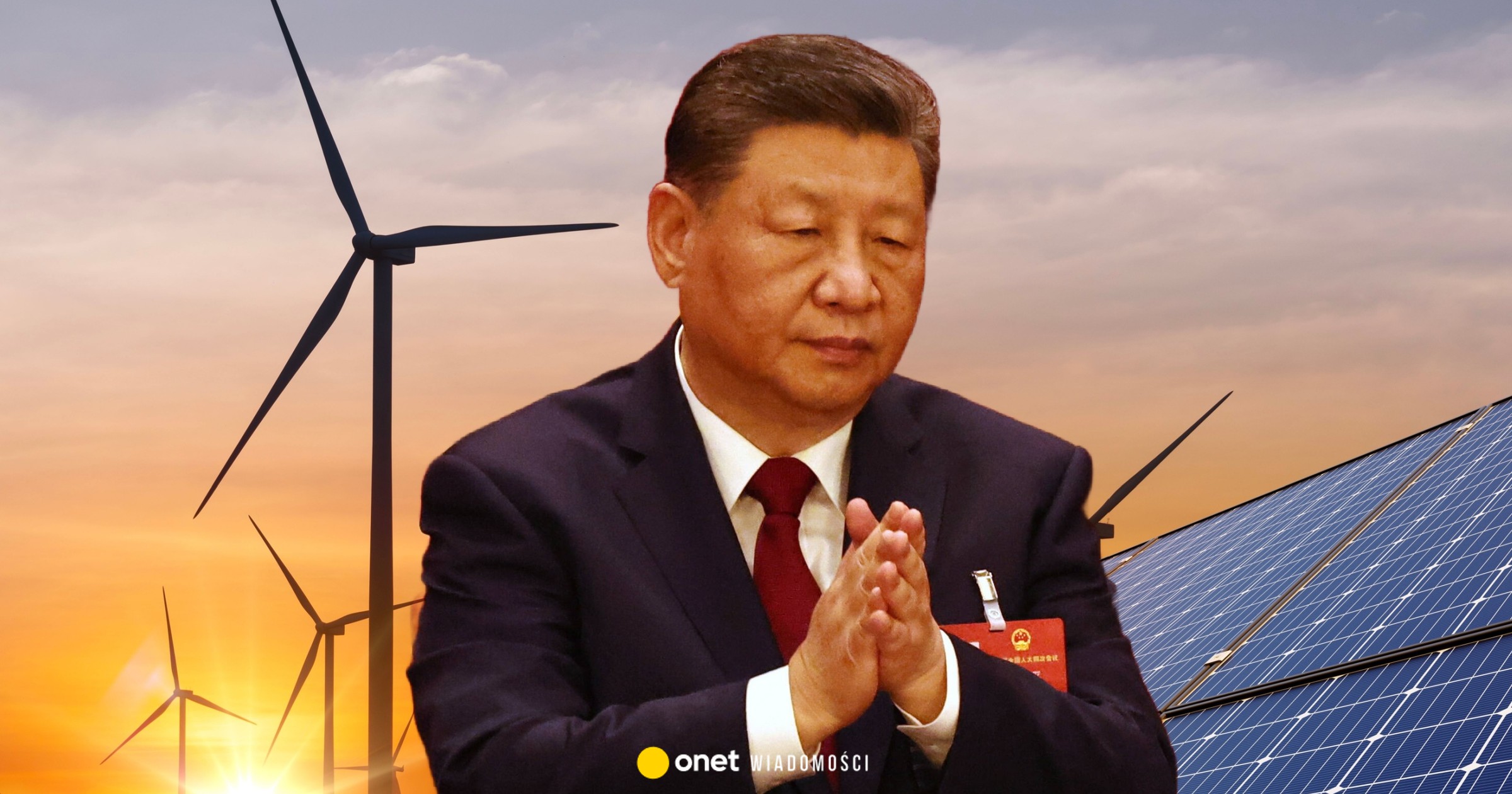
The global energy system is once again under pressure. This time it's not just about prices, but about the stability of supplies as such. The conflict in the Middle East has disrupted operations one of the world's most important trade routes, and a sharp decline in oil exports from the region has caused uncertainty across Asia. It's a painful awakening for many countries – energy is no longer a given. It becomes a strategic weakness.
In this context, China stands out from the rest of the region. While many economies are forced to make immediate cuts and savings, Beijing still has a lot of room for maneuver. This is not a coincidence. President Xi Jinping has long been pushing for the country to have energy in its own hands. The current situation shows that this strategy was not just a political slogan.
A billion-dollar cushion in case of a crisis
In recent years, China has accumulated significant reserves of energy raw materials and diversified supply sources. Commercial oil reserves on the continent alone amount to 851 million barrels, to which should be added strategic reserves. In total, this gives a huge “safety cushion”which gives Beijing time and freedom to act while other countries immediately feel shortfalls. Only in January and February this year, Beijing bought 16 percent. more oil than last year.
At the same time, China is able to maintain supplies also from less standard directions – e.g. from Iran. More than 80 percent goes to China. Iranian exports, a the flow of oil continues despite the conflict. Iranian Foreign Minister Abbas Aragchi described the Strait of Hormuz as open “only to us and our allies”, which shows that energy is becoming a tool of geopolitics.
Abbas Aragchi, Iranian Minister of Foreign AffairsERDEM SAHIN / PAP
To this should be added the flexibility of Chinese tankers and quick reactions of the state, which in a crisis situation can prioritize the domestic market. State refineries have already been ordered to temporarily suspend fuel exports to maintain stable prices on the domestic market. China's total reserves are estimated to be between 900 million and 1.4 billion barrels, equivalent to roughly three months of imports.
A unique energy mix
China's resilience is also because they use oil and gas differently than most Asian countries. Most imported oil from Iran and the Middle East is used in the southern part of the country – mainly for transport and industry. Meanwhile, the north of China is supplied primarily from domestic production and Russian oil flowing through pipelines. And these sources are not threatened by conflict in the Middle East.
Oil from Russia accounts for almost a fifth of China's imports, making Moscow its largest supplier. Coal, however, remains the dominant source of electricity and is mined locally – China produces over half of the world's coal. Combined with the fact that oil and gas make up less than a quarter of China's energy mix, the country is not as reliant on imports as Europe or the US.
China consumes 15 to 16 million barrels of oil a day, most of which goes to the transportation sector. Although foreign supplies are crucial, diversification—from Iran and Saudi Arabia to Russia—mitigates the effects of interruptions. This explains why China is able to keep its industries running even as the rest of Asia struggles with fuel shortages.
The green path to energy independence
China's energy resilience is not just about oil. The country is investing heavily in a “supergrid” – an extensive electrical infrastructure that connects renewable energy sources and distributes it efficiently between regions. China has become a world leader in green technologies: wind, solar, water and nuclear will already produce over one third of the country's electricity in 2025. Currently, generation capacity from renewable energy sources accounts for more than half of the installed capacity.
As energy economist Roger Fouquet emphasizes, “China's ambitious transformation towards renewable sources is not only a step towards environmental protection, but also securing the economy against global riskswhich we see during the conflict with Iran.” In his opinion, the country “in some sense was lucky to start investing in renewable sources 25 years ago – today it is reaping the fruits of that.”
The article continues below the video
Electric car owners in Beijing are virtually unaffected by price fluctuations caused by the situation in the Middle East. The combination of vast reserves and rapidly growing renewables gives China a unique ability to respond to shocks – minimizing short-term impacts and strategically planning for the future, while others only put out current fires.
Importantly, although a significant portion of oil still comes from the Middle East, the combination of renewable sources and technological advantages means that China is more resilient than most of the region. The current crisis could further accelerate this trend, including the drive to peak emissions by 2030 and carbon neutrality by 2060.
A new geopolitical dilemma
However, the energy transformation brings new challenges. Moving away from fossil fuels towards renewable ones can create a paradox a new kind of dependence — this time on China. Today, this country dominates the production of key technologies, from solar panels to electric cars, which raises concerns especially in Europe and among US allies.
It is no wonder that trade disputes between China and the European Union are increasingly focusing on green technology sectors. China's restrictions on the export of critical raw materials are also raising tensionsnecessary for the energy transformation. For many countries, a new dilemma arises: to reduce dependence on oil, but at the same time to become even more dependent on Chinese technologies.
However, the green transformation has undeniable advantages. In addition to its environmental benefits, it enables local energy production and reduces vulnerability to global supply disruptions. Unlike oil or gas this infrastructure can operate for even decades without dependence on geopolitically unstable regions.
There are no simple solutions for energy-dependent countries. Diversification remains the best strategy — combining various sources and technologies, which helps minimize risks on both sides.
I’m Ashley Davis as an editor, I’m committed to upholding the highest standards of integrity and accuracy in every piece we publish. My work is driven by curiosity, a passion for truth, and a belief that journalism plays a crucial role in shaping public discourse. I strive to tell stories that not only inform but also inspire action and conversation.