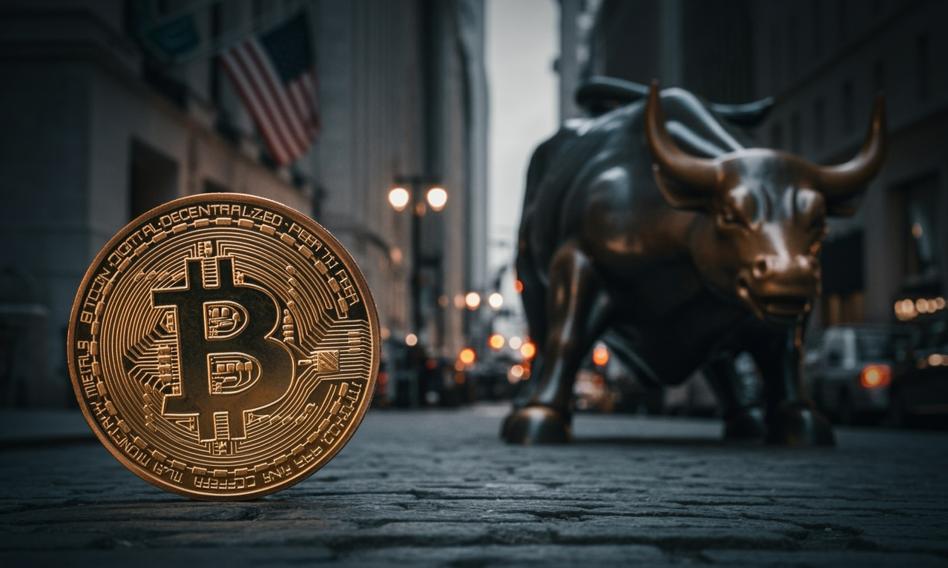
Wall Street is constantly watching the war in Iran, the market and economic consequences of which will be felt much longer than the conflict itself. At the same time, capital is looking for new growth opportunities, and bitcoin remains one of the most frequently mentioned options. In the face of growing uncertainty and geopolitical turmoil, the biggest names in the financial sector are reminding excited investors about the fundamental rules of the market game.
Rob Kapito: Assuming everything will end well is a mistake
The price of oil could reach the ceiling of USD 150 per barrel even if the war of the United States and Israel against Iran ended tomorrow, says Rob Kapito, one of the heads of BlackRock, the world's largest asset management company. Supply chains have already been destabilized and it will take some time before they return to normal functioning.
– What if the disruption lasts a week, six months, a year, what will that mean for my businesses? – Kapito asked rhetorically during the Asia Pacific Financial and Innovation Symposium in Melbourne, Australia.
“What worries me the most is that people don't even consider it, they just assume that everything will turn out fine,” the BlackRock manager added.
In the past, when similar conflicts occurred, investors en masse bought short-term US treasury bonds and bet on declines in the stock market. Meanwhile, since the beginning of the war, American stocks have fallen by less than 5%, gold has fallen by 15%, and American bonds, which in theory should constitute a safe haven and ensure the balance of the portfolio, have also fallen.
Bernstein: Bitcoin's market structure is maturing
The Bernstein company, which advises wealthy clients on wealth management, is convinced that bitcoin's declines have already reached a hard bottom and that the market is poised for a clear upward rebound.
“Bitcoin will continue to outperform other asset classes, with growth driven by strong demand from institutional investors through ETFs that have maintained interest in the face of a market correction, as well as new 'access points' created by financial institutions offering cryptocurrency-related services,” Bernstein analysts say.
ETF fund managers currently control 6.1%. total bitcoin supply, which is a clear and positive signal.
– The structure of the Bitcoin market is maturing – analysts emphasize.
Market estimates show that 60 percent Bitcoins haven't been touched for over a year. This indicates the existence of a large, volatile long-term investor base, which helps cushion volatility during periods of sudden sell-offs. Analysts assume that by the end of 2026 the price of the largest cryptocurrency may reach PLN 150,000. USD, and if the bull market is prolonged, even the level of 200,000 becomes realistic at the end of 2027. USD.
Lloyd Blankfein: At some point, verification has to come
Lloyd Blankfein is the former CEO of Goldman Sachs who guided the bank with a steady hand through the turbulent waters of the 2008 global financial crisis. Today, an experienced banker warns against the growing risk in the private debt market.
– The analogy I like to use is the accumulation of fallen leaves on the forest floor and the spark that eventually appears. The longer the intervals between sparks starting a fire, the more flammable litter will accumulate, Blankfein illustrated the situation.
Private debt accumulates on investors' balance sheets and is most likely highly overvalued. A single review of the valuation of new assets can trigger a dangerous chain reaction.
“At some point, there has to be circumstances or a crisis that ultimately forces you to look at what your assets are actually worth,” Blankfein said on Bloomberg Television.
Bank of America: The dollar will remain strong for now, then gradually depreciate
According to the latest forecasts from Bank of America, the American currency will maintain its strength in the near future. In the wake of the US and Israel's war against Iran, strategists have updated their predictions for major currency pairs. They expect the EUR/USD rate to be 1.14 and USD/JPY to stabilize around 160 at the end of the second quarter.
The Iran conflict has clearly changed short- and medium-term prospects. The institution points out that the dollar still has room for appreciation, especially in relation to the currencies of countries strongly dependent on imports of energy raw materials.
Expectations towards the policy of central banks have also changed. In the US, monetary policy is expected to tighten by 10 basis points, while the remaining G10 central banks are expected to increase interest rates by two to four.
– Whether these expected increases ultimately take place or not, it will not matter much for the currency market, at least until mid-year – say the bank's strategists.
Later, however, the dollar will experience a weaker period.
– We forecast a gradual depreciation of the dollar in 2026 – say analysts, assuming that the EUR/USD rate will reach 1.20 at the end of the year. However, the condition for the implementation of this scenario is long-term normalization on energy markets.
Larry Fink: Market presence matters more than entry time
Larry Fink, CEO of BlackRock, used his annual letter to remind investors of some fundamental and timeless laws that govern the stock market.
– In the long run, the mere presence on the market was much more important than hitting the perfect entry point – wrote the head of BlackRock.
“Some of the best days in the market have come right after the most terrifying news,” Fink recalled.
He pointed out that over the last two decades, the capital invested in the American S&P 500 index has increased eightfold. However, if the investor missed the 10 best sessions during this period, his profit was halved. This cautionary tale comes at a time of great uncertainty and an unprecedented flood of negative headlines.
– The danger is that we focus so much on market noise that we forget about what is really important. The forces shaping today's headlines have been accumulating for a very long time. The old model of global capitalism is breaking down. Countries spend huge resources to achieve strategic self-sufficiency in energy, defense and technology, concluded the manager.
Fink also referred to the potential impact of artificial intelligence on deepening social inequalities.
– The enormous wealth created by previous generations went largely to people who already owned significant financial assets. Currently, artificial intelligence threatens to repeat this trend on an even larger scale, warned the president of BlackRock.