On Wednesday, the American stock exchange welcomed investors with an unexpected sight: a simultaneous jump in the prices of Intel and AMD shares. It did not result from the fact that these companies simultaneously announced any new accelerators or from signing an agreement with OpenAI, Anthropic or any other popular company related to the development of artificial intelligence. It was the result announcements of a large increase in interest in their historic businessi.e. classic processors, which is expected to translate into shortages and rising prices of their products.
One of the catalysts for this reaction, paradoxically, was a conference organized by the most important competitor of Intel and AMD on the processor market, i.e. Arm, whose shares rose even more on the same day. Arm is known primarily for licensing its intellectual property, which is now found almost everywhere – from simple washing machine microcontrollers, through smartphones and portable computers, to server rooms. During his presentation However, Rene Haas, the head of Arm, announced that the company will sell not only licenses, but also ready-made chips for data centers.
Arm is no longer just a license seller and is also starting to sell ready-made server chips.
He said then that “people thought CPUs were dead” and “we need more and more CPUs.” It also assumes that CPU sales in 2031 will bring Arm $15 billion. revenue. Where do these assumptions come from? They are influenced not only by the increase in demand for servers, which has been talked about for a long time, but also by fundamental change in the chip structure of servers. Rene Haas pointed out that new servers are built to support AI agents will have up to four times more classic processor cores than previous AI servers. This means that not only are more data centers being built than ever before, but each of these data centers will need more processors.
This new trend has been talked about for some time. AMD talked about the unprecedented demand for server processors during its financial report. At the beginning of March, Dave Zinsner – Intel's CFO – said that “CPUs have become cool again”. During the GTC conference, Nvidia announced its new server processors and that it would sell entire systems filled only with processors, because they have become necessary in the new AI reality.
This is confirmed by virtually all analysts and engineers close to AI. The increase in the popularity of AI agents and the shift of computing power from training language models, which depends mainly on the performance of accelerators and to a small extent on the CPU, to inference, i.e. the use of models in practice, has increased the demand for classic processors many times over.
It is now so large that the Nikkei Asia report mentions: another type of chip shortagewhich already entails longer waiting times for orders to be fulfilled and is expected to result in an increase in the prices of AMD and Intel processors. This means that the signs of renewed interest in processors were already visible earlier, and the Arm conference and the Nikkei report made it more realistic.
The processor market is more competitive than ever before
It remains an open question who will ultimately benefit most from this trend. The problem for Intel and AMD, which has been dampening investor enthusiasm for a long time, is the inconvenient fact for these companies that their largest customers become their main competitors. Amazon, Google, Microsoft – these hyperscalers have been designing and implementing their own server processors using licenses from Arm to varying degrees for several years.
Nvidia also creates its own CPUs and they are often the first choice for companies implementing its accelerators. Now Arm has joined the list of AMD and Intel's competitors, and its new processors are to be delivered, among others, to Meta's data centers. The results of these structural changes in the CPU market are already visible – although Intel and AMD are selling record numbers of server processors, their sales are growing slower than overall chip sales of this type. In other words, the percentage share of Intel and AMD processors in the server market, which was almost 100% a decade ago, has been decreasing for some time and it is currently difficult to predict how this journey will end.
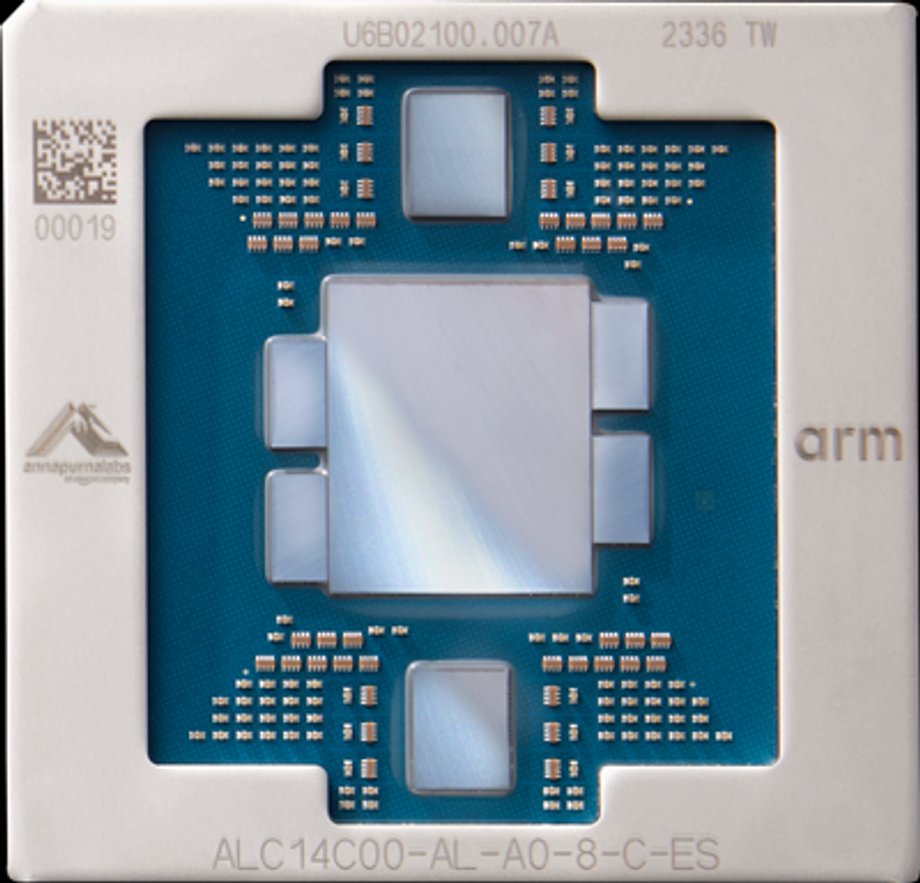
Amazon has been developing a family of its own data center processors called Graviton for years. Other hyperscalers followed AWS, thus becoming competition for Intel and AMD.
Intel and AMD with a huge opportunity
However, in the short term, the situation for Intel and AMD looks very good. We live in times of chip shortage and technological arms race. In practice, this means that it often matters less about whose chips are the best or most profitable and much more about who can sell enough of them fast enough.
Advantage Intel in these conditions is that has its own factories for chip production and packagingso it doesn't have to fight for TSMC's limited resources. There may be some doubts about the condition of the mentioned factories and the new production processes launched in them, because for various reasons Intel currently produces significantly fewer chips than it would like. Without a doubt, the current market situation is a dream opportunity for Intel.
Whereas AMD it does not have its own semiconductor factories, so it depends on TSMC, but when designing its latest generation of processors, has made some strategic decisions that may pay off significantly and put this company in a much better position than the growing market competition.
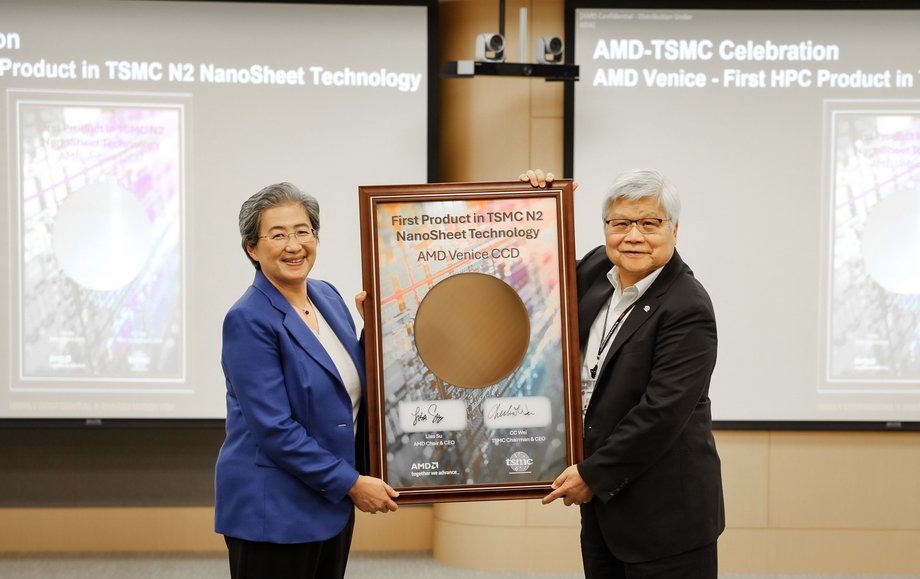
AMD is one of the first buyers of the production capacity of TSMC's 2-nanometer factories. This is the first situation of this type in years.
The general rule in the world of semiconductor manufacturing is that when TSMC, Samsung, or Intel first implement a new generation of chip manufacturing processes that enable the creation of smaller transistors, they usually produce smaller chips first.
This is because these processes are imperfect to begin with and are more likely to produce defects that increase the chances that the manufactured chip will not work. It is easier to accept the need to reject a damaged 100 mm² chip that would go into a smartphone than a giant 800 mm² chip that would go into an AI accelerator costing thousands of dollars. That's one of the reasons why we saw the first iPhone with a 3nm processor in 2024, and we won't see the first 3nm Nvidia accelerators until this year.
However, AMD did something we haven't seen for years and the company's latest server processors, codenamed Venice will be one of the first chips to use TSMC's brand new 2nm technology process. AMD therefore does not have to compete with dozens of companies fighting for access to TSMC factories supporting the 3-nm process, which are largely reserved for Nvidia anyway. Instead, it uses production lines that it will only share with Apple.
Of course, this decision involves a lot of risk. The new technological process may simply be poor and TSMC may not be able to produce enough working chips, which could turn sharing factories “only” with Apple into sharing “all” with Apple. There are also many other things that can go wrong – after all, there are reasons why for many years smartphone chip producers, i.e. Apple and previously Huawei, have led the way in new semiconductor factories. However, this risk, as with Intel, is also a huge opportunity for AMD.
Many unknowns, one certainty After a day of enthusiasm, AMD and Intel shares began to decline, while Arm shares held steady.
|
Stooq, own study
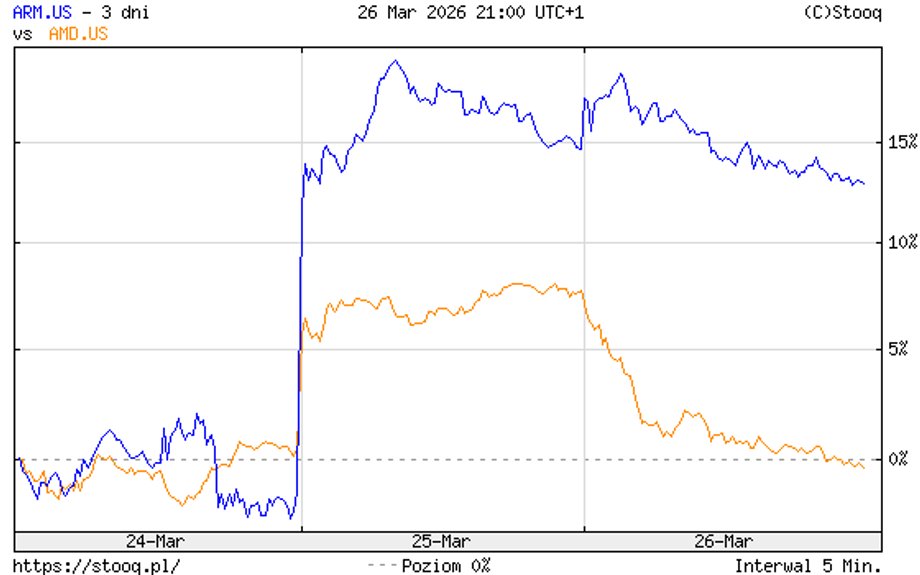
For now, the undeniable fact is the visible trend of increased demand for CPU, which has gained momentum thanks to the popularization of AI agents. The growing importance of ARM processors is also undeniable – both the newly announced ones manufactured by Arm and those using the ARM architecture developed by it. So although the market position of AMD and Intel looks promising in the short term, it remains to be seen whether they will be able to take full advantage of this opportunity.
For now, the only certainty is that consumers must prepare for the effects of another type of chip shortage on their wallets.
Read also: Doomed to the cloud? Keeping your data private is becoming increasingly difficult