Polish industry increases ammunition production. The goal is 200 thousand missiles per year in 2028

2025-11-01 16:00
publication
2025-11-01 16:00
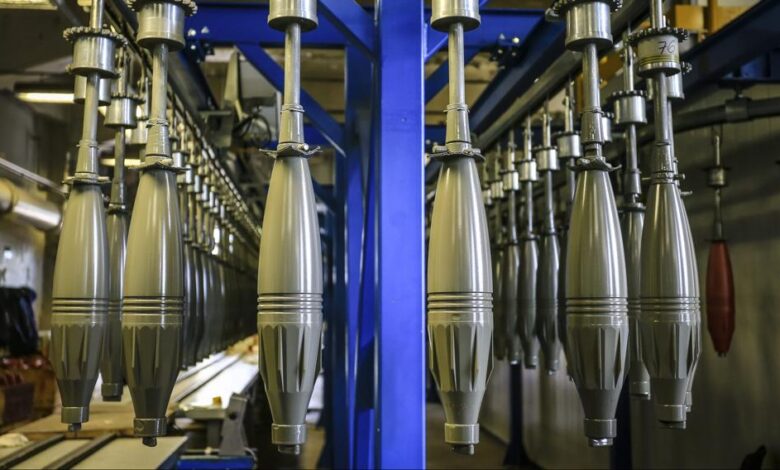
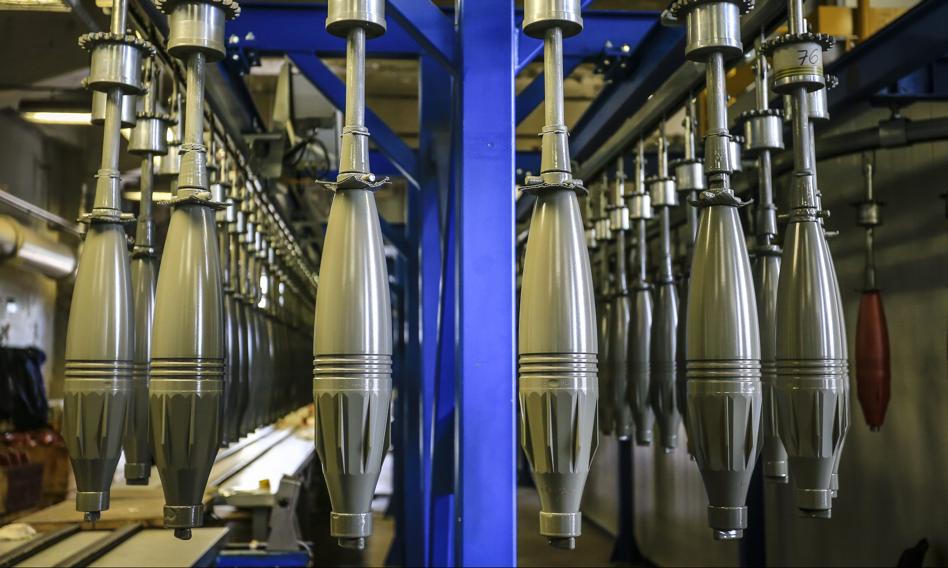
A radical increase in the production of artillery ammunition, especially 155 mm caliber, is currently one of the key tasks of the Polish defense industry, primarily the state-owned PGZ. In 2028 – according to the government's declaration – Poland is to produce approx. 200,000. such bullets per year.
Production up
A radical increase in the production of 155 mm ammunition – the basic caliber of artillery of NATO countries, needed, among others, for Krab and K9 gun howitzers – this is currently a key task of the Polish armaments industry, related to, among others, with conclusions regarding the enormous consumption of this type of ammunition by both sides during the fighting in Ukraine.
This concerns the daily consumption of several to several thousand bullets, and – as the deputy head of the Ministry of National Defense, Cezary Tomczyk, informed in July – in 2023, the production of 155 mm artillery ammunition in Poland was at the level of several thousand bullets per year.
The low production volume was related to, among others, with the fact that 155 mm ammunition is a relatively new weapon used in the Polish Army – the first equipment using this type of ammunition are the Krab howitzers, which entered service in 2016. Previously, the basis of Polish barrel artillery were post-Soviet guns of smaller calibers, not adapted to the NATO standard. Currently, however, artillery compliant with NATO standards – i.e. Krabs and South Korean K9 howitzers – are becoming more and more popular in the Polish army.
Increasing production capacity to several hundred thousand missiles per year is the goal that was set for the Polish Armaments Group in this situation. and its member companies producing ammunition and explosives – Nitro-Chem Chemical Plants in Bydgoszcz, MESKO in Świętokrzyskie, as well as Belma in Bydgoszcz, Dezamet in Nowa Dęba and Gamrat in Jasło. Private entities are also trying their hand in the industry, such as Grupa Niewiadów and Grupa WB, which is developing its competences primarily in the field of building missiles.
Co-financing for ammunition producers
In August, in Bydgoszcz – where Nitro-Chem, one of the world's largest producers of TNT, is located – Prime Minister Donald Tusk announced that this year the production of artillery ammunition in Poland will amount to approximately 30,000, and in two years it will be 200,000. bullets. Ultimately, the annual production of missiles in Poland is to exceed one million.
The rapid increase in the production capacity of the Polish armaments industry, when it comes to artillery ammunition, will be facilitated by co-financing of producers. For this purpose, a special act was passed last year, under which PLN 3 billion was allocated for this purpose – PLN 2 billion from the Ministry of National Defense budget and one billion from RARS assets. These funds went to the Capital Investment Fund managed by MAP. Companies wishing to expand their production capacity then submitted applications for funding.
In July Polish Armaments Group presented a concept according to which three new ammunition factories would be built; the entire project is to involve the modernization of existing plants and the construction of new ones. The first of the planned factories is to be responsible for the production of missiles in the current technology with existing partners, assuming a significant increase in production capacity to 100,000. pieces per year.
The second factory, as reported by PGZ, will be focused on the production of a new generation of shells for gun howitzers, including Krab and K9, in an amount of up to 80,000. pieces per year. The third factory, in turn, is to be a center responsible for the production of a new generation of powders and charges for large-caliber ammunition.
At the same time, the Ministry of Financial Assets announced the signing of agreements to co-finance ammunition producers. By their power to Dezamet SA over PLN 1.3 billion will go to expand the production potential of 155 mm large-caliber ammunition, and Mesko SA – to increase the production capacity of 155 mm bodies – will receive over PLN 887 million. Nitro-Chem SA can count on over PLN 113 million for the purchase of technological lines for ammunition reloading, and Gamrat sp. z o. o. on over PLN 66 million for the construction of installations and production of gas generators.
Cooperation with foreign countries
In addition to the expansion of factories, the issue of acquiring the technology needed to produce modern ammunition has become crucial – including: production of the so-called multi-base powders. For this purpose, Polish companies had to start cooperation with foreign partners; Dezamet has established cooperation with the British concern BAE Systems, and Mesko with the French Eurenco.
Under Meska's agreement with Eurenco, the French concern is to transfer technology to Poland – for the production of 155 mm modular charges and supplies of raw materials needed for this purpose. Ultimately, 600,000 are to be created. loads per year.
On Wednesday, in Kraśnik in the province A ceremonial laying of the foundation stone took place in the Lublin province of one of the three new ammunition factories, which will also be part of the Mesko company. As Deputy Prime Minister and Head of the Ministry of National Defense Władysław Kosiniak-Kamysz said during the ceremony, this investment means “obtaining full capacity to produce 155 mm bullets within 2 years.” As he said, production – currently approximately 30,000. missiles per year – it will ultimately increase by 3.5 thousand percent.
MESKO in Skarżysko is a manufacturer of ammunition, including missiles, belonging to the Polish Armaments Group – it is one of the most famous Polish arms companies. It produces, among others: Piorun anti-aircraft launchers, which have been purchased by other European countries in recent months. (PAP)
mml/mro/lm/