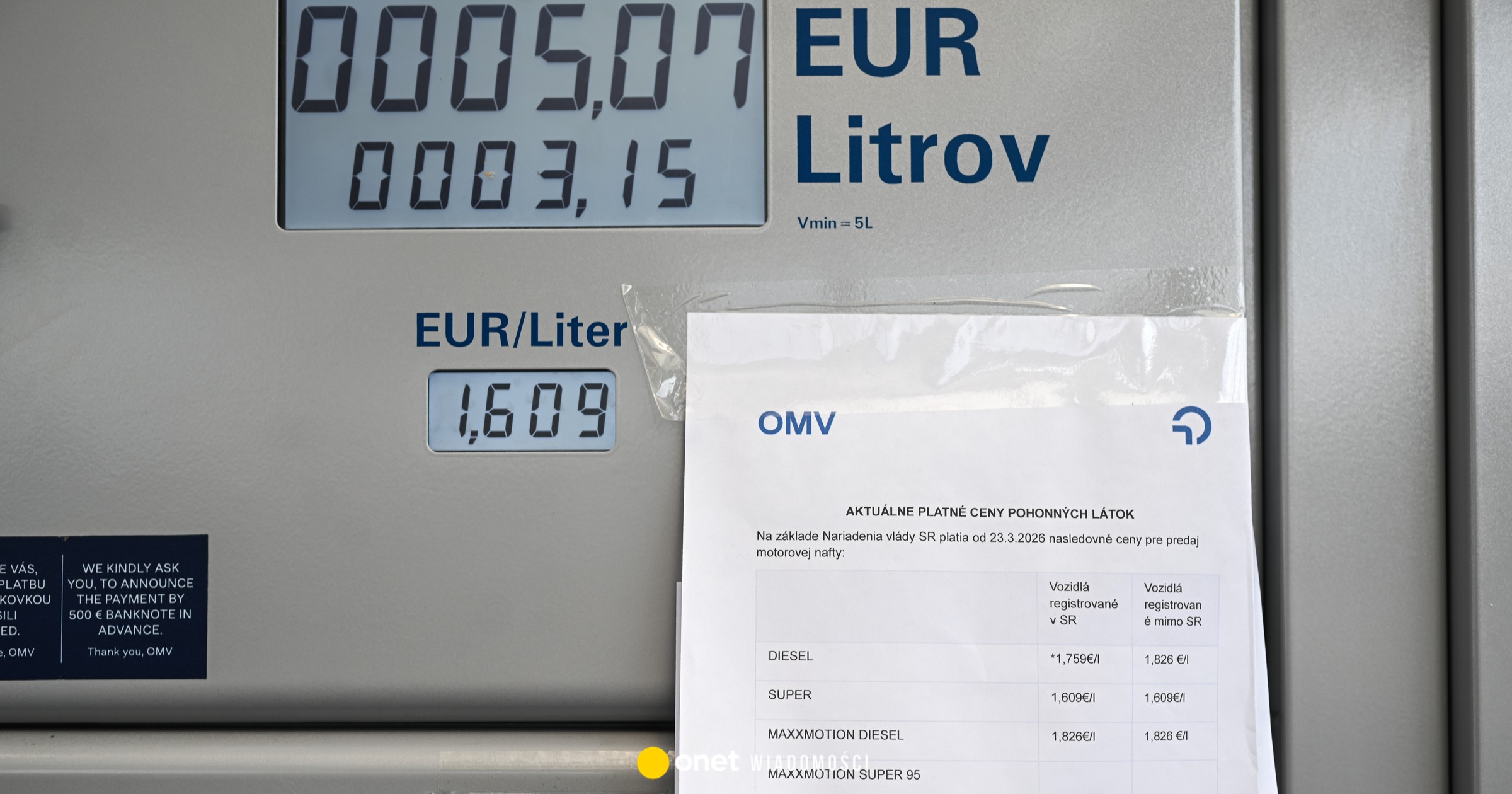
The Slovak government has introduced controversial regulations that make the price of diesel dependent on the country of vehicle registration – foreign drivers pay significantly more than locals. In practice, this means, among others: higher prices for drivers from Poland, who often refuel at the southern border. Officially, it is supposed to be a response to the fuel crisis and a way to protect national resources, but the solution has raised serious legal doubts from the very beginning.
Sound familiar? Hungary has already tried a similar trick – and quickly found out how such a game with Brussels ends. Slovakia is now entering the same path, although Europe already knows the end of this story.
Drivers whose vehicles are registered outside Slovakia pay 1 euro 83 cents (approx. PLN 7.90) per liter of diesel fuel. This price was set as the average of the prices in force in the Czech Republic, Poland and Austria.
In turn, domestic drivers fill up at standard market prices, which are currently lower by approximately 20-30 eurocents (i.e. by approximately PLN 85 -PLN 1 and 30 cents per liter).
A man fills a plastic canister at a gas station in Tvrdosin, Slovakia, March 24, 2026.Anadolu / Contributor / Getty Images
The government adopted these fuel-cutting measures last week, and they came into force on Monday. In addition to higher prices for foreign drivers, a single refueling limit has also been introduced – a maximum of EUR 400 (approx. PLN 1,730), which corresponds to approximately 220-260 liters of fuel.
Additionally, the export of diesel oil from Slovakia and refueling in containers larger than 10 liters are prohibited.
Special refueling rules (i.e. higher prices) for owners of vehicles registered outside Slovakia are contrary to European Union law, specifically the prohibition of discrimination based on country of origin
– explains Juraj Paulus from the Taylor Wessing law firm.
As the lawyer adds, quite literally a textbook example of discrimination — in an identical situation, two groups are treated differently.
He also emphasizes that foreign drivers have no real possibility of changing this situation on an ongoing basis, but they may have a good chance of seeking compensation for violations of EU law by Slovakia.
The article continues below the video
“We are dealing with a crisis situation”
The key question – according to the lawyer – is how long the system of double fuel prices will last and whether the European Commission will decide to initiate formal infringement proceedings (so-called infringement), even if the regulations cease to apply.
Such procedures conducted by Brussels usually take a long time – sometimes even years.
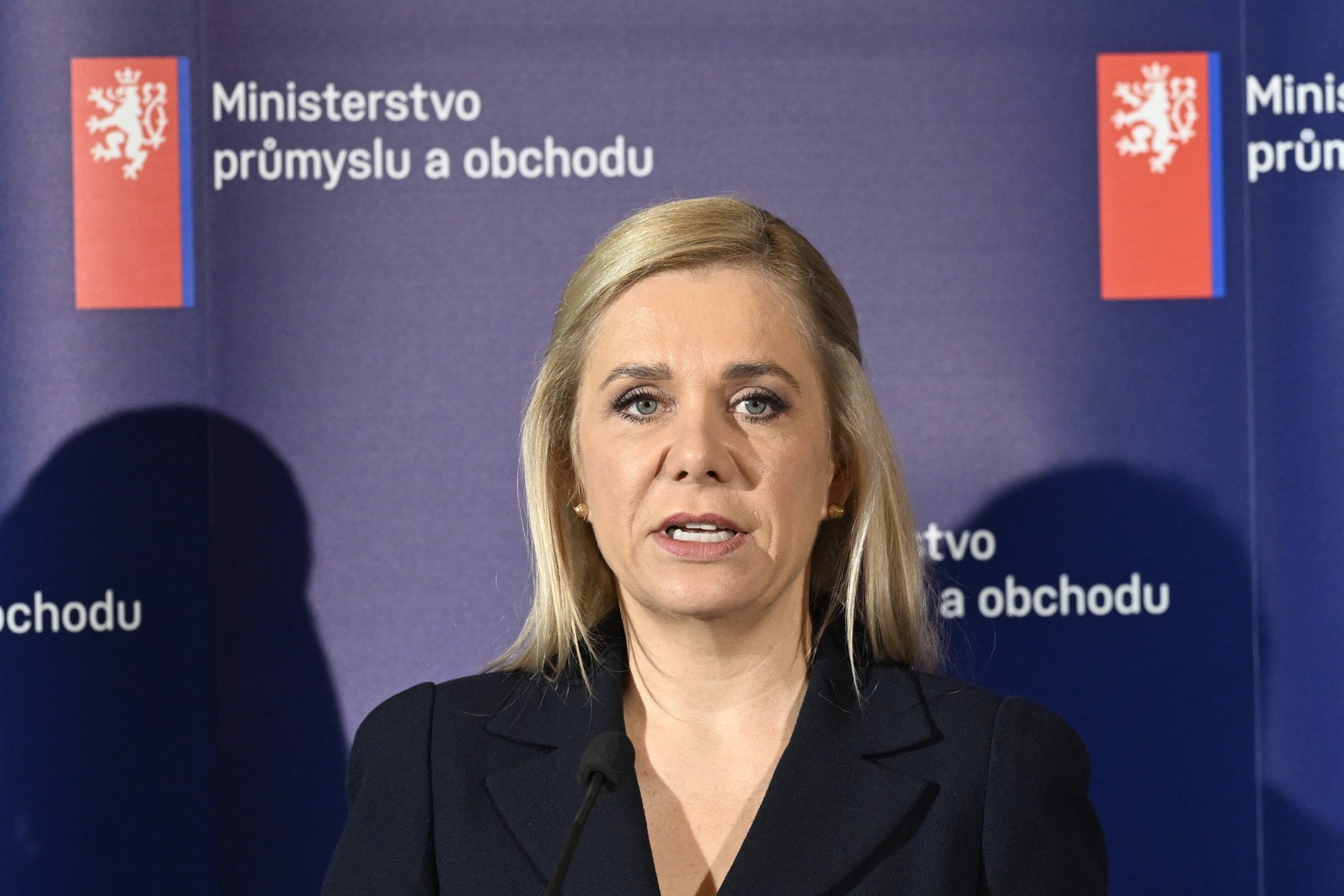
Economy Minister Denisa Sakova from the Social Democratic Party Głos (Hlas) claims that the government has not yet received official information from Brussels.
We found out about it yesterday from the media. We are waiting for the official position, which should be sent to us by the representative office in Brussels, through the Ministry of Foreign Affairs. We are ready to talk to the European Commission about this
she said.
Slovak Minister of Economy Denisa Sakova in Prague, Czech Republic, March 18, 2026.Michal Krumphanzl / PAP
Sakova argues that in a situation of oil crisis, when the state has decided to release strategic oil reserves, Slovak citizens may be privileged. These reserves belong to the state, and therefore indirectly to its citizens.
When asked whether the government expects that Brussels will not have time to react due to the temporary nature of these regulations, the minister did not provide a clear answer.
We are dealing with a crisis situation. We believe that since the state has released its oil reserves, which are its property and are processed by the Slovak refinery, products from this oil should go to the domestic market. Slovak citizens should feel that prices are not rising. We are ready to convince the European Commission that our decision is correct
– she said.
This is not the first such conflict
In the past, Hungary also used similar solutions, introducing preferential fuel prices for its own citizens, while charging foreign drivers higher rates.
This model was quickly met with a sharp reaction from the European Commission, which considered it contrary to the principles of the single market and threatened Budapest to initiate formal infringement proceedings. Under pressure from Brussels and growing controversy, Hungary withdrew from these regulations after approximately three months.
Because the disputed regulations were no longer in force, the Commission did not ultimately bring the case to an end – the procedure was suspended and the conflict was resolved before the stage of proceedings before the Court of Justice of the EU.
However, the example of Hungary shows that even a short-term departure from EU rules can trigger a strong reaction from Brussels and force governments to quickly withdraw controversial decisions.
I’m Ashley Davis as an editor, I’m committed to upholding the highest standards of integrity and accuracy in every piece we publish. My work is driven by curiosity, a passion for truth, and a belief that journalism plays a crucial role in shaping public discourse. I strive to tell stories that not only inform but also inspire action and conversation.