Half of drugs sold online are fake: 'It's becoming an emergency'. The Romanian authorities admit that they have few legal instruments to combat the phenomenon

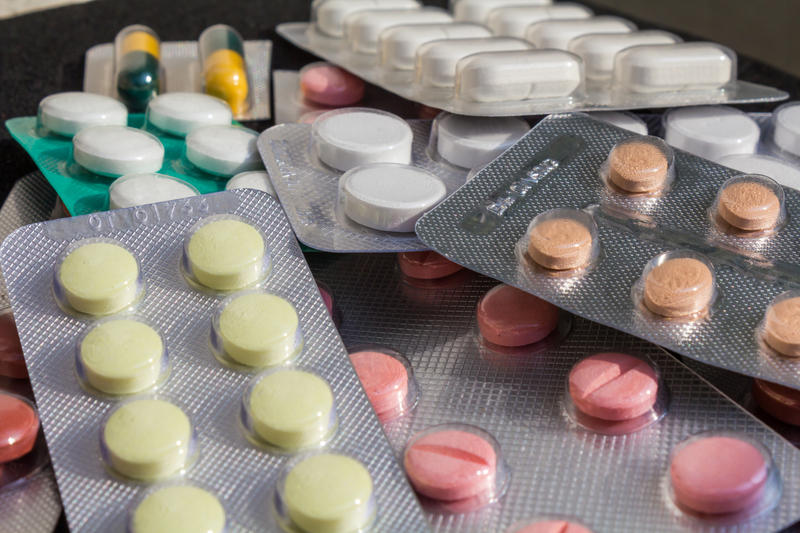
Fake medicines endanger the patient's health or can even lead to death, points out Dan Zaharescu, president of the Romanian Medicines Serialization Organization. These are products generally sold online, and the World Health Organization estimates that 50% of medicinal products that are sold worldwide online, not in authorized pharmacy networks, are fake.
- According to the estimates of the World Health Organization, approximately one million people die annually due to fake medicines, globally, says Dan Zaharescu.
- The authorities in Romania admit that, for now, they have, from a legal point of view, few tools to fight this phenomenon. “It is very difficult to apply the current provisions of the Criminal Code to the factual situations we are facing. We have two crimes in the Criminal Code, but they mainly refer to other products”, explained Răzvan Marinică, Chief Police Commissioner at the Economic Crime Investigation Department of the Romanian Police.
The risks: serious side effects or even death
Counterfeit medicines “are specially designed to deceive the patient, by appearance, by way of presentation, without providing the therapeutic benefits that the patient needs. They are manufactured in the absence of any quality control procedure”, explained Dan Zaharescu, president of the Romanian Medicines Serialization Organization, at the “Patient safety through medicine safety” debate.
For this reason, they “pose a direct threat to patient safety.”
“Such products lead to treatment failure, serious adverse reactions or even the death of the patient to whom they were administered,” says Dan Zaharescu.
A first risk, he explains, is related to the lack of the active substance in these products: “The patient does not follow the treatment he needs, which leads to the progression of the disease.”
If the active substance is there, but is dosed incorrectly, “they can become toxic, if the active substance is in too great a quantity.”
And also, “in many counterfeit drugs there are toxic substances that may contain dangerous impurities or ingredients that seriously affect the health of the patient.”
In addition, the undeclared ingredients that these products sometimes contain “can fatally interact with other medicines that the patient takes and thus expose him to some major risks”, says Dan Zaharescu.
Most fake medicines are sold online
Most fake medicines are sold online, adds the president of the Medicines Serialization Organisation. The World Health Organization estimates that 50% of medicinal products sold online, not in pharmacy chains, but through various other channels, are fake products.
There have been cases, says Dan Zaharescu, in which they even managed to penetrate pharmacies or hospitals, through networks that were later compromised.
“In order to counter the phenomenon, the European Union decided, as early as 2019, to implement the Directive on falsified medicines, a directive that introduces mandatory safety elements on the packaging of prescription medicines: bar codes in two dimensions, protective devices against opening the packages.
The EU has also ordered the creation of organizations that manage both the European drug verification system and the national drug verification systems, under the coordination of the competent national authorities,” he explained.
“Right now, we're attacking these 'smart guys' with the weapons we have”
The Romanian Penal Code provides for two crimes that the authorities are using at the moment in an attempt to combat this phenomenon, says Răzvan Marinică, Chief Police Commissioner at the Economic Crime Investigation Department of the Romanian Police.
There are articles 357 – regarding the falsification or substitution of food or other products and 358 – regarding the sale of food, drinks or other products knowing that they are adulterated. But they mainly refer to other products.
According to him, “it is very difficult to apply the current provisions of the Criminal Code to the factual situations we are facing”. “At the moment, we are attacking these “smart guys” with the weapons we have”, says the Police representative.
The chief commissioner, however, puts his hopes in the application of the Medicrime Convention in Romania, “which is already on the institutional circuit. Which means that we will also have tools capable of combating this phenomenon.”
The transposition of this convention into Romanian legislation will mean that “any operation related to a falsified medicine can be framed as a crime, if everything we proposed goes through the approval chain”.
“If we ratify Medicrime, we will be able to have a legal framework for specific specific crimes regarding the falsification of medicines”, explains Radu Marinică.
He also says that “things will change after we apply all kinds of mechanisms in Romania, such as the Digital Services Act (a new European regulation on digital services, adopted in 2022 – ed.), through which we can stop any online promotion”.
Growing phenomenon: “It's becoming an emergency”
Online trade “with anything”, including medicines, is a phenomenon that “is expected to grow” and become “an emergency, from our point of view”, stated Răzvan Prisada, the president of the National Agency of Medicines and Medical Devices, during the debate.
Răzvan Prisada says that the role of the institution he leads is “to ensure the quality of the medicines sold to the population”.
But, adds Prisada, “we can do this exclusively in terms of the authorized distribution chain. I mean authorized pharmacies, which get their drugs from authorized warehouses.”
Răzvan Prisada believes that information and education on this subject is the key to the problem: “Beyond how many fines we apply and how many sites we close, with the help of the competent authorities, the rate at which they appear will accelerate”, is the opinion of the president of the Medicines Agency.
“For the patient, it is important to know that any box of medicine that is handed to him in any pharmacy in Romania has been checked by a perfectly functional system and is an authentic medicine. What is expected of that medicine is what is written in the leaflet.”
But “when, for several reasons, the source from which the medicine is procured is unauthorized – most often a site that can be called in any way or that can copy, including as an image, real sites – at that moment, we cannot in any way assure the patient that that medicine is genuine. And most often it is not”, explains the president of the National Medicines Agency.
The first step to the safety of a drug, the official points out, is “the source from which you get it.”
The Medicines Agency carries out an information campaign through Google Ads and social media
Despite the increase in access to online medicines from uncontrolled sources, the level of information regarding falsified medicines is low, says Răzvan Prisada.
For this reason, the Medicines Agency launched the information platform medicamentesigure.ro, which contains advice on the safe purchase and safe use of medicines, but also a link to the list of pharmacies authorized to sell medicines online without a prescription.
“It is important that those who do not currently have this information decide not to purchase medicines except from authorized sources, which we can control,” says Răzvan Prisada.
He adds that “people looking for or buying medicine online are from all walks of life.”
The information campaign launched by the Medicines Agency will be an integrated one, says Prisada: “It will contain clear messages, in accessible language, not in a hermetic language, as the authorities sometimes use.”
In addition, “it will be promoted including through Google Ads. The moment they open and search for anything about drugs – not counterfeit drugs, because I understand that people are not really looking for fake or counterfeit drugs, but they are looking for drugs, antibiotics, etc., anything related to this topic – a banner will be displayed that, once the user presses it, will be directed to the medicamentesigure.ro platform”, says the president of the Medicament Agency.
The campaign will also be carried out “on all types of social media, addressed to all age groups”.