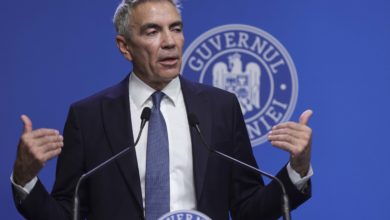
British Prime Minister Keir Starmer said on Thursday he had authorized armed forces to board and detain Russian ships in British waters to stop a network of vessels that his government and others around the world say allow Moscow to export oil despite Western sanctions.
The decision comes as other European countries, including France, Belgium and Sweden, have stepped up efforts to seize ships from Russia's so-called “ghost fleet” of oil tankers used by Moscow to finance its four-year war against Ukraine.
Starmer said he approved the more aggressive measures against these vessels because Russian President Vladimir Putin is likely “wringing his hands” following a spike in oil prices following the Middle East war.
“That is why, in my firm opinion, we should be taking even tougher action against the ghost fleet,” Starmer told a meeting in Helsinki on Thursday. “Together we must shut down sea routes critical to this vital trade to keep the pressure on Putin,” he urged attendees.
Britain this year provided intelligence and logistical support to the French and American armed forces, which intercepted Russian vessels. But Starmer's announcement marks the first time British forces have been authorized to board Russian ships.
London's move could force Russian ships to travel longer distances
Downing Street said British military and law enforcement officials were preparing to board Russian vessels that do not surrender, are armed or use advanced surveillance technology to avoid capture.
Once ships are boarded, criminal proceedings could be initiated against the owners, operators and crews for breaching the sanctions legislation.
A British official said at least 12 Russian vessels under sanctions have crossed the English Channel on average each month over the past year.
British permission to board Russian ships could mean those ships would avoid the English Channel, one of the world's most important shipping routes, and be forced to take longer and more expensive routes, the official said.
Russia continues to export crude and oil despite successive waves of sanctions
Russia's reliance on the Phantom Fleet has allowed it to continue oil exports without complying with Western restrictions imposed after its full-scale invasion of Ukraine in 2022.
European efforts to keep pressure on Russia were undermined this month after US President Donald Trump's administration granted countries a 30-day waiver to buy sanctioned Russian products currently at sea to stabilize global energy markets hit by the Iran war.
Britain has imposed sanctions on 544 ships in Russia's ghost fleet. London estimates that about three-quarters of Russia's crude oil is carried by these vessels.
Vessels in Russia's ghost fleet typically have opaque ownership structures and have raised concerns about environmental risks, as old, unverified tankers are prone to spills, mechanical breakdowns and leaks, threatening marine ecosystems.