The EU and Australia have signed the major trade deal they have been working on for eight years. “Australian farmers are extremely disappointed”

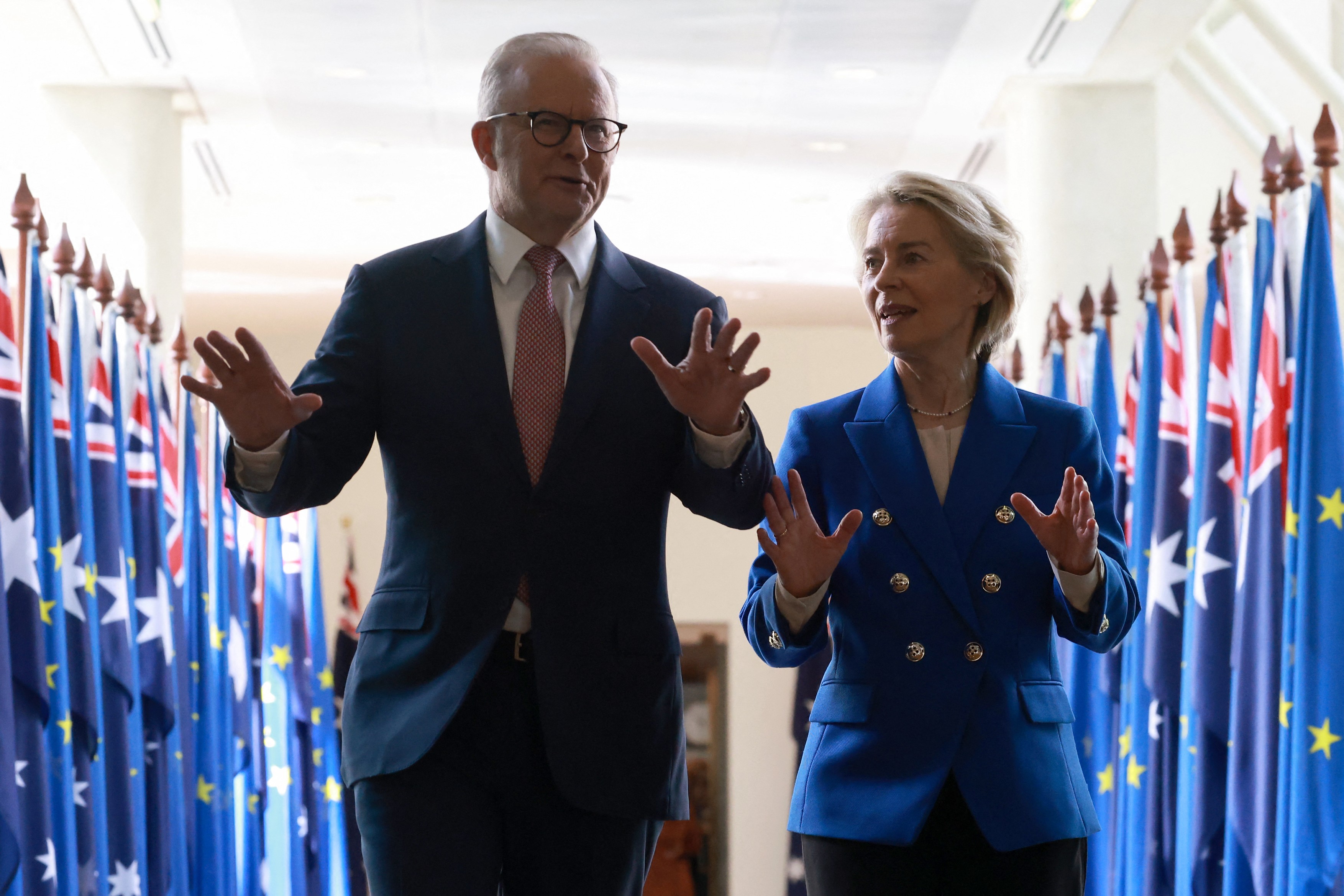
Australia and the European Union signed the eight-year-old trade deal on Tuesday, eliminating tariffs on almost all European products and almost all Australian exports of critical minerals, Reuters reports.
However, some Australian agricultural products, such as beef and mutton, for example, will be subject to export quotas, which is why Australian farmers have criticized the deal as offering “substandard” access to the EU market.
The deal comes after both sides stepped up negotiations following a significant increase in US tariffs under the Trump administration and growing concern in the West about China's dominant position in the supply of rare earths and other critical minerals. The two sides also signed an agreement to strengthen security and defense ties.
The deal with Australia comes after the EU-Mercosur deal came into force provisionally at the end of February, and in January the EU and India struck the “mother of all trade deals”.
The trade agreement eliminates 99% of tariffs on EU products
“The EU and Australia may be far apart geographically, but we could not be closer in terms of our worldview,” European Commission President Ursula von der Leyen said in a statement.
“With these dynamic new partnerships in security and defense as well as trade, we are moving even closer,” she added.
The deal will eliminate over 99% of duties on EU goods exports to Australia, reducing customs duties for companies by €1 billion a year. EU exports to Australia are expected to grow by up to 33% over the next decade.
Australian Prime Minister Anthony Albanese told a news conference that the deal would bring about A$10 billion (€6 billion) to the Australian economy annually, adding that the elimination of almost all import tariffs on critical Australian minerals in the European Union would help stabilize global supply chains.
“For both Europe and Australia, the relationship with China is a strategic imperative, and so delivering on our critical minerals partnership will be crucial to our success,” von der Leyen told the Australian parliament.
“We can't be too dependent on one supplier for such essential ingredients, and that's exactly why we need each other,” she explained.
The deal also signals Europe's growing commitment to the Indo-Pacific region, following the conclusion of trade deals with Indonesia in September and India in January.
Australian tariffs will drop to zero on European wine, sparkling wine, fruit and vegetables and chocolate from day one, and on cheese within three years.
“Australian farmers are extremely disappointed”
The EU will eliminate tariffs on many agricultural products, but some key exports will be subject to quotas. For beef – one of the biggest sticking points that led to the failure of previous 2023 negotiations – the EU will open two tariff quotas for 30,600 tonnes, with around 55% of the volume to enter duty-free.
“Australian farmers are extremely disappointed that negotiations for a free trade agreement with the European Union (EU) have ended without significant trade gains in terms of agricultural market access since Australia last withdrew from negotiations,” Hamish McIntyre, president of the National Farmers' Federation of Australia, said in a statement.
Under the agreement, some EU “geographical indications” names for products such as Pecorino Romano or Ouzo will be fully protected after a relatively short phase-out period. But some producers of products such as feta will be able to continue to use these names, provided that the origin of the product is clearly indicated on the label.
Australia has also agreed to raise the luxury car tax threshold for electric vehicles in the EU to A$120,000 (€72,100), meaning around 75% of electric vehicles in the region will be exempt from the tax.
Trade between the two sides is substantial, with EU firms exporting €37 billion worth of goods to Australia in 2025 and €28 billion worth of services in 2023.
As a bloc, the EU was Australia's third largest bilateral trading partner in 2024, as well as its sixth largest export destination, according to official data. The European Union was Australia's second largest source of foreign investment in 2024.