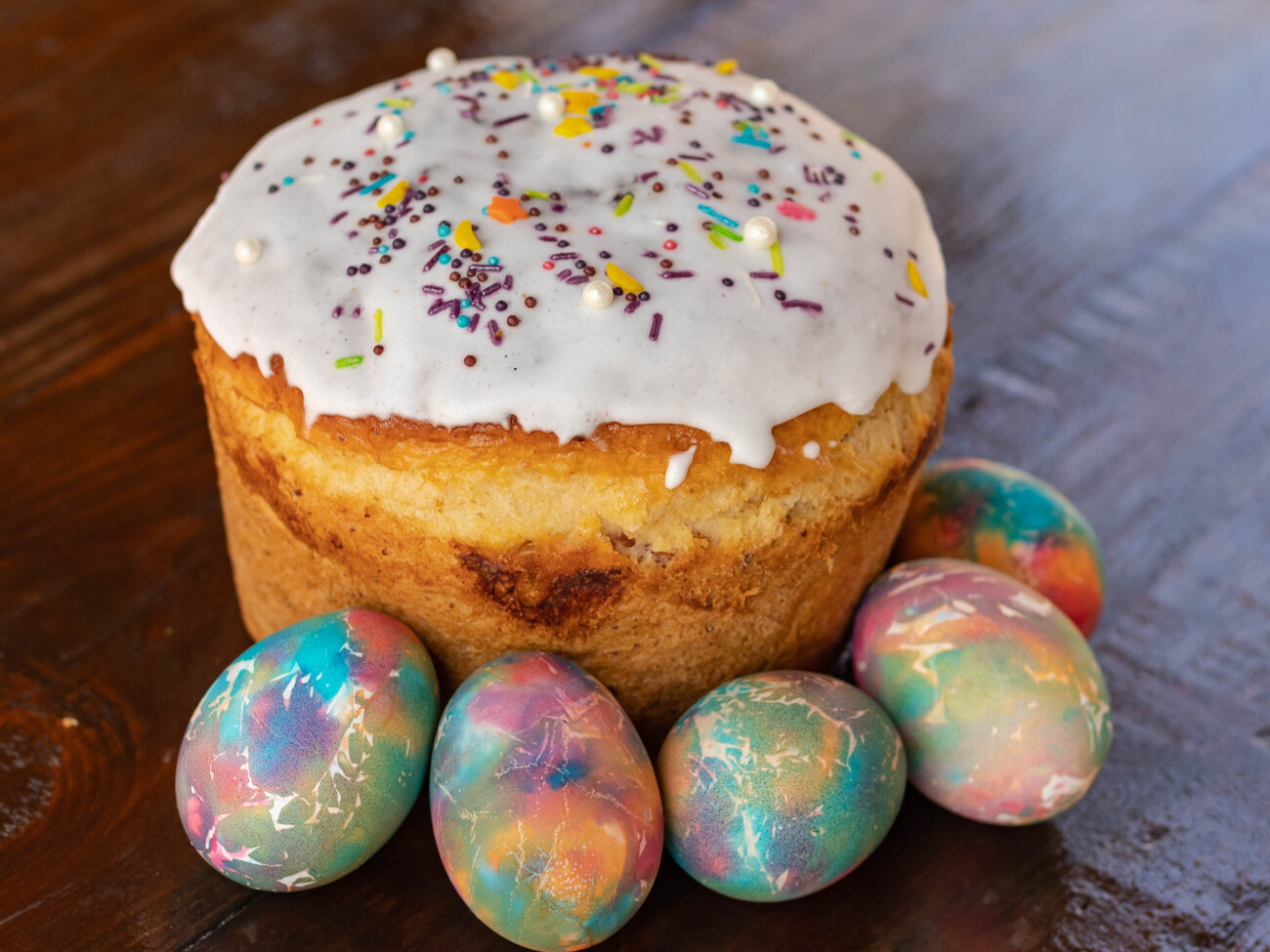
On March 20, the author of the Ukrainian culinary YouTube channel Onyshkevychi shared an unusual recipe for paska, which remains soft for a long time and does not go stale.
According to the blogger, paska is easy to prepare, but it turns out incredibly tasty thanks to the secret ingredient – potato broth. It is the starch in the broth that helps baked goods stay soft and moist.
Ingredients:
- 200 ml milk;
- 150 ml potato broth without salt;
- 35 g live yeast;
- 250 g sugar;
- 3 eggs;
- 3 yolks;
- 180 g butter;
- 60 g sour cream;
- a pinch of salt;
- vanilla extract;
- 950 g flour;
- 100 g raisins;
- orange zest.
Step-by-step preparation:
- Mix warm milk with potato broth. Add yeast, 1 tbsp. l. sugar and 2 tbsp. l. heaps of flour. Stir and leave in a warm place until activated.
- Combine the eggs with the yolks, remaining sugar and salt. Beat with a mixer until it becomes a fluffy light mass.
- Mix the activated dough with the egg mixture. Add warm melted butter and heavy sour cream. Enter vanilla.
- Gradually add sifted flour. First mix with a spoon, then with your hands lubricated with vegetable oil.
- Knead until the dough is smooth and comes away easily from the sides of the bowl and your hands.
- Cover the dough with a towel and leave it warm until it doubles in size.
- Punch down the dough carefully. Add raisins and zest. Leave again for the dough to rise again.
- Grease the molds. Fill them with dough, but no more than a third of the total volume. Remove excess raisins from the surface to prevent them from burning.
- Cover the molds with a towel. The dough should rise almost to the edges.
- Press the dough lightly with your finger – if the dent slowly returns, it's time to bake.
- Brush the tops of the Easter eggs with yolk and milk.
- Bake at 170°C on medium level until done.
Important nuances
- Potato broth makes the paska pulp fibrous, moist and does not allow it to dry quickly.
- Use strong flour with 12g protein or higher. The higher the protein, the better the structure.
- The oil should be warm, but not burn the yeast.
- If the tops of the beans start to burn, cover them with foil.
- The dough must be kneaded with love and not injure the molds with unnecessary movements after proofing.
- Leave the finished paskas to cool on a wire rack to avoid condensation forming on the bottom.