The year 2026 is shaping up to be a year of adjustments and smart repositioning in the real estate market. The post-election macroeconomic context, fiscal pressures and legislative changes in real estate create a more mature, selective and efficiency-oriented market.
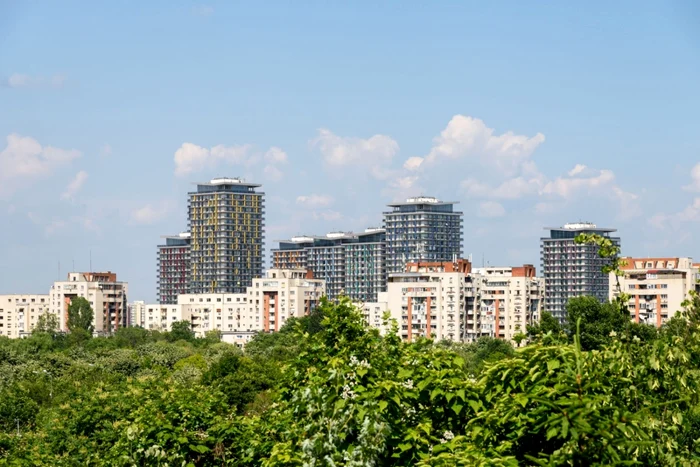
Apartment prices will not fall in 2026. Photo Shutterstock
The new legislative changes outline a clear picture for 2026 in the real estate and credit market. The Nordis law protects buyers but limits small and medium-sized developers, while the increased VAT rate gives real estate transactions a competitive advantage “second hand“, according to an analysis carried out by Ofertebancare.ro. According to it, in the context of economic growth estimated at 1.5-3%, but also of the pressure generated by the new tax regulations, the credit market functions as a buffer: lower interest rates than inflation, accessibility to credit and more efficient options for investments.
“We are not in a housing bubble. A market where about 60% of purchases have been made with cash in recent years is a savings market, not a debt-based speculation market”said the economist Claudiu Trandafir.
Interest rates: the competition is moving to the fixed area
After the interest peak of the previous years, 2026 brings a stabilization trend as the cost on fixed interest and decrease on variable interest (according to IRCC). Banks are competing aggressively for refinances and new customers with below-inflation offers. The decrease in IRCC since the beginning of the year is already acting as a “oxygen balloon” for the middle class, and a possible reduction of the BNR key interest rate towards the end of the year could speed up this process, but conditional on the correction of the budget deficit.
New offer, at a historic low
In the real estate market, the main problem remains supply. The number of building permits, especially in Bucharest, is sharply decreasing, which generates a shortage of new homes in 2026. In this context, prices remain resilient, even if the volume of transactions is moderate.
“Legislative changes following the Nordis case increase certainty for buyers but restrict liquidity for small and medium-sized developers. The market is consolidating around large, well-capitalized players and new project deliveries will remain limited“, said Trandafir.
The big winner: the secondary market
ANCPI data show that, from 2017 until now, more than 1.6 million homes have been traded in Romania, most of them without bank credit. This seller profile – without rate pressure – brings price stability to the secondary market.
In addition, the increase in the VAT rate for new homes creates a decisive advantage for apartments owned by individuals, who are not affected by this additional cost. The price difference is becoming large enough that a good part of the credit-financed demand will go to “second-hand” properties, especially those built and completed in the period 2017-2025, but also older homes, completed before 2000, strategically or centrally located.
“Prices are not falling because new supply is at an all-time lowand secondary market sellers are not pressured by banks. In 2026, the smartest purchase for a buyer with credit is a recent, secondary-market condo combined with a fixed interest rate below inflation. This is where prudence, value and affordability meet“, concludes the economist.
The price of apartments will continue to rise
The real estate developers consulted by “Adevărul” also spoke about possible increases in apartment prices.
“Even if the pressure from previous years has moderated, costs are not returning to pre-pandemic levels. In 2026, the difference will not be the price of materials, but the ability of developers to intelligently integrate them into a coherent project. House prices will continue to rise, but at a more balanced and differentiated pace. The middle-up segment remains the most stable, as it addresses a buyer with more secure income and a long-term perspective. Rising construction costs, wages and energy efficiency requirements will inevitably be reflected in prices. However, we are not in a scenario of accelerated price increases, but one of gradual adjustment, supported by demand“, said Cătălin Apetri, CEO and Founder of CGA Home Consulting and development director for Romania of the investor Ghai Sant Ram, for “truth“.
“Prices across the entire residential market will continue to rise, but at a more moderate pace. The difference will be made by the completed projects, which provide safety and already functional infrastructure”declared in turn, for “truth” Cristian Stanciu, CEO of the Ivory Residence project.
Answering the same question, Ozan Tuncer, CEO of Cosmopolis, told “truth” that the construction materials market has functioned in recent years as a sensitive indicator of global developments. The most realistic scenario for 2026 being that of a tempering, not a decline. “There will probably be categories of materials where the increase will be lower, but there are no premises for a cheapening in the real sense. The global economy still operates in a context of high costs for industrial production, and Romania is not isolated from these influences.
Housing prices are the result of a calculation in which we have to factor in the price of materials, labor costs and staff shortages, but also the low number of new projects and growing demand. All of these are important elements that put pressure on the final price. All these factors are pushing the market towards the same result, moderate price increases“, Ozan Tuncer declared for “truth“.
Cosmin Savu Cristescu, the founder of Redport, explained to “truth” that the market will go through a reset process: “Well-connected areas and properly priced projects will continue to perform, while overbid or poorly positioned developments will struggle. Basically, we are witnessing a process of professionalization of the market.
We see no real premises for a significant cheapening of construction materials. Energy costs, inflation, wage pressures and fiscal impact remain pressure factors. Most likely, material prices will stabilize or experience moderate increases in line with the rate of inflation.
In this context, what makes the difference is the ability of developers to effectively manage supply chains and plan investments in the medium term”.
Asked whether residential housing prices will increase or not, Cristescu stated that housing prices will not experience accelerated growth, but will naturally reflect the evolution of construction costs and inflation: “At the same time, Bucharest remains one of the most affordable European capitals, and the ratio between income and residential prices still allows for an organic evolution of the market.
The offer of new, quality housing is insufficient in relation to the demographic dynamics and the need to renew an old housing stock, with an average age of over 60 years. In this context, for 2026 we anticipate a moderate price advance”.