How much does an energy storage battery cost and how do you choose it to have energy autonomy

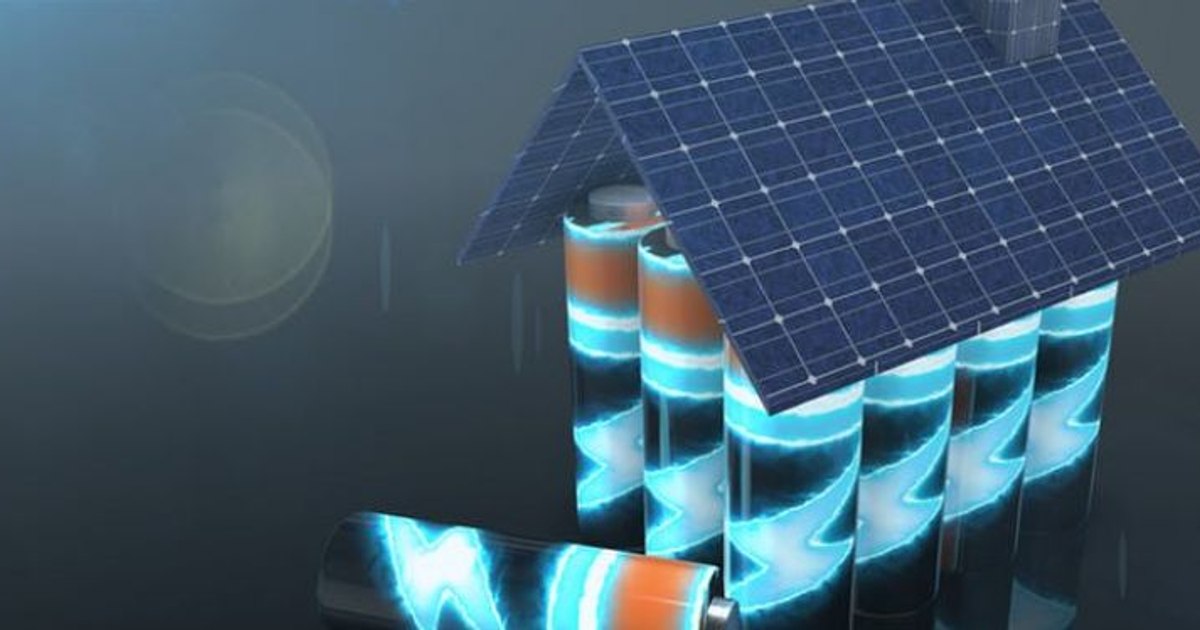
The intention of the authorities to transform the Casa Verde Photovoltaice program into the Casa Verde Baterii arouses the interest of Romanians who have installed photovoltaic panels in the past, especially since part of the costs could be subsidized by the state. The specialists consulted by “Adevărul” explained the criteria that must be taken into account when purchasing an energy storage battery and how much it costs.
The “Photovoltaic Green House” program could turn into “Battery Green House”
program “Casa Verde Photovoltaics” would be transformed into “Casa Verde Baterii”, as recently declared by the Minister of the Environment, Diana Buzoianu, specifying that the program will support the storage of energy produced in households.
The Minister of the Environment declared last month that, after the state budget will be approved and it will be known exactly what the limit will be at the AFM's disposal, the division of money by programs will also be discussed, taking into account the program “Green House Batteries”.
Following this announcement, more and more Romanians who have already installed photovoltaic panels expressed their interest in storage batteries.
“More and more prosumers are discovering that photovoltaic panels are not enough for energy independence. The panels produce energy during the day, but the highest consumption is in the evening, and the storage batteries become the missing piece of the system, allowing the energy produced to be used when needed”said the specialists consulted by “Adevărul”.
So far, however, the authorities have not announced the budget and the level of funding.
How much a battery costs and how to choose it
The price of a battery depends on the technology, capacity and compatibility with the inverter. In general, for a typical household, a 5–10 kWh LiFePO₄ battery compatible with any inverter already installed costs between 9,000 and 13,000 lei, depending on the storage capacity, says an energy specialist.
“From our internal data, the most installed batteries by Romanians are those with a capacity of approximately 5 kWh per module, especially LiFePO4 type batteries. These are preferred because they allow further expansion of the system, as more modules can be connected to reach 10–20 kWh of storage.
In practice, this capacity is suitable for most homes because the energy produced by the panels during the day can be stored and used in the evening or during periods of high consumption“, explains Dorian Petresc, specialist in the implementation of renewable energy solutions.
The choice of battery should be made according to:
• Inverter power – the battery must be compatible with the existing inverter or be part of an integrated ecosystem (as in the case of Livoltek).
• Daily consumption – a family with a consumption of 8–10 kWh/day needs a battery of at least 5 kWh for real autonomy.
• Purpose of use – back-up in case of failure, optimization of consumption, reduction of injection into the network or maximization of self-consumption.
• The possibility of expansion – modular systems allow additional batteries to be added as consumption increases.
Intelligent energy management is also an important criterion: modern batteries can automatically decide when to store, when to deliver and when to optimize consumption depending on the energy price and solar production.
What is the average life of a battery and how do you extend it
Modern LiFePO₄ (Lithium-Iron-Phosphate) technology batteries have a lifespan of 10–15 years with over 6,000 charge-discharge cycles.
In practice, this means that a battery used daily retains more than 80% of its capacity even after a decade.
Lifetime is influenced by operating temperature, cell quality, usage (deep discharges vs. partial discharges), management system (BMS), which protects the battery.
Casa Verde: A new type of battery with low fire risk is gaining ground in the residential market
Advantages of using a storage battery
Batteries bring benefits to both consumers and the energy system:
For consumers, the advantages are:
• Energy autonomy – the energy produced during the day can be used in the evening, when consumption is higher.
• Lower bills – increases self-consumption, decreases network dependency.
• Power cut protection – back-up systems ensure power supply to the home in the event of a breakdown.
• Greater efficiency of the photovoltaic installation – energy is no longer lost or injected into the grid at low prices.
For the energy system, the advantages concern:
• Reduction of grid overload during lunch hours, when solar production is maximum.
• Balancing consumption – energy stored during the day is used in the evening, when demand is high.
• Easier integration of renewables – storage is essential for the stability of modern grids.
Energy specialists say that if “Casa Verde Baterii” is launched, the cost of electricity for prosumers will be reduced by at least 40% compared to those who do not own batteries.
What effects would the Casa Verde Baterii program have?
The energy specialist, Felix Căprariu, president of IMM Bucharest Ilfov, part of the national structure of CNIPMMR, explained to “Adevărul” what effects the new state program will have.
In Romania, a prosumer consumes on average 40% of what he produces in summer, and in winter it reaches 50%. Under these conditions, the energy difference ends up in the electrical network, which is not technically prepared to receive and transport the energy to the place where it can be consumed.
“By mounting the batteries on the production site, the self-consumption of the prosumer will increase. The energy produced during the day can be consumed at night. In this way, we reduce the amount of energy that reaches the grid and has to be transported to another consumer, but we also reduce the need to purchase electricity from external markets at night, at high prices, which later end up in the price that the final consumer pays. All this will reduce the cost of electricity for prosumers by at least 40% compared to those without batteries“, says Felix Căprariu.
Association of Prosumers: 360,000 Romanians are penalized by the incompetence of the authorities
The proposal has a technical justification launched by ANRE and the Ministry of Energy since mid-2025, says the specialist, when the number of prosumers increased exponentially through the existing support schemes in 2023 and 2024, but also due to the increase in energy prices after the end of the period of application of the regulated tariff to the final consumer.
“By modifying the program, it will be possible to move to a new stage that will ensure the sustainability of the original program that did not take into account the behavior of domestic and non-domestic consumers in free market conditions that react to any speculative phenomenon in the European energy sector. It is normal when we carry out funding programs without impact studies and fictitious public consultations on the basis of which we can correctly anticipate what effect they have both technically and economically.
We hope that at least this time the managing authority will conduct public consultations with relevant organizations that can improve the program without the need to open other support schemes to correct the previous one”adds the specialist.
According to official data, in the last two years, the number of prosumers (natural persons who produce and consume electricity) has almost tripled, from 100,000 to over 300,000.