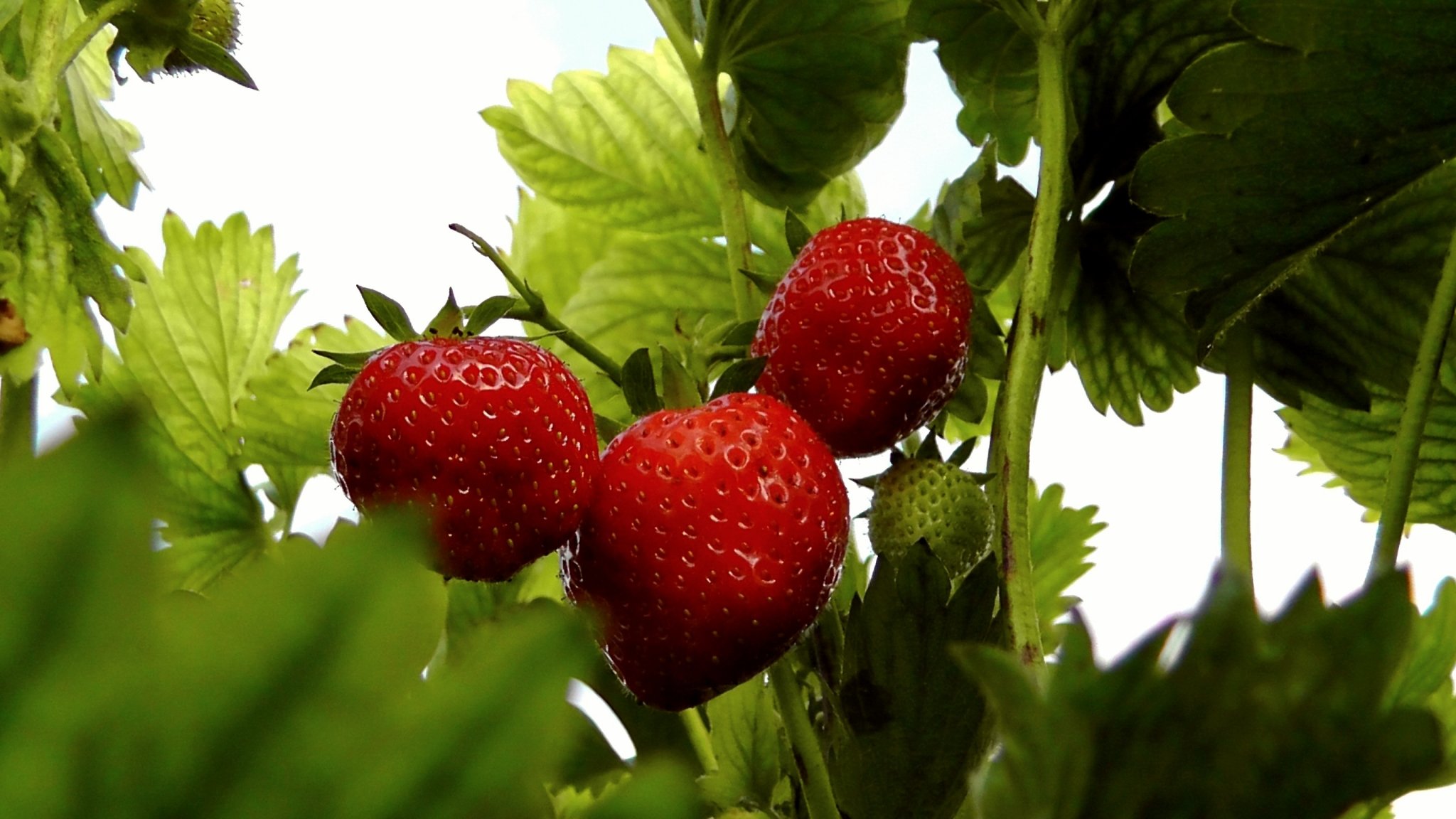
Strawberries can be not just sweet, but truly aromatic and dense pulp that does not become limp in your hands. Such berries hold their shape well in yogurt, do not lose their taste when frozen, and become the basis for simple summer desserts.
Tested varieties:
- “Festival” – unpretentious and winter-hardy variety. The berries are bright red, with a rich aroma and moderate sweetness. It tolerates temperature changes well and produces a stable harvest even in cool summers.
- “Borovitskaya” – late variety with large, shiny berries. The pulp is dense, juicy, with a thin skin. Excellent for fresh consumption and preparations.
- “Rapella” – an early, productive variety with conical berries and a delicate floral aroma. Resistant to gray rot, which is especially valuable at high humidity.
How to grow strawberries with rich flavor:
- Choose a place with good lighting, but protected from drafts.
- Water regularly, but do not allow water to stagnate, as excess moisture reduces sugar content.
- Mulch the soil with straw or pine needles: this retains moisture, protects the berries from rot and keeps them clean.
- Remove old leaves in spring and the first flower stalks of young plants. This helps the root system get stronger.
Question and answer:
Which strawberries grow best in short summer conditions?
Early and mid-season varieties with high resistance to changes in temperature and humidity – for example, “Festivalnaya”, “Rapella” and “Borovitskaya”. They manage to produce a harvest even in cool June.
Is it possible to grow fragrant strawberries without fertilizers?
Yes. Strawberries are responsive to soil structure, and not to fertilizing. It is enough to plant it in loose, well-drained soil with the addition of compost. Excess nitrogen, on the contrary, reduces aroma.
How to protect strawberries from rot in rainy summers?
Mulch the beds with straw, sawdust or agrofibre. This lifts the berries off the ground and creates a dry surface. Also choose varieties that are resistant to gray mold, such as Rapella.