
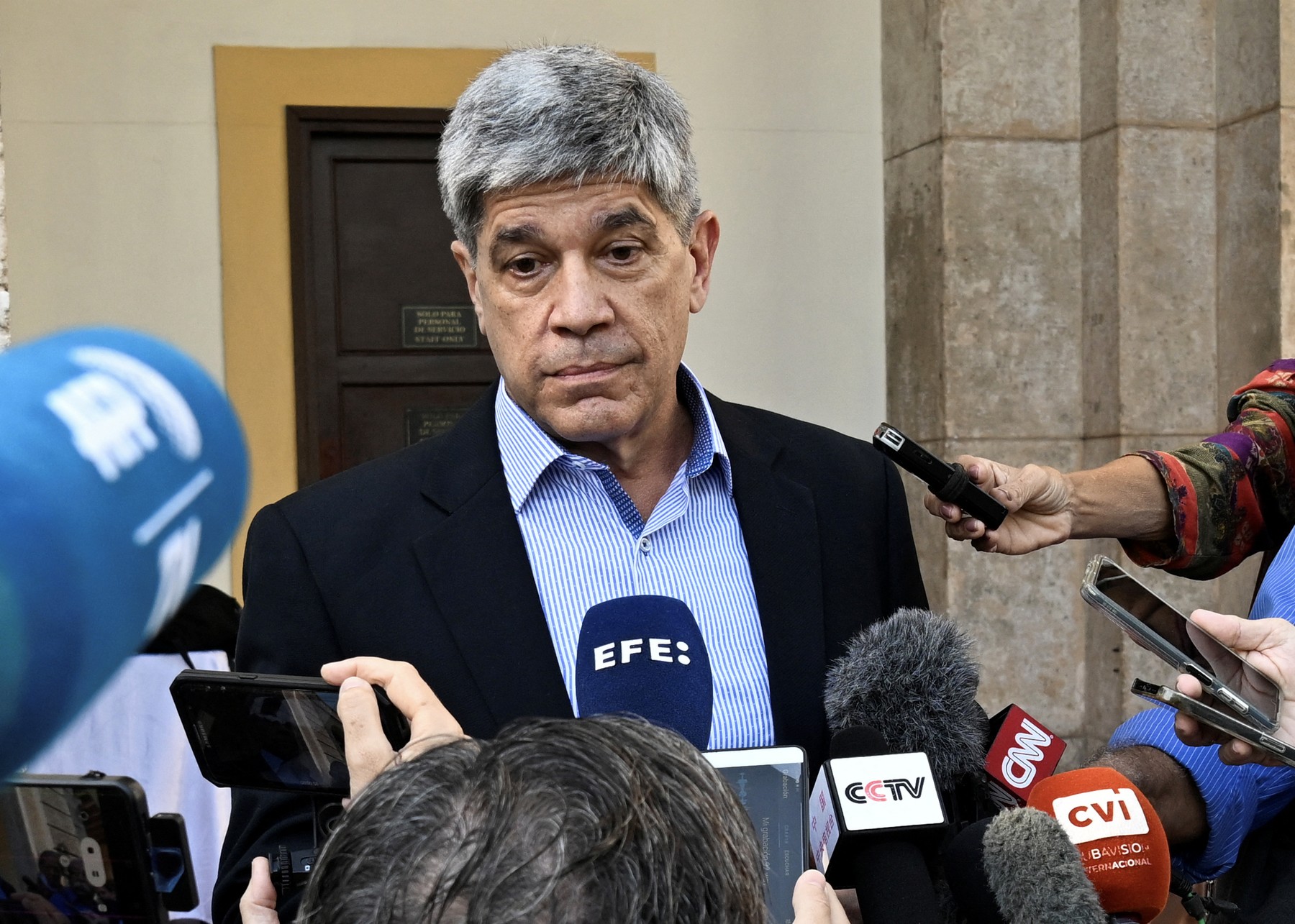
Cuban Deputy Foreign Minister Carlos Fernández de Cossío said it would be “naïve” for the administration in Havana to ignore the possibility of conflict with the United States.
In an interview with NBC News that aired Sunday, the Cuban official said his country was preparing for “the possibility of military aggression” by the United States.
“Our army is always prepared and in fact is preparing these days for the possibility of military aggression,” said Carlos Fernández de Cossío.
“We'd be naive” not to consider the possibility of one, “given what's going on in the world,” he added.
The deputy head of Cuban diplomacy stated, however, that the country's leaders “truly hope that this will not take place.
“We don't understand why it should happen and we don't find any justification,” emphasized Carlos Fernández de Cossío.
Recently, President Miguel Díaz-Canel said for his part that the Cuban authorities are preparing for a possible “aggression” from the United States.
“Cuba's political system is not negotiable”
Tensions between Washington and Havana escalated after the US operation in Caracas, where US forces captured Venezuelan President Nicolas Maduro, who had a close relationship with the Cuban leadership.
The Guardian wrote this week that the Trump administration is pushing for regime change in Havana.
USA Today, citing two sources familiar with Washington's plans, reported that Washington was preparing an economic deal with Havana that would ease trade restrictions but also include an “exit” for President Díaz-Canel, although he has two years left as president of Cuba and five years as leader of the Communist Party.
On Friday, Carlos Fernández de Cossío rejected any suggestion that Cuba's political system or the president's term would be negotiated in the talks with the US.
“I can categorically confirm that the political system of Cuba is not negotiable and, of course, neither the president nor the position of any Cuban official is subject to negotiations with the United States,” the deputy foreign minister said in a press conference.


