“Everybody understands what Donald Trump has done, except him.” Harsh verdict given by an important voice who was recently in Romania

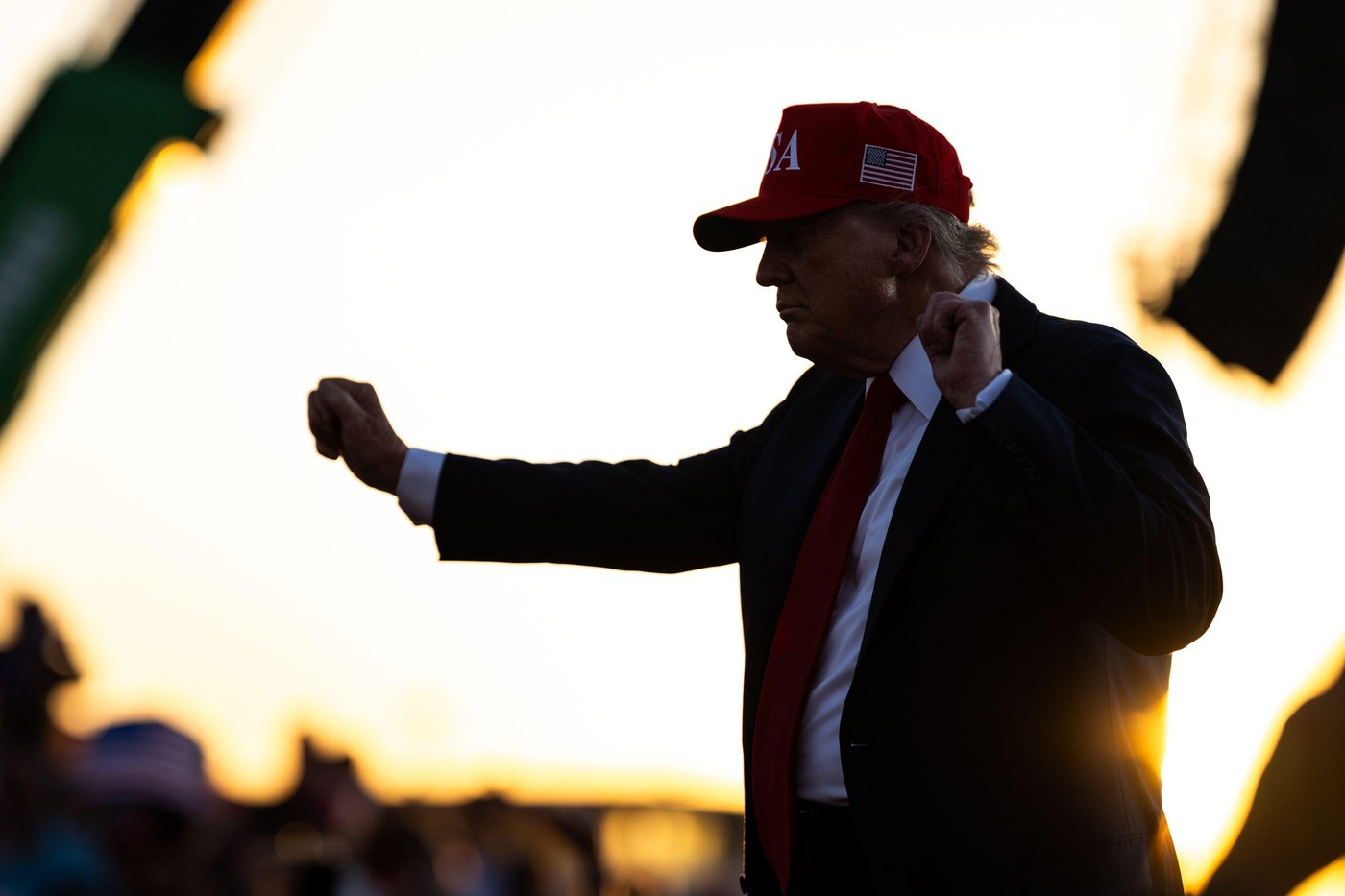
“Donald Trump doesn't think strategically. He doesn't think historically, geographically, or even rationally. He doesn't connect the actions he takes one day to the events that take place weeks later. He doesn't think about how his behavior in one place will change the behavior of other people in other places,” writes historian and journalist Anne Applebaum in an op-ed published by The Atlantic.
Applebaum writes that the US president does not consider the broader implications of his decisions and does not take responsibility when those decisions turn out to be wrong. Instead, she argues, Donald Trump acts on whims and impulses, and when he changes his mind — when he feels new whims and new impulses — he's simply lying about anything he's said or done before.
“For the past 14 months, few foreign leaders have been able to accept that a person with no strategy can nevertheless be president of the United States. 'Surely,' foreign policy analysts murmured, Trump is thinking beyond the present moment. 'Surely,' foreign statesmen whispered, he adheres to a certain ideology, a pattern to a plan. All sorts of labels have been thrown around—isolationism, imperialism—in an attempt to put Trump's actions in historical context. There have been solemn articles written about the supposed importance of Greenland, for example, as if Trump's interest in the Arctic island did not come entirely from the fact that it looks very large on a Mercator projection,” she continues.
Delusions about Trump have shattered among world leaders, Applebaum argues
However, the historian and journalist points out that this week “something broke”.
“Trump may not understand the connection between the past and the present, but other people do. They can see that, as a result of decisions that Trump has made but cannot explain, the Strait of Hormuz is blocked by Iranian mines and drones. I can see how oil prices are rising around the world, and I understand that it is difficult and dangerous for the US Navy to solve this problem. I can also hear the president ranting, as he has done so many times forward, trying to get others to take responsibility and threatening them if they don't,” writes Anne Applebaum.
Applebaum, a Pulitzer Prize winner and one of the world's most respected historians and journalists, singles out the refusal of European NATO allies, but also of Canada and other US partners around the world, such as South Korea, to provide military assistance to reopen the Strait of Hormuz, through which up to 20% of the world's oil normally passes.
“What does (…) Donald Trump expect to do a few European frigates in the Strait of Hormuz? This is not our war, we didn't start it,” Boris Pistorius, the German defense minister, said earlier this week.
Both Japan and Australia said on Monday they had no plans to send military vessels to help escort the ships through the strait.
Conveyor belt rejections for US president from allies
French President Emmanuel Macron said before Trump's request that several European and Asian countries intended to organize a joint security mission in the Persian Gulf area, but only after the end of the war launched by the US and Israel late last month.
Kaja Kallas, the head of European diplomacy, said on Monday that foreign ministers from the EU bloc have so far shown “no appetite” for expanding the EU's naval mission from the Middle East to the Strait of Hormuz.
The European Union's Aspides mission, named after the Greek word for “shields”, was set up in 2024 to protect ships from attacks by Yemen's Houthi rebels in the Red Sea.
“In our discussions there was a clear desire to strengthen this operation, but for the moment there was no appetite for changing the mandate of the mission,” Kaja Kallas told reporters after the meeting of EU foreign ministers in Brussels.
Trump's threats didn't work either
Anne Applebaum points out in the editorial published by The Atlantic that these refusals came despite the fact that Trump warned in an interview given to the British publication Financial Times, that NATO will have a “very bad future” if the allies do not help the US in Iran.
“It's normal for the people who benefit from the goods that come through the strait to make sure that nothing bad happens there,” Trump said, arguing that Europe and China depend heavily on Gulf oil, unlike the US.
“If there is no response or if there is a negative response, I think it will be very bad for the future of NATO,” he added.
Applebaum also recalls that Spanish Prime Minister Pedro Sanchez refused to allow the United States to use military bases to start the war, and that Britain and France might send a few ships to protect their own bases or allies in the Gulf, “but neither will send their soldiers or sailors to offensive operations started without their consent.”
This is not cowardice. It's a calculation: If Allied leaders thought their sacrifice might count for something in Washington, they might choose differently. But most of them have stopped looking for a hidden logic behind Trump's actions and understand that any contribution they make will not count at all. In a few days or weeks, Trump won't even remember that this happened,” concludes Anne Applebaum.
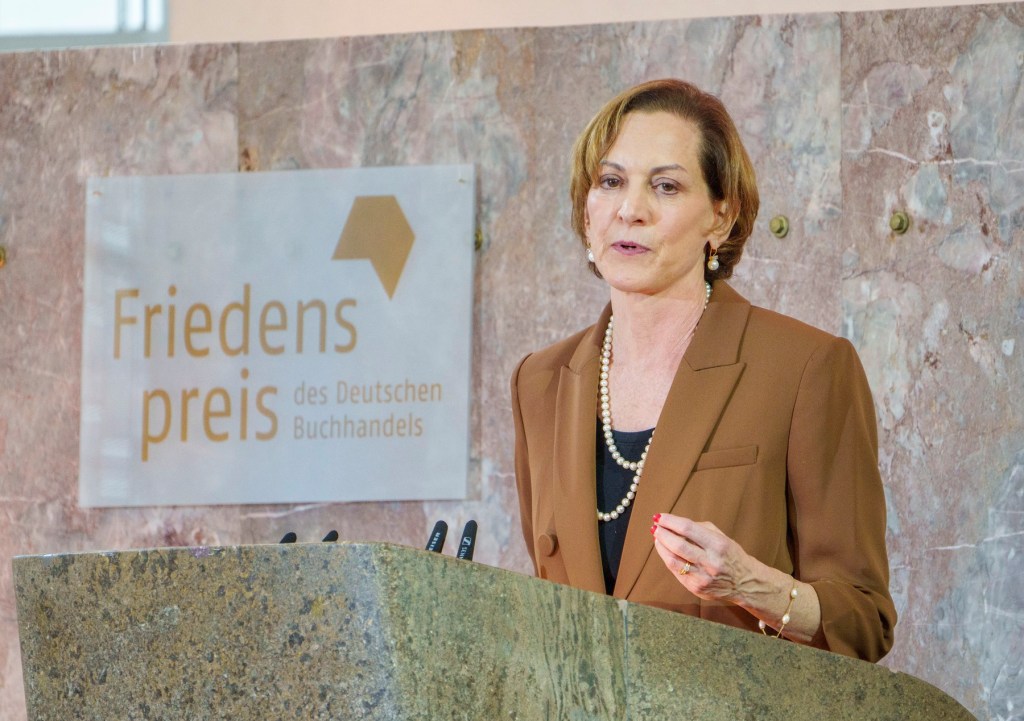
Anne Applebaum is the author of landmark volumes on autocracy
She was in Romania just last week, participating on March 11 at the presentation of the “EFOR 2026 Annual Report” in the “Carol I” Central University Library Hall and, a day later, at the event entitled “Why Democracies Turn Against Themselves”, organized by the West University of Timișoara.
At the age of 61, Applebaum is the author of historical books that have become benchmarks for Eastern Europe, including “Gulag. A History”, winner of the Pulitzer Prize for non-fiction in 2004, “The Iron Curtain”, “Soviet Repression in Eastern Europe, 1944-1956” or “The Red Famine. Stalin's War against Ukraine”.
In Twilight of Democracy, her 2020 volume that became an international bestseller, she analyzes the attraction of Western intellectuals and politicians to autocracy.
Anna Applebaum's newest book, “Axis of Autocrats,” examines the network of dictatorships—Russia, China, Iran, North Korea, Venezuela, Zimbabwe, and more—that work together to support each other, preserve their power, and undermine the democratic world.
She is married to veteran diplomat Radoslaw Sikorski, the current foreign minister of Poland.