Costa Rica closes its embassy in Cuba and demands the liberation of the “hemisphere from communists”

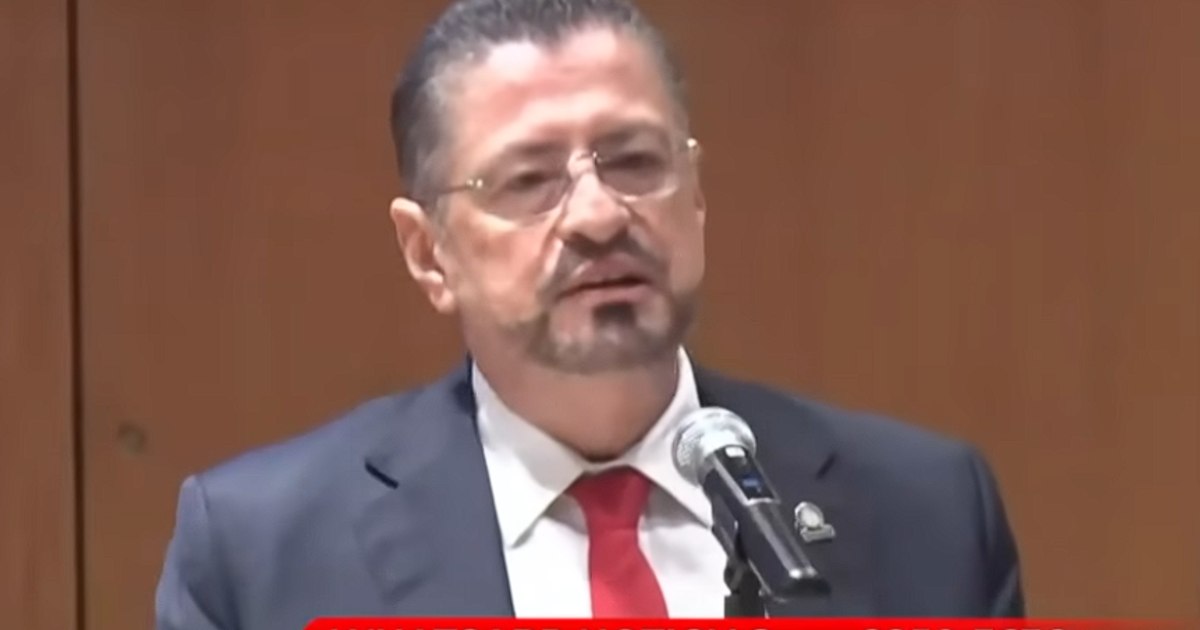
Costa Rica announced on Wednesday, March 18, the closure of its embassy in Havana and the expulsion of Cuban diplomats from the country, with its president Rodrigo Chaves demanding their release “communist hemisphere”, according to AFP.
Chaves calls for the liberation of the “hemisphere from the communists”. PHOTO video capture TouTube Television Costa Rica
President Chavez is an ally of the American leader Donald Trump who imposed an energy blockade on Cuba and repeatedly threatened in recent weeks to take control of the communist island, notes Agerpres, citing the international agency.
Government of San Jose “does not recognize the legitimacy of the communist regime in Cuba, considering the bad treatment, the repression, the inhumane conditions imposed on the inhabitants of this wonderful island”the right-wing president, who will be followed in May by the conservative Laura Fernandez, told the press.
“We must rid the hemisphere of communists” added Rodrigo Chaves.
“Costa Rica and the Cuban communist regime do not have diplomatic relations”
The president also specified that, “iAt this moment, Costa Rica and the Cuban communist regime do not have diplomatic relations”.
His foreign minister, Arnoldo André Tinoco, had previously announced the closure of the Costa Rican embassy in Cuba and declared that “asked the Cuban Ministry of Foreign Affairs to withdraw its diplomatic staff from the embassy in San José, with the exception of consular agents”.
Havana will be able to maintain its consular staff in the country to assist approximately 10,000 Cuban residents, while Costa Rica will deal from Panama with its citizens living in Cuba, according to President Chaves.
Costa Rica thus follows in the footsteps of another ally of the Trump administration in the region, Ecuador, which expelled the Cuban ambassador to Quito and the entire diplomatic mission in early March, citing interference in the country's internal political affairs and participation in “violent activities”.
Cuba's reaction
Havana reacted on Wednesday, denouncing the decision as “arbitrary, clearly taken under pressure and without regard to national interests or those of our brotherly people”.
“Through this action, the Costa Rican government (…) is once again joining the offensive of the American government in its renewed attempts to isolate our country” from the rest of the region, the Cuban Foreign Ministry said in a statement.
Costa Rica and Ecuador are part of an alliance of Latin American countries formed around the American president, created to fight against drug trafficking.
Cuba is facing its worst economic crisis in more than 30 years, exacerbated by the suspension of oil supplies by Caracas since the capture of Venezuelan President Nicolás Maduro in January and by Washington's de facto oil embargo on the island of 9.6 million people.
In 2026, the US president repeatedly made aggressive statements against Cuba and its leaders, assuring at the same time that the island, in talks with Washington, wants to “reach an agreement” with the United States.