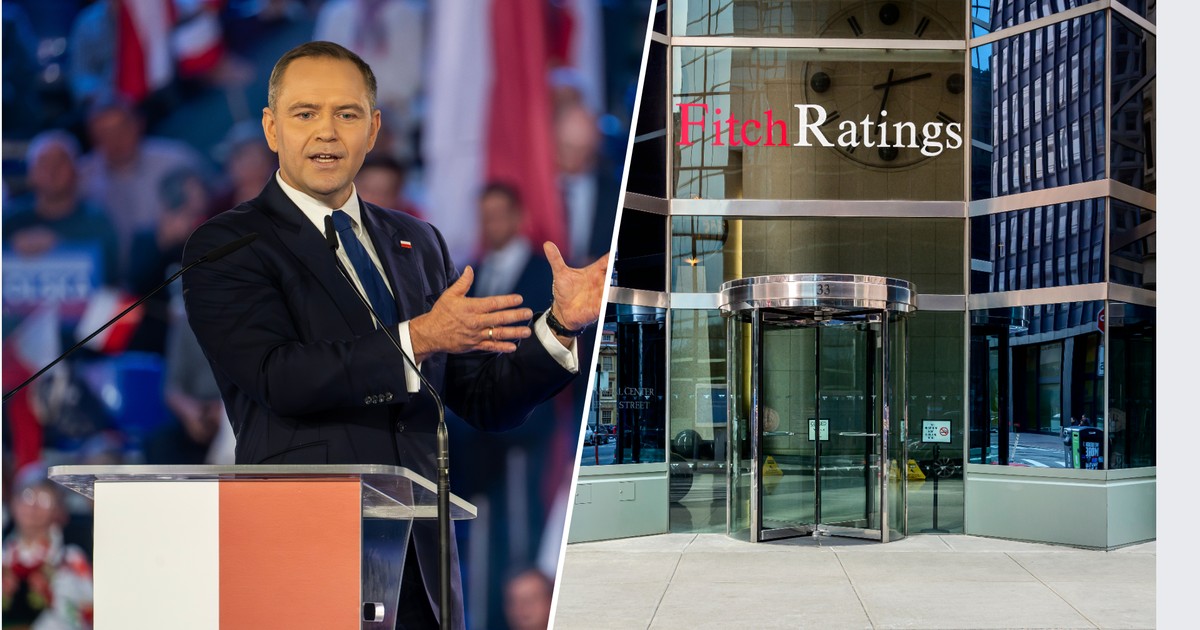
Agency Fitch notes that the president and president of the National Bank of Poland (NBP) as an alternative to SAFE presented a proposal to finance defense spending through the management of NBP gold reserves.
“However, this plan would require changes in regulations, a Fitch believes it may also be exposed to volatility in gold prices and the risk of uncertainty over the central bank's role in financing government spending” – we read in the Fitch analysis.
Continued below the video:
Veto on SAFE. Fitch agency: a politically charged debate
“We think so politically charged SAFE debate reflects key challenges underlying Poland's negative 'A-' rating outlook. In addition to weakening public finances, the confrontational relationship between the president and the government limits the latter's political and reform options, especially in terms of fiscal consolidation,” we read further.
The Fitch agency is one of the three largest and most important rating agencies in the world dealing with creditworthiness assessment. At the end of February Fitch confirmed Poland's rating at “A-” and maintained its negative outlook.
President's veto under Fitch's microscope
The agency notes that Poland is the largest beneficiary of SAFE (EUR 43.7 billion) and is expected to receive pre-financing of EUR 6.6 billion after the EC approval of its defense plan. Fitch emphasizes that the Polish government has committed to continuing the SAFE loan despite the veto.
In the latest report, the agency points out that Poland's goal of increasing defense spending (3.5% of GDP in 2025 according to the EU definition) is being implemented in the context of a significant increase in wages in the public sector, social benefits and rising debt servicing costs.
The agency estimates that Poland's annual gross financing requirement for the general government sector (accrual basis) is approximately 14%. GDP, which results from, among others, from a large deficit (6.7% of GDP in 2026). “Actual debt may be higher due to defense advances and other forms of pre-financing.” – we read in the report.
See also: The Polish government wants billions for an anti-drone system. The president's veto is not ignored
“Participating in the SAFE program could help ease the pressure.”
Fitch then writes about Armed Forces Support Fund.
The agency notes that defense spending is financed partly from the state budget and, to an increasing extent, from the off-budget Armed Forces Support Fund managed by BGK, which issues off-budget debt securities on the local market and finances large equipment purchases.
Fitch explains that on Friday the government adopted a resolution authorizing the ministers of defense and finance to sign an agreement and transfer funds through the existing Armed Forces Support Fund under the “Armed Poland” program. The agency estimates that the veto likely means the scope of eligible spending will be narrower than in the government's original plan.
“Participating in the SAFE program could help ease the pressure of debt servicing by reducing marginal financing costs and extending maturities as loan terms are favorable in terms of terms and costs compared to market financing, especially in the current volatile market conditions,” Fitch said.
See also: SAFE from A to Z. Here is a set of the most important questions and answers
“Political impasse”
The agency emphasizes that President Nawrocki's veto on the SAFE program followed repeated vetoes against government proposals.
“The president also opposed tax increases and spending cuts, limiting the scope of possible fiscal consolidation before the next parliamentary elections in 2027.” – we read.
“Increasing defense spending is seen as a priority by all political parties in a context of high security risks. However, the recent debate on costs, sources of financing and geopolitical implications in relations with the EU and the US illustrates the intensification of political polarization and the risk that prolonged political impasse will limit Poland's ability to implement policy” – says Fitch.
Source: fitchratings.com