A US ground military action to destroy or recover Iran's highly enriched nuclear material would involve numerous risks and would be “the largest special forces operation in history”. Trump has indicated he is considering such a step, but it is unclear whether the mission will actually take place, officials and experts cited by the New York Times, Jerusalem Post and Wall Street Journal say.
President Donald Trump's administration is considering a bold mission in Iran that would involve seizing or destroying highly enriched nuclear material believed to be stored deep under a mountain in Isfahan.
Analysts say it would be one of the riskiest military operations in modern American history, far more complex and dangerous than the one that killed Osama bin Laden in 2011 or the one that captured Nicolás Maduro in early January.
One of the problems is that no one knows for sure where all the fuel is.
Furthermore, if the containers containing it are punctured, the gas that will escape would be both toxic and radioactive. If the containers get too close to each other, there is a risk of an accelerated nuclear reaction.
Trump said on Tuesday that such ground operations do not worry him. “I'm really not afraid of it,” he told reporters.
The president, writes the New York Times, confirmed that he was considering the operation, but said he would only try it if the Iranian army was “so decimated that it would no longer be able to fight on the ground.”
Asked by a reporter on Monday if the conditions were met, he said that “if any president would answer those kinds of questions, then he shouldn't be president.”
How much enriched uranium does the Iranian regime have?
When US and Israeli fighter jets bombed three of the Islamic Republic's main nuclear facilities last June, experts and officials estimated that the regime possessed about 440 kilograms of 60% enriched uranium – on the verge of military-grade material, enough for about ten nuclear bombs, writes the Times of Israel.
The regime was also believed to still be in possession of nearly 200 kilograms of 20% enriched uranium.
Military grade uranium is enriched to 90%.
The head of the International Atomic Energy Agency, Rafael Grossi, said last week that about half of the 60 percent enriched uranium was stored in a complex of tunnels at the Isfahan nuclear site.
A report published earlier this month indicated that the US believes there is a “very narrow access point” through which the material could be recovered.
How close is Iran to building a nuclear bomb?
Matthew Bunn, a Harvard nuclear expert, noted for the New York Times that if Trump stopped attacking Iran now, “he would leave behind a weakened but hardened regime, possibly more determined than ever to build a nuclear bomb — and still possessing the materials, knowledge and equipment to do so.”
But how close is Iran to such a target?
According to experts, Trump exaggerated when he said Iran was “one month away” from being able to build a nuclear weapon before he bombed three nuclear sites in June 2025.
Specifically, Iran could have enriched nuclear fuel to the level needed to build a nuclear weapon within a month, but it would have taken months, perhaps even a year, to build a rudimentary weapon.
Before war broke out on February 28, most intelligence officials said they saw no imminent risk of Iran rushing to build a bomb.
That was underscored Tuesday by Joe Kent, director of the National Counterterrorism Center, who argued in a letter explaining his decision to resign that “Iran did not pose an imminent threat to our nation.”
Now, however, writes the New York Times, the situation has changed. After 18 days of bombing by the United States and Israel that destroyed much of its conventional military capability, nuclear material is one of Iran's last lines of defense.
“From their point of view, they need it more than ever,” George Perkovich, senior fellow at the Carnegie Endowment for International Peace, said Tuesday.
“The largest special forces operation in history”
The United States has been planning such operations for years, ever since it created special nuclear-trained units that practice disabling weapons, destroying centrifuges and handling nuclear material.
The operations are shrouded in secrecy, so even basic questions — including whether the United States would destroy containers of nuclear material or try to remove them from the country — remain unanswered.
Similarly, it is unclear whether the United States would attempt a low-key, minimalist operation like the one to capture Bin Laden, or whether Trump would order a major assault of protective troops and air cover.
The United States would most likely have to check several different locations to find the material.
The Wall Street Journal wrote the other day that a mission to seize Iran's stockpile of enriched uranium would require “the largest special forces operation in history.”
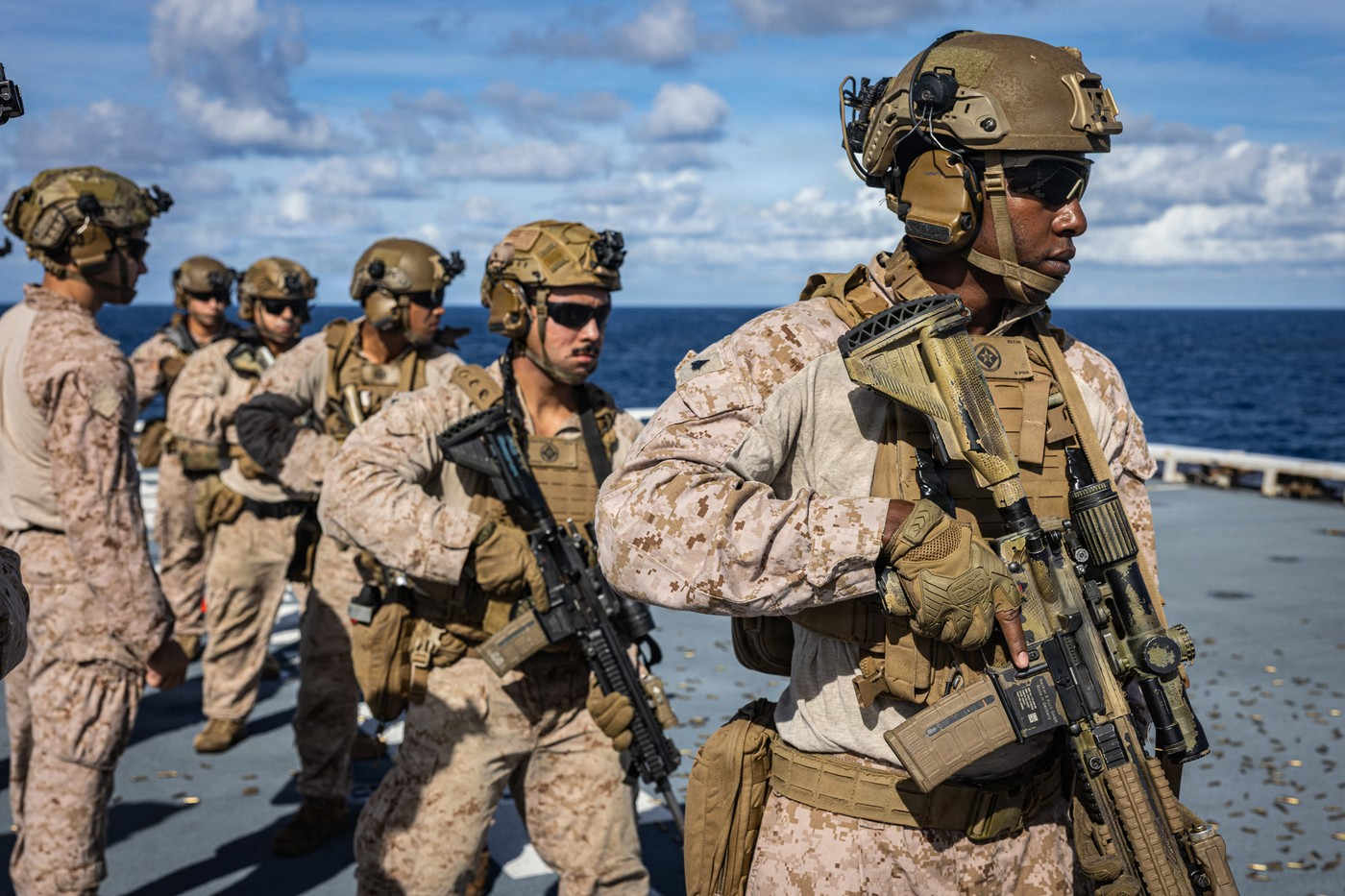
Citing former military officials, the daily reported that the mission would need more than 1,000 troops on the ground.
The military would have to secure the perimeter, while specialists would dig through tons of rubble, checking for mines and traps.
To deliver the equipment to the site and to remove the recovered nuclear material from the country, a local airfield would be required, and if none were available, a makeshift airfield would have to be set up as part of the operation.
U.S. forces would likely be targeted by drone and missile attacks, requiring ground and aircraft intervention to repel the attacks.
An alternative to removing the nuclear material from the country would be to dilute it, although this would involve the risk of contamination of the area.
Jerusalem Post: There is no imminent US plan to enter the Isfahan area
Citing its own sources, the Israeli daily Jerusalem Post wrote that the information about a potential ground invasion on several fronts in Iran, which would also target the recovery of enriched uranium, is exaggerated.
The USS Tripoli assault ship — believed to be carrying thousands of Marines to the Middle East — was approaching the Straits of Malacca off Singapore on Tuesday on its way to the region, according to CNN.
CNN announced that the ship Tripoli is carrying troops from the Navy Expeditionary Unit no. 31, based in Okinawa, a rapid reaction force of 2,200 members.
Such a force could be used in an invasion. However, there are many ways these forces could be used.
In this regard, information obtained by the Jerusalem Post says that there is no obvious or imminent US plan to enter the Isfahan area in the next few days or weeks to seize the 60% enriched uranium.
It is not very clear how the forces on the way to the region will be used and how the US and Israel will address the threat posed by enriched uranium in the future, probably because Washington and Jerusalem will make a decision only after they see how the general situation in Iran evolves, the Israeli daily also writes.
Alternative
The complications are so great that they could prompt the Trump administration to re-examine a proposal that Abbas Araghchi, Iran's foreign minister, put on the table last month, days before the attack, writes the New York Times.
Tehran, he said, was willing to dilute all nuclear material in its possession to the level used in nuclear reactors under the supervision of the International Atomic Energy Agency.
But the material would not be allowed to leave the country, it had to remain in Iran under surveillance.
The two US negotiators, Jared Kushner, the president's son-in-law, and Steve Witkoff, his special envoy, rejected the idea, saying Iran could not remain with stockpiles of nuclear fuel.
They offered an alternative: The United States would supply Iran with low-enriched uranium, suitable for power reactors, indefinitely and for free, according to two people familiar with the negotiations.
Araghchi rejected the idea. There was talk of another meeting, but the US-Israeli attack at dawn on February 28 shattered the negotiations.