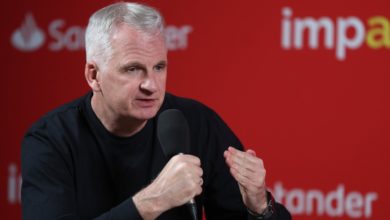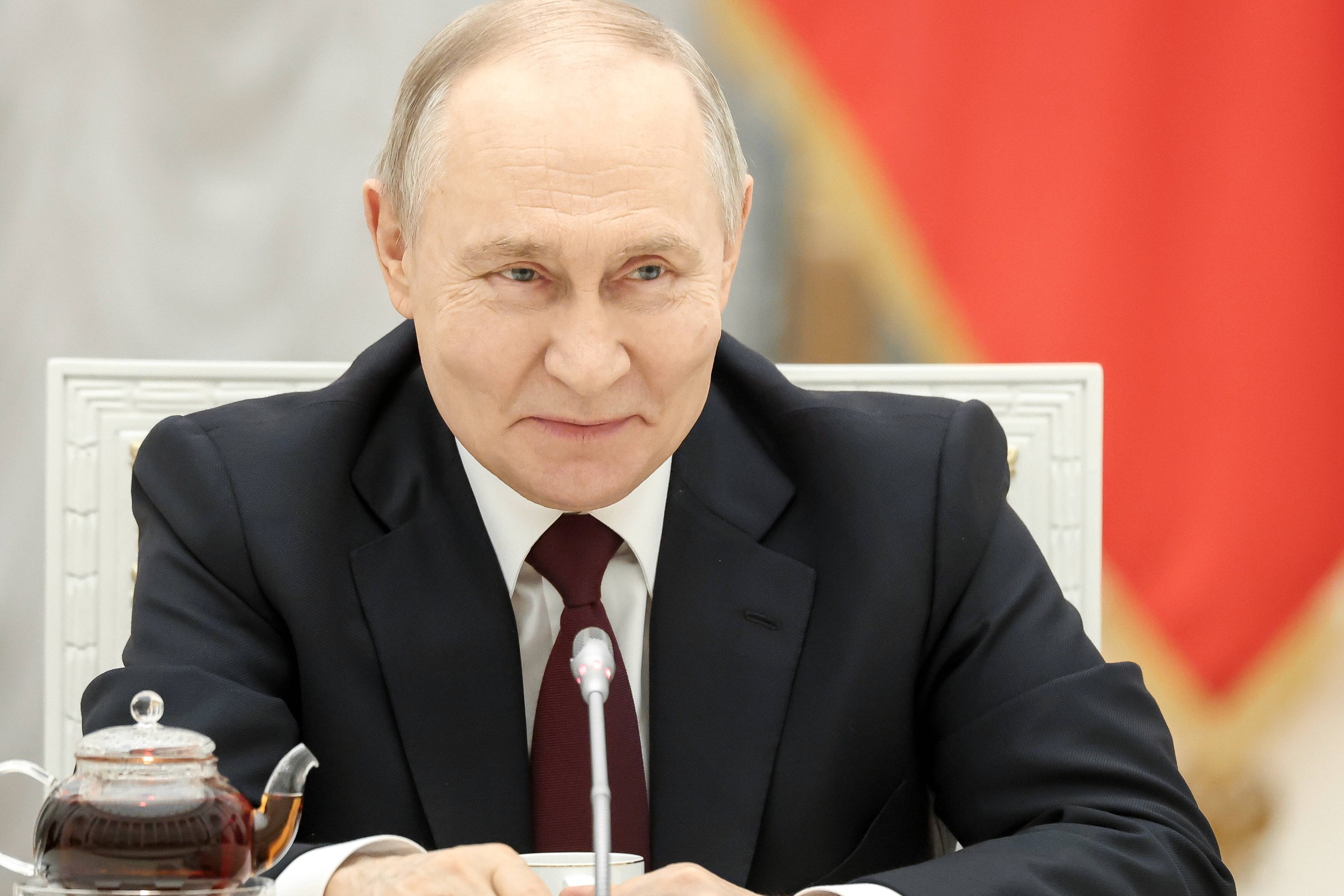
In cooperation with NATO, the SPRAVDI Strategic Communication Center at the Ministry of Foreign Affairs of Ukraine conducted a study revealing the methods and goals of Russian disinformation attacks on Ukraine. In an exclusive interview for Onet, the director of the center, Ihor Sołowiej, shared the results and explained how the aggressor wages information war.
Mariia Tsiptsiura, Onet: What did this study look like and what was its purpose?
Ihor Solowiej: This study is one of the effects of tightening cooperation between Ukraine and NATO in countering information threats. In a full-scale war, we have accumulated rich experience in fighting against Russia not only on the battlefield but also in cognitive warfare [koncepcja działań wojennych, w której głównym celem i polem bitwy jest ludzki umysł, a nie terytorium].
NATO countries, which are also targets of Russian disinformation attacks, are interested in studying the Ukrainian experience, and we are interested in improving our own methods by testing NATO approaches. In this study, we tested NATO's methodology for detecting Russian disinformation operations using specific cases we have dealt with ourselves. This is about “field tests” of NATO's methodology in the conditions of real cognitive warfare.
What are the methods of Russian disinformation attacks?
What topics are most often used in disinformation?
What does the process of analyzing disinformation operations look like?
What actions are being taken to counteract disinformation?
“People feel the negative impact, but they don't know it's the enemy's actions.”
How are disinformation operations analyzed? Why does your method allow you to see the big picture? Can these operations be linked to the aggressor state?
It is important to note that the perfect methodology does not yet exist yet and is unlikely to emerge as cognitive warfare measures are continually being improved. This study focuses on the issue of attribution, i.e. proving that we are dealing with a targeted disinformation operation behind which there is a specific entity exerting influence. Essentially, it is about collecting an evidence base on the basis of which specific remedial actions will be taken. For example, to initiate the blocking of a specific information resource or the imposition of sanctions, we must be absolutely sure who exactly is behind a specific operation.
This is why analysis is carried out and technical, behavioral and other evidence is collected. We are looking, for example, who owns the domain of a given website, whether the news is distributed in a coordinated way and what exactly resources are used. In fact, it is an investigation of sorts, during which there are many questions to be answered. However, the overall picture can be seen once a significant threat knowledge base has been accumulated to understand the adversary's strategy, typical methods and infrastructure used, etc.
What do such disinformation operations look like in practice? Is there any data on how often Russia conducts them?
Experienced specialists can recognize disinformation operations in time, but they often go unnoticed by the rest of the recipients. This means that people feel negatively affected but do not realize that it is the result of deliberate actions of the enemy. Moreover, in times of war, disinformation operations often accompany activities “on the ground.” This winter, for example, Russia tried to create a humanitarian crisis in Ukraine by shelling energy infrastructure.
At the same time, Russia conducted a complex and multi-level campaign to maximize the destructive effect of the shelling. The enemy's minimal program was apparently to undermine the Ukrainians' will to resist and make the concept of “peace at all costs” acceptable to the majority. At the same time, Moscow still dreams of provoking an internal rebellion in Ukraine that will paralyze the state management system and lead to the collapse of Ukraine. This is more or less what the Russian maximum program looks like. Russia achieved neither the first nor the second goal, but once again we saw how propaganda works.
Expert on Russia's actions. “Traditionally they work through proxies”
Please provide examples of specific Russian disinformation operations.
Throughout the winter, we watched Russia conduct intense shelling of energy infrastructure while simultaneously launching massive disinformation attacks. For this purpose, everything that could theoretically have an impact on Ukrainian society was used: from statements of the highest officials of the Russian Federation to bot farms in social networks and the mass dissemination of inauthentic content generated by artificial intelligence.
Most “entries” aimed at the Ukrainian audience have traditionally appeared through proxy sources: anonymous Telegram channels, bots on social networks, supposedly “independent” bloggers, etc. For example, in January, false information was aggressively spread that generators donated from Poland were allegedly resold on the Ukrainian trading platform OLX. We proved that it was fake news and in fact there were no such cases.
This operation was aimed not only at turning Poles against Ukrainians who were allegedly stealing aid. It was also an attack on Ukrainians, whom Russia is trying to convince that no one can be trusted: even if the West provides aid, it is allegedly immediately stolen, and ordinary people are condemned to freeze to death. And if the government is ruled by corrupt people who make money from war, what is the point of further resistance? Maybe we should agree to the Kremlin's demands? Or maybe to defeat Russia you need to overthrow your own government in Kiev? This is exactly the line of thinking Russia is trying to induce. For this purpose, attempts are made to first lead the recipients to despair, then to anger, and then to encourage them to take specific actions.
These actions do not necessarily have to take the form of anti-government demonstrations or local rebellions. If a person feels betrayed and assesses his situation as hopeless, he may, for example, avoid military service, stop supporting the army, or even allow himself to be recruited by hostile secret services. All this suits the Kremlin's military-political goals, which is why disinformation operations pose a real threat.
What topics are most often used by the aggressor in such operations?
In the midst of a full-scale war, based on our own experience, we have already created a matrix of the main propaganda narratives that Russia uses against Ukraine. But narratives are the strategic level of cognitive warfare. When it comes to specific disinformation operations, the enemy uses any topics that can cause a sharp negative reaction from recipients. Russia has long stopped focusing on what was previously called “pro-Russian propaganda.” It is already understood in Moscow that Ukrainians are insensitive to the advertising of “Russian Mir”. That is why Russia is betting on destabilizing Ukraine. Ukrainians react very sharply to topics of corruption, political abuses, injustice – and these are the topics the enemy is manipulating. Topics directly related to the war are also very sensitive: mobilization, human and territorial losses, prisoners and missing persons, refugees and internally displaced persons, etc.
It is important to understand that the most dangerous are manipulations of real problems that are given a surreal dimension. Modern man perceives the world through the prism of the media sphere – and this is what Russia is trying to turn into a distorting mirror.
How to effectively counteract such actions by Russia?
There is no “universal pill” that would neutralize information threats once and for all. However, there is a clear algorithm.
First, hostile propaganda platforms should be blocked. These include all Russian media, social networks, instant messengers and Russian computer programs (games, accounting, navigation programs, etc.). International cooperation is also important here – after all, the largest social media platforms are managed by global technology giants. They must realize or be forced to realize that these platforms are not only a space for free communication between people, but also a tool for destabilizing democratic societies. This is a very complex political issue, but sooner or later it will have to be answered – not only at the level of individual national governments, but also at the level of the European Union and NATO.
Of course, the realities of cognitive warfare require the introduction of sanctions that could potentially deprive the Kremlin of the resources necessary to continue the war, including in its information dimension. Secondly, it is necessary to create your own content. Effective and honest strategic messages play a very important role here, helping citizens maintain an authentic view of the world and avoid confusion. The third direction is media education. People should be taught to independently detect manipulation, fake news and distrust disinformation. Taking action in all three areas can largely neutralize attempts by Russia and other dictatorships to influence public opinion in democratic societies.