2026-03-17 17:17, updated 2026-03-17 18:28
publication
2026-03-17 17:17
update
2026-03-17 18:28
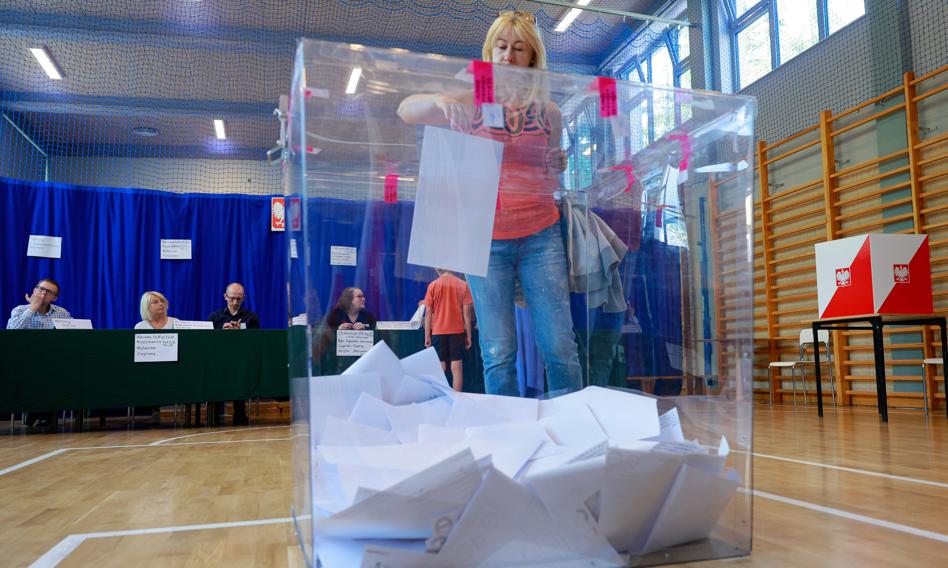
Senate committees have started work on the draft amendment to the Electoral Code. Changes based on experience from last year's presidential elections. concern the reduction of voting districts. The project also assumes that the National Electoral Commission is to appoint judges to the District Electoral Commission; and not, as currently, people with legal education.
On Tuesday, the Senate legislative, human rights and rule of law committees and the local government and state administration committees discussed the Senate draft of an extensive amendment to the Electoral Code and the Local Referendum Act. It provides for changes in the criterion for appointing a member of the District Electoral Commission by the National Electoral Commission, reducing voting districts, changing the number of incumbent electoral commissioners and the procedure for their appointment.
A moment before the meeting – as informed by the chairman of the legislative committee, Krzysztof Kwiatkowski (KO) – the committee received the opinion of the National Electoral Commission, which changed the plans for work on the project. However, the meeting was an opportunity to listen to the opinions of experts regarding the compliance of the project with the constitution.
The Senate proposes OKW secretaries
The idea of restoring the position of secretary of the district commission was generally positively received. As indicated, this will professionalize the work of the commission and help avoid incidents that occurred during last year's presidential elections, when votes were assigned to the wrong candidates in some commissions.
According to the draft novella, The main task of the secretary will be to ensure the correctness of the activities of the electoral commission, in cooperation with the chairman of the Electoral Commission. His responsibilities will include coordinating: the counting and checking of ballots upon receipt and prior to voting; coordinating the course of voting and determining voting results; coordinating the preparation of the voting protocol, its signing and making it public.
The secretary would be appointed by the relevant electoral commissioner from among the candidates proposed to him by the commune head.
However, during the discussion it was also pointed out that the function of the secretary would not solve all problems related to the work of the committee and may result, for example, in other members burdening him with excessive responsibilities.
The Senate bill strengthens the role of judges in supervising elections
According to the project, the National Electoral Commission would appoint judges to the District Electoral Commission; in accordance with applicable regulations, the National Electoral Commission appoints persons with higher legal education.
According to the applicants, the current wording of the regulations “does not guarantee the apolitical nature of the members of the district electoral commission”. According to them, replacing this requirement with the condition of being a judge will result in the members of the OKW being “not only apolitical by the nature of the office they hold, but also characterized by a high level of professionalism and actually practicing the legal profession.” Judges would be nominated by the Minister of Justice to serve on the commission.
This change was also well received by experts. The judicial model – as indicated – is, in principle, a better model and guarantees a higher standard of the commission due to the independence of judges. It was pointed out that the judiciary was strongly based on the tradition of electoral law.
Shorter lines to the polls? The Senate wants to reduce voting districts
Constitutional doubts were raised primarily regarding the proposed mechanism for determining the number of seats in electoral districts. Their number would be determined by a resolution of the National Electoral Commission, taking into account the data collected in the Central Register of Voters. There were voices in the discussion that this matter should retain its statutory status and not be based solely on a resolution.
The project also proposed that: election officials were appointed from among the employees of the commune office, which was not possible before. Currently, an election official cannot be a person employed in the commune office where he or she is to perform his or her function.
Another proposed change is to reduce the number of residents to create a permanent voting district. Currently, a circuit can be created for a maximum of 4,000. inhabitants. The draft amendment reduces this number to 3,000. However, the permissible number of OKW members will remain unchanged.
According to the justification, the change is intended to increase the efficiency of the performance of duties by members of electoral commissions. It was emphasized that voters in a reduced permanent voting district would also feel more safe. Referring to the last elections, attention was drawn to the formation of queues to vote, which – as noted – may cause anxiety “related to the fear of whether the voter will be able to vote at all before the polls close.”
Changes are also planned regarding, among others: the number of electoral commissioners. Currently, 100 commissioners are appointed by the National Electoral Commission, at the request of the head of the Ministry of Interior and Administration, from among people with higher legal education. The applicants propose reducing to 49 the number of electoral commissioners whom the National Electoral Commission would appoint from among judges, at the request of the head of the Ministry of Justice.
The Sejm and the Senate – two projects to repair elections
At the same time, the Sejm is working on another draft amendment to the Electoral Code – also introducing the institution of the secretary of the electoral commission. The parliamentary bill also provides for changes in the area of reporting to the district electoral commission. According to the project, only those committees that register a list or lists of candidates would be granted the right to nominate representatives to the OKW. In the case of presidential elections, nominating your representatives to the committee would have to be preceded by the committee collecting PLN 100,000. signatures, because that's how many are required to register a presidential candidate. (PAP)
from/ nl/ par/