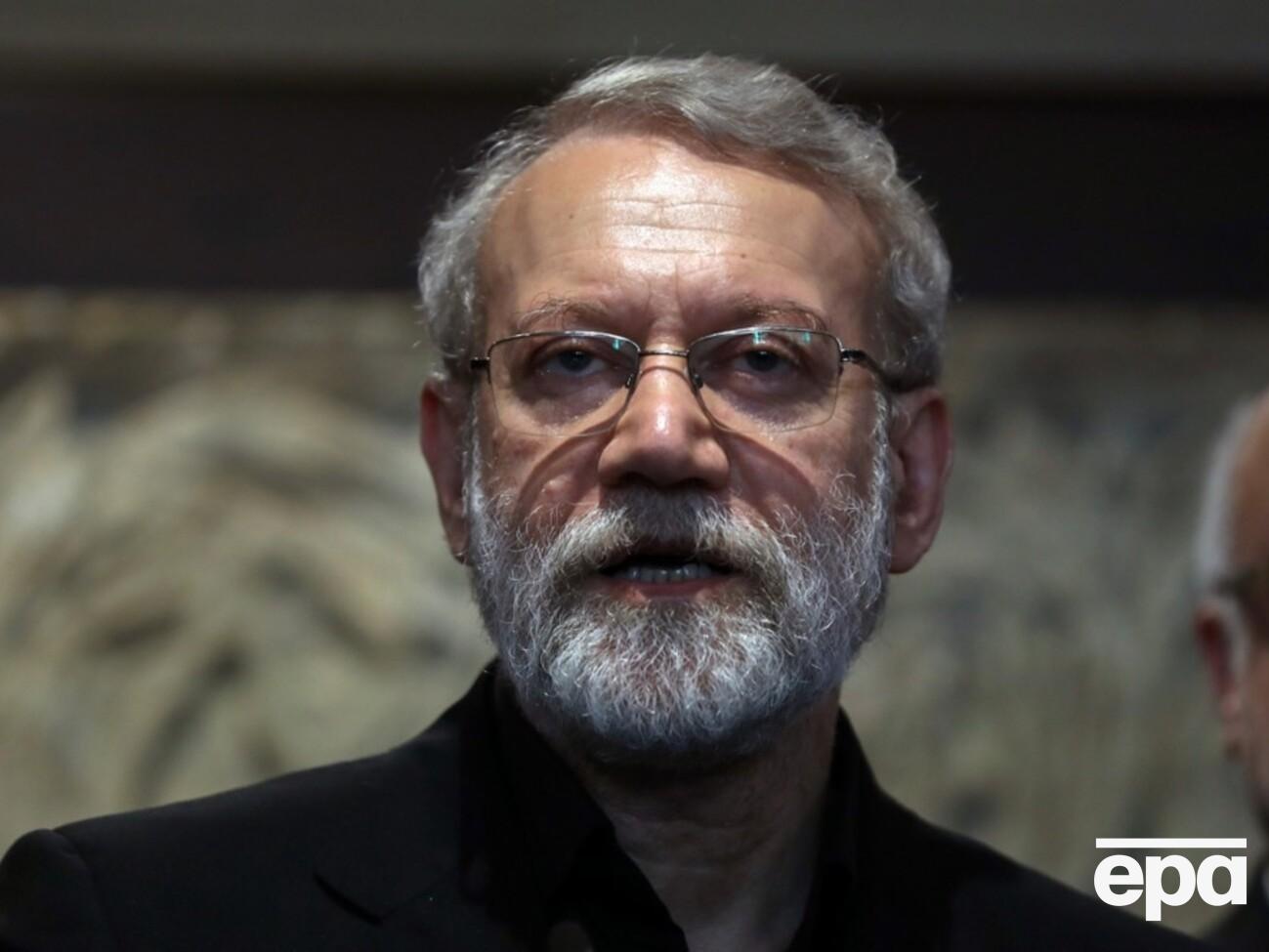
“An experienced Iranian politician died in a terrorist attack by criminals of American-Zionist origin,” the report said.
The agency also reported that his son, Dr. Morteza Larijani, died along with his father.
Previously, the Israel Defense Forces (IDF) reported his liquidation, noting that Larijani was killed in an airstrike by Israeli troops on March 17.
According to Reuters, citing the Iranian Fars news agency, Larijani died at the age of 67 during a US-Israeli airstrike while visiting his daughter in the eastern suburbs of Tehran.
What is known about Ali Larijani
As the agency notes, Larijani came from a prominent family whose brothers rose to high positions after the 1979 Islamic Revolution. He was considered “cunning and pragmatic” but always firmly supported Iran's theocratic system of government.
According to Reuters, Larijani was a commander of the Islamic Revolutionary Guard Corps during the Iran-Iraq War of the 1980s, then headed Iran's national broadcaster and also twice headed the Supreme National Security Council. He also served as Member of Parliament and Speaker for 12 years.
Larijani's role in suppressing mass protests
Despite Khamenei's allegiance to absolute power, Larijani offered a more “cautious approach” than other hardline figures, according to Reuters. He used diplomacy to advance Iran's goals and placate domestic opposition.
Despite this, the agency notes, he likely played a central role in suppressing mass protests in January 2026 and “called for retaliatory violence” that led to the deaths of thousands of protesters and led to Washington sanctions against him last month.
Larijani's role in nuclear negotiations
The article also said the strikes symbolized the failure of the nuclear policy Larijani helped develop. In implementing this strategy, he acted as the voice of the supreme leader to connect with Western negotiators and explain Khamenei's vision in numerous television interviews.
According to Reuters, in his role as chief nuclear negotiator (2005–2007), Larijani defended Iran's right to enrich uranium, which is necessary for nuclear power plants, but which could be used to create nuclear weapons. Following the discovery of hidden enrichment facilities in 2003, fears of a bomb were raised and sanctions were imposed on Iran. Larijani has always denied any intention of creating nuclear weapons.
The agency also notes that he visited Moscow and met with illegitimate President Vladimir Putin, helping Khamenei lead an “important ally.”
As speaker of parliament (2008–2020), Larijani ensured that the 2015 nuclear deal met the demands of skeptical Iranian hardliners, according to Reuters.