The S&P 500 index rose 1%, the most in five weeks. The Dow Jones Industrial Average rose 0.8% and the Nasdaq Composite rose 1.2%. Meanwhile, Donald Trump is putting pressure on other countries to help reopen the Strait of Hormuz.
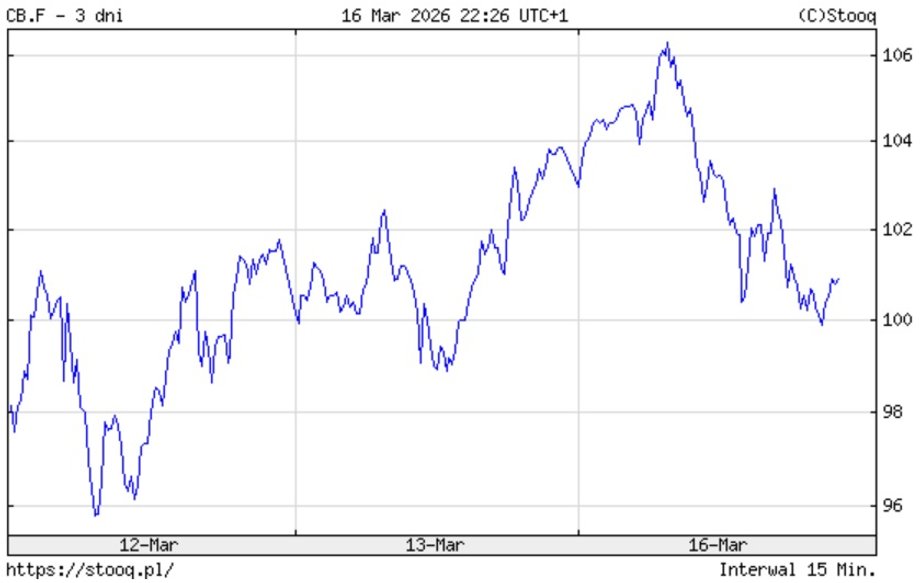
The price of crude oil has once again become the driving force behind the markets. A barrel of American WTI crude oil fell by 5.3 percent on Monday, to $93.50, which eased the pressure on the economy after exceeding $102. in the morning. Brent crude, the international benchmark, fell 2.8%. up to $100.21 per barrel, after previously reaching a price of $106.50.
Oil prices remain high – they were around $70 before the United States and Israel launched attacks on Iran. In response, Iran all but halted flows through the narrow Strait of Hormuz, which typically carries one-fifth of the world's crude oil from the Persian Gulf to consumers around the world. This has caused oil producers to cut production because their raw material has nowhere to go.
Brent crude oil prices for the last three days:
|
Stooq.pl / GPW Benchmark, stooq.pl
If the strait remains closed for a long time, it could result in a lack of enough oil on the market, which will lead to inflation rising to devastating levels for the global economy, AP estimates.
Donald Trump is putting pressure on the Strait of Hormuz
Donald Trump is putting pressure on other countries to help reopen the Strait of Hormuz. The US president over the weekend demanded that other countries affected by the strait closure “take care of it” and said his country would “help”.
The US stock market has a history of recovering relatively quickly from military conflicts in the Middle East and elsewhere, provided oil prices do not remain too high for too long. Many professional investors expect this to happen, which has helped keep U.S. stock prices near record highs, AP reports.
Despite all the wild swings over the past few weeks, the S&P 500 is down just 4%. below its historical high.
However, some analysts believe that markets may be underestimating the risk of war in the Middle East.