Intrigues, power plays and rivalries: Behind the scenes of the disputed vote for Mojtaba Khamenei, Iran's new supreme leader

An intense succession battle, likened by the New York Times to “Game of Thrones,” pitted Revolutionary Guard generals against the moderate camp. The former won their cause, but not without resistance.
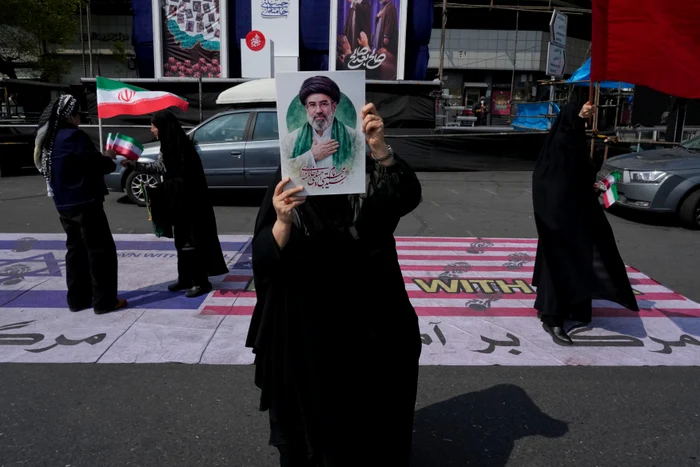
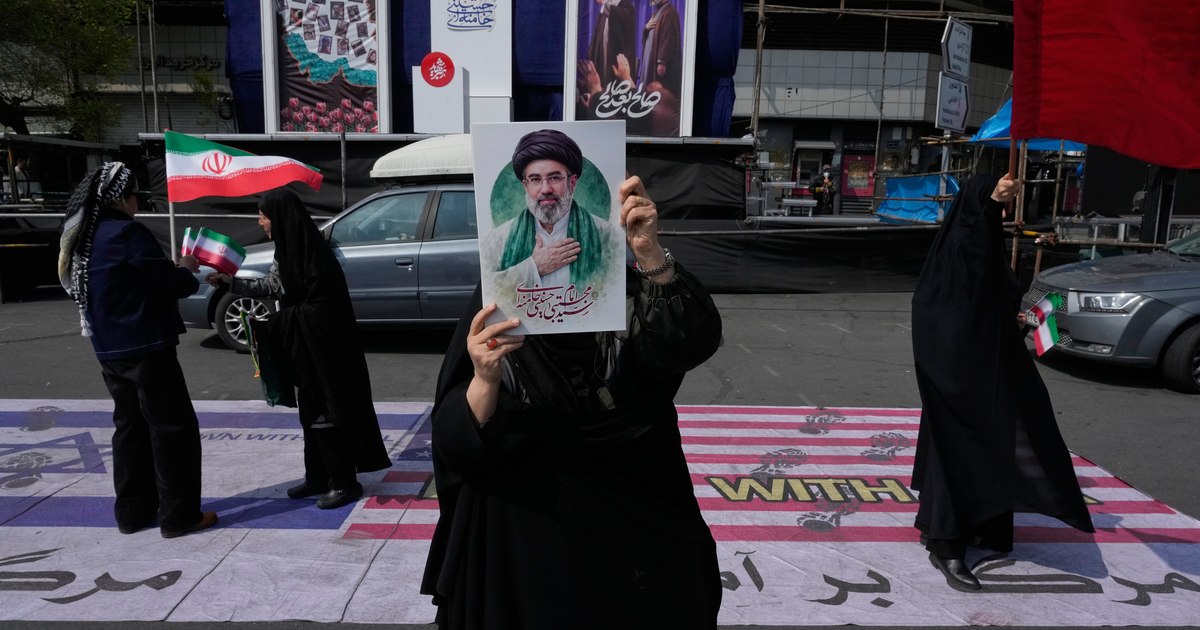
A woman expresses her support for Mojtaba Khamenei in Tehran PHOTO profimedia
The rise of Mojtaba Khamenei to the supreme leadership of Iran might seem, at first glance, an inevitable process. In reality, his election was the result of an intense political confrontation, marked by intrigues, rivalries and backroom negotiations between the regime's most powerful factions.
The succession process has become “the Islamic Republic's version of Game of Thrones,” with a vacant throne, an assembly of clerics deciding the country's future and two dynasties — Khamenei and Khomeini — vying for influence, writes the New York Times.
And in normal times, choosing a third supreme leader of Iran would have been a challenge – a leader who would serve not just as a religious leader, but as one with authority over political decisions and the armed forces.
“We analyze seven criteria for each candidate,” namely political vision, religious credibility, management ability, respectively wisdom,” explained Ayatollah Mahmoud Rajabi, a member of the leadership of the Assembly of Experts.
However, the situation became dramatic after the death of Ayatollah Ali Khamenei, killed in an air attack at the beginning of the war with the United States and Israel. In the midst of bombings and a major crisis, the election of a successor for life became a test of the survival of the theocratic system.
According to anonymous sources from several levels of power – senior Iranian officials, clerics, people affiliated with the supreme leader's office and members of the Revolutionary Guard Corps – Khamenei most likely would not have come to power if his father had died of natural causes. Ayatollah Khamenei gave his close advisers three names as potential successors. His son was not among them.
Secret meetings and first votes
On March 3, the 88 members of the Assembly of Experts, the body constitutionally responsible for electing the supreme leader, met in a secret meeting online. On the same day, Israel bombed the institution's headquarters in the city of Qom, causing casualties among administrative staff.
According to several Iranian officials and members of the Revolutionary Guards, the rival factions immediately began promoting their candidates.
The hard camp, supported by the Revolutionary Guards, wanted continuity and a confrontational foreign policy. Instead, the moderates called for a new figure, a new style of government, and a change in direction vis-à-vis the US that would end hostilities.
Behind Mojtaba Khamenei lined up powerful figures of the military apparatus, including General Ahmad Vahidi, the commander of the Revolutionary Guards, and General Mohammad Ali Aziz Jaffari, the military strategist, and General Mohammad Bagher Ghalibaf, the Speaker of the Parliament and former commander of the Guards. Hossein Taeb, the former head of the Guardians' intelligence unit and mastermind of cross-border assassination plots, was also in his camp.
On the other hand, influential political leaders opposed his candidacy.
Ali Larijani, the head of Iran's National Security Council and currently Iran's de facto leader, told members of the Assembly of Experts that in his view the country needs a moderate and unifying leader, and from that point of view Khamenei would be a polarizing figure. President Masoud Pezeshkian, a moderate, and several high-ranking officials and clerics joined them.
The moderates proposed two potential candidates, including former President Hassan Rouhani, who led the country during the negotiations that led to the 2015 nuclear deal with the United States; and Hassan Khomeini, grandson of the founder of the Islamic Republic. Moderates also proposed Alireza Aarafi, an academic and jurist, as a compromise choice: a candidate with strong religious foundations but no influence in politics or military circles, making him manageable.
However, in the first round of voting, Mojtaba Khamenei obtained the necessary two-thirds majority, a sign that the influence of the military was decisive.
As the discussion progressed, members of the assembly seemed less interested in a leader to rescue the country from its current state of acute crisis and more in a reincarnation of their “martyred” leader to avenge his death, senior officials revealed.
Ayatollah Mahmoud Rajabi, a member of the assembly's board of directors, in an interview with state television, said the assembly had tried to meet face-to-face five or six times, but the sessions were canceled each time for security reasons.
Blocked ad and last moves
Although the result seemed clear, the official announcement was canceled at the last minute.
Ali Larijani warned that the immediate proclamation of the new leader could put his life in danger, after Washington and Israel had threatened to eliminate any successor to the ayatollah.
On March 6, Israel carried out the threat and bombed the Supreme Leader's compound in Tehran with anti-bunker bombs, but Mojtaba Khamenei was not there.
The delay in the announcement gave moderates one last chance to try to overturn the vote. They presented an alleged directive from the former leader, according to which Ali Khamenei would not have wanted his son to follow him in power.
According to witnesses, two of the ayatollah's close advisers told the clerics that he had forbidden hereditary succession.
Their argument was clear: such a succession would contradict the principles of the 1979 Islamic Revolution, which overthrew the monarchy.
The last-minute effort to overturn the assembly's decision shocked clerics present at the meeting, according to officials and clerics. They asked for time to consult all members.
In a video speech, Ayatollah Ali Moalemi, one of the assembly's members, denounced the moderates' efforts as tantamount to a “coup d'état”.
“There were efforts to change the minds of the members of the assembly and take us in another direction,” Ayatollah Moalemi said. “There were interventions from outside the assembly with the intention of infiltrating and influencing us.”
Symbolic refusal
At the same time, Mojtaba Khamenei would have initially refused the position.
“When he was told that he was chosen, he replied: “I don't want to accept, choose someone else”, revealed the politician Abdolreza Davari, who is close to him.
But Davari explained that the gesture is part of a clerical tradition: “It's a Shia custom of modesty to say you don't seek power and then accept it.”
Larijani, a close confidant of Ayatollah Khamenei, argued that the virtual vote for his son would be invalid because the Constitution requires assembly members to vote in person. Then the gathering was informed that the potential successor, recovering from injuries sustained in airstrikes on the first day of the war, did not even want the job. For security reasons, direct communication with him was not possible.
The generals' counteroffensive
Against the background of these disputes, the generals of the Revolutionary Guards intervened decisively.
On March 7, President Pezeshkian announced that Iran would stop attacking the Arab nations of the Persian Gulf and apologized. He said the decision was made by the three-person transition council he was part of.
The Revolutionary Guard generals leading the war and supporting Khamenei were outraged, according to sources cited by the NYT. General Vahidi, the supreme commander of the Guardians, and General Aziz Jaffari urged the Assembly of Experts to meet immediately for a final vote and announce Khamenei's son as the new supreme leader.
The former head of the body's intelligence services, Hossein Taeb, reportedly personally called all 88 members of the Assembly to persuade them to vote for Mojtaba Khamenei.
According to some officials, he would have told them that supporting the ayatollah's son is a moral, religious and ideological duty.
Final vote
On March 8, the Assembly of Experts met again, also in virtual format. This time, each cleric wrote the name of the candidate on a piece of paper, sealed it in an envelope, and sent the vote by courier to the committee for counting and validating the vote.
The final result: 59 votes out of 88 for Mojtaba Khamenei – enough for a two-thirds majority, but far from unanimity.
Shortly before midnight, state television officially announced that Iran has a new supreme leader.
Congratulatory messages and pledges of loyalty began to flow, including from politicians who had previously opposed his appointment.
For now, the new supreme leader has not yet appeared in public, but the Iranian establishment seems to have aligned itself around him, at least at the official level, writes the New York Times.