Earthquake on the labor market: giants start layoffs, investments stop. How analysts explain the phenomenon


In recent weeks, several large companies in Romania have announced waves of layoffs. Bosch, Amazon, Aptiv, Oracle, and recently OMV Petrom, have started rolling out layoffs. Analysts say that everything starts from legislative instability in Romania and especially about tax increases. And the biggest risk for Romania is not the departure of foreign companies, but their refusal to invest, experts warn.
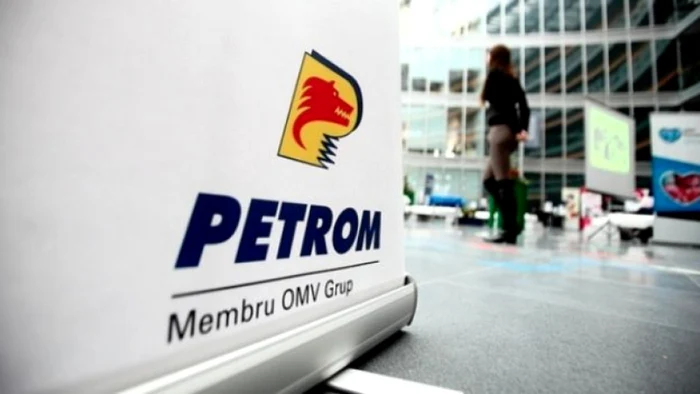
OMV announced massive layoffs. Photo by Shutterstock
Starting from the middle of last month, international giants with factories or offices in Romania announced that they are operating mass layoffs, as follows:
– Almost 170 employees of the Bosch factory in Jucu, Cluj – i.e. more than 5% of the staff – will be out of a job on the eve of the winter holidays;
– The American tech giant Amazon, present in Romania for almost 20 years with thousands of employees in Iași, Bucharest and Timișoara, announced that it is making 14,000 employees available worldwide;
– The Aptiv auto parts factory, the most important employer in the city of Ineu, Arad county, moves its production outside the EU and lays off all its approximately 1,000 employees;
– Oracle is preparing to lay off approximately 400 employees in Romania, as part of a wave of global restructuring, amid the company's accelerated transition to solutions based on artificial intelligence;
– OMV Petrom has confirmed that it will lay off approximately 1,000 employees, following a restructuring decision taken by its main shareholder, the Austrian group OMV.
In all the above situations, layoffs are part of the companies' cost optimization plans, in the context of high taxation in Romania and global economic uncertainties.
Chisăliță: OMV Petrom is optimizing its costs
A special situation is in the case of OMV Petrom, which decided to reduce the number of employees due to the drop in the price of a barrel of oil and the increase in taxes, as sources told “truth” the energy expert Dumitru Chisăliță.
“In the case of the layoffs at OMV Petrom, we are talking about two big issues: on the one hand, the drop in the price of a barrel of oil by about 20% from the beginning of the year until now, and on the other hand, about the legislative instability in Romania and especially about the increase in taxes.
Any company takes shelter by reducing costs, which also translates into layoffs. Most companies are either leaving or optimizing their costs“, declared Dumitru Chisăliță for “truth“.
More and more companies are facing budget constraints
Fiscal volatility has turned into budgetary instability and pressure on margins, while increases in VAT, contributions and the removal of some tax facilities have increased the administrative burden and reduced the space for investment and innovation, Supertree representatives warn.
The direct consequence is increasing pressure on cash-flow: expenses are growing faster than income, and leaders are forced to postpone investments, limit hiring or reduce development budgets.
In addition, companies also face human resource and organizational challenges. Rising costs, inflationary pressures and competition for talent make it difficult to retain professionals without affecting profitability. Leaders need to optimize productivity, overhaul hybrid work models and modernize internal processes – all while maintaining team morale.
“More and more companies are facing budget constraints, compliance risks and a lack of internal resources to effectively manage changes in the marketplace. Expansion, reorganization or hiring plans are becoming increasingly difficult to sustain without strategic support”, explains Gianina Crăciun, CEO of Supertree and Managing Partner of Adeco Advisory.
Multinationals react according to the local market context
Asked why multinationals make layoffs, business consultant Sorin Spiridon, Managing Partner of TPC Concept, told “truth” that “the reaction of foreign companies in Romania in 2025 will be different depending on two realities: their position at the European level and the context of the local market”.
“Multinationals under pressure for profitability in Europe will prioritize optimization at group level: cost efficiency, portfolio simplification, footprint reconfiguration.
In such situations, Romania is indirectly affected: specific headcount adjustments and organizational transformations decided by HQ and implemented regionally. However, this resettlement is not only a risk, but also an opportunity to relocate activities from more expensive markets to Romania, where competitiveness remains strong.
For companies that decide locally, internal pressures – taxation, labor costs, political uncertainty – are changing the way investments are thought about. In a context where rules change rapidly and costs rise faster than productivity, corporate decisions are increasingly oriented towards financial discipline and operational pragmatism”Spiridon explained to “The truth”.
If taxation becomes unpredictable, they move to other countries
However, he added, “MNCs are used to local volatility and we don't think they are factoring in massive pullbacks“.
“However, the impact will be visible in the economy and society: the labor market is rapidly professionalizing and investments are becoming more selective. Companies stay here for talent, geographical position and growth potential, not for the absence of risks. Romania only needs to maintain two essential advantages – predictability and skills – to remain on the short list of regional investments.
In the medium term, adjustments may occur in labor-intensive industries with low margins and low relocation costs: auto parts for heat engines, textiles and clothing, certain volume support services and activities such as food manufacturers that ship more domestically. The latter, if taxation becomes unpredictable, can move production relatively easily to other countries in the region, and Romania remains only an import market“, Spiridon added.
“We are not talking about sudden departures, but about a decrease in new projects where the advantages become fragile. (…) The biggest risk for Romania is not the departure of foreign companies, but their giving up investing.
When capital moves to more predictable markets, the effect is not immediately seen in factory closures, but in the lack of upgrades, high-paying jobs and innovation at the local level. In a low-growth Europe, competition for capital is fierce. Fiscal predictability and skills development are not “nice-to-have” competitive advantages, but conditions for economic survival“, said the consultant.
Waves of reorganizations in Romanian multinationals
For his part, business consultant Mona Bardos, representative of Monasi, told “Adevărul” that, recently, they have been observed more and more often in Romania “waves of reorganizations in foreign or multinational companies, especially in the IT, financial and support services sectors”.
In itself, restructuring is not something negative, it is part of the natural dynamics of the economy, but the problem arises when the impact is on a large number of people and there is a lack of communication, planning and real support for the affected people, he explains.
“From the perspective of the private sector, it is vital that companies are transparent about their intentions, in order not to generate a wave of insecurity and imbalance in the labor market:
1. to communicate clearly if layoffs are coming; provide details of compensation payments, retraining programs or career advice;
2. to think about the impact on the remaining teams, because trust and stability are lost there too. I also speak from personal experience: during the 14 years I spent in corporations, I went through reorganization processes several times.
So that these processes do not affect the market, entrepreneurs and employees even more, I believe that some concrete measures can be applied, such as professional transition programs or partnerships between companies in the same area or industry, aspects that help people to remain relevant and easily re-enter the market either at other companies or in the entrepreneurial environment. Finally, reorganization can be a painful process, but it doesn't have to be traumatic,” Mona Bardos told “truth“.