Both the far right and the far left achieved strong results on Sunday in the first round of local elections in France. However, you should not draw hasty conclusions from this, because a lot can still change. The lower-placed candidates are now trying to forge alliances that could dramatically influence the results in the second round on March 22.
The National Rally party (led by Jordan Bardella and Marine Le Pen) achieved a strong result but failed to gain an overwhelming advantage in the south, one of its regional strongholds. In key cities such as Marseille and Toulon, she now faces a fierce fight in the second round. Despite this, several of its candidates won over 40 percent. votes, something many centrists can only dream of.
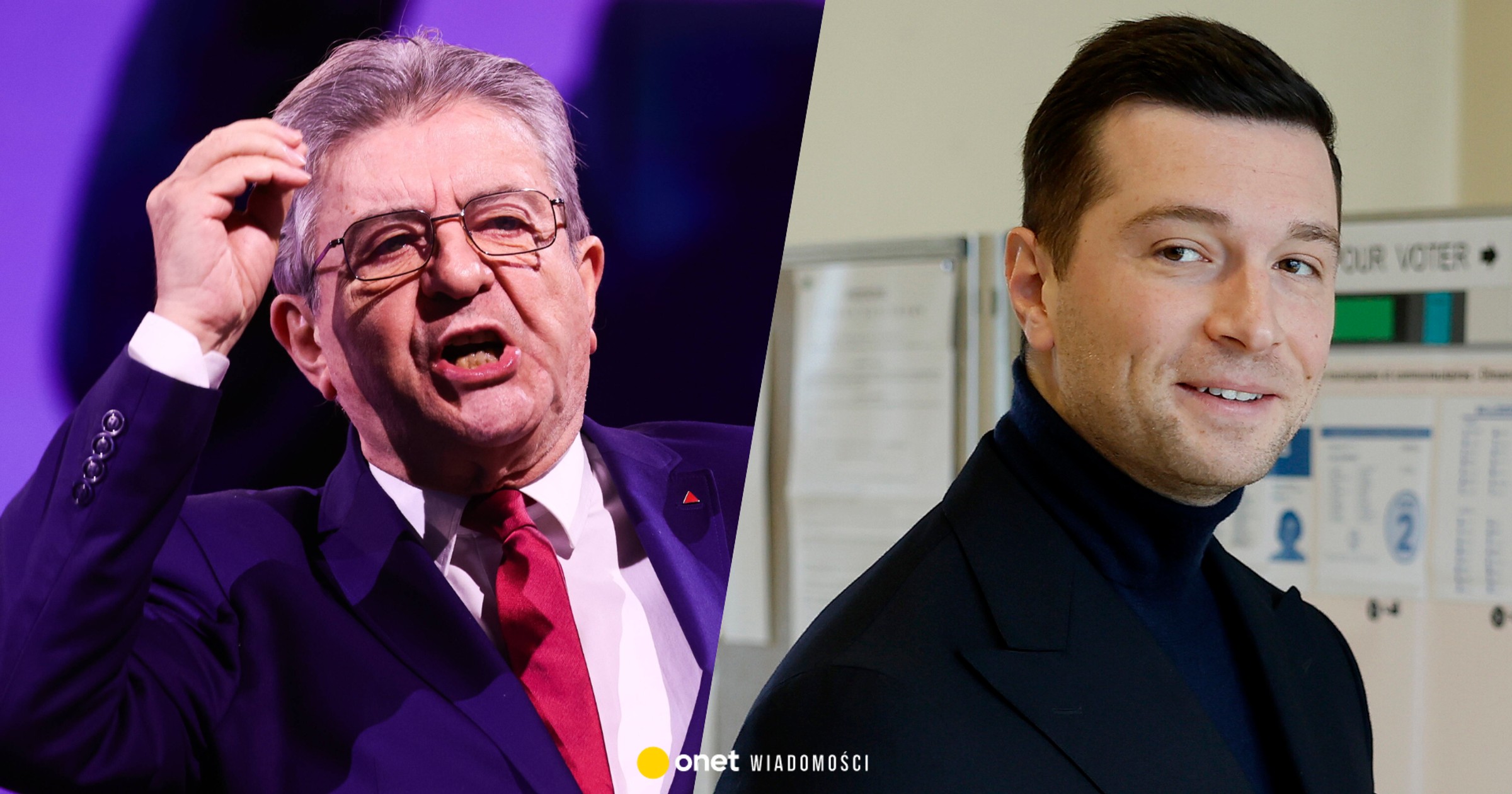
At the other end of the spectrum, radical leftist Jean-Luc Melenchon's Defiant France movement performed better than expected in several cities such as Lille and Roubaix in the northeast, confirming its status as a key player ahead of next year's presidential elections. The good results of his candidates will be a worry for the moderate left, which is afraid of an alliance with the increasingly controversial Melenchon, but is not strong enough to completely ignore him.
Here are POLITICO's top takeaways on the current state of the election race.
Good results, but without the overwhelming advantage of the far right
France's two-round electoral system has historically worked to the detriment of Marine Le Pen's National Rally party, including in mayoral and city council elections, because ad hoc alliances are formed before the second round to block far-right candidates.
This time the party hoped to exploit disagreements between centrists and leftists — as well as its growing popularity across the country — to make a breakthrough.
In this respect, the first round brought mixed results to the party. Incumbent mayor and party vice-president Louis Aliot was re-elected with an absolute majority in Perpignan in the south, the only major city governed by the party.
However, the ZN failed to achieve a decisive victory in Toulon, one of the cities it had hoped to capture. His candidate, MP Laure Lavalette, one of Le Pen's closest collaborators, will face a difficult fight with her rivals in the second round.
Still the far right is making significant gains in urban centers that have long been strongholds of the center-right and center-left.
The most striking example is Marseille, France's second-largest city, where National Rally candidate Franck Allisio is neck and neck with incumbent mayor Benoit Payan, who has the support of several moderate left-wing parties.
“These results reveal expectations that we know are enormous,” National Assembly Speaker Jordan Bardella said minutes after polls closed. – The change will not wait until 2027 – it will start this Sunday – he added, referring to the second round.
Despite this, Allisio will have a hard fight to win. The left-wing candidate in Marseille, who also qualified for the second round, is now suggesting an alliance with Payan to prevent the far-right candidate from winning.
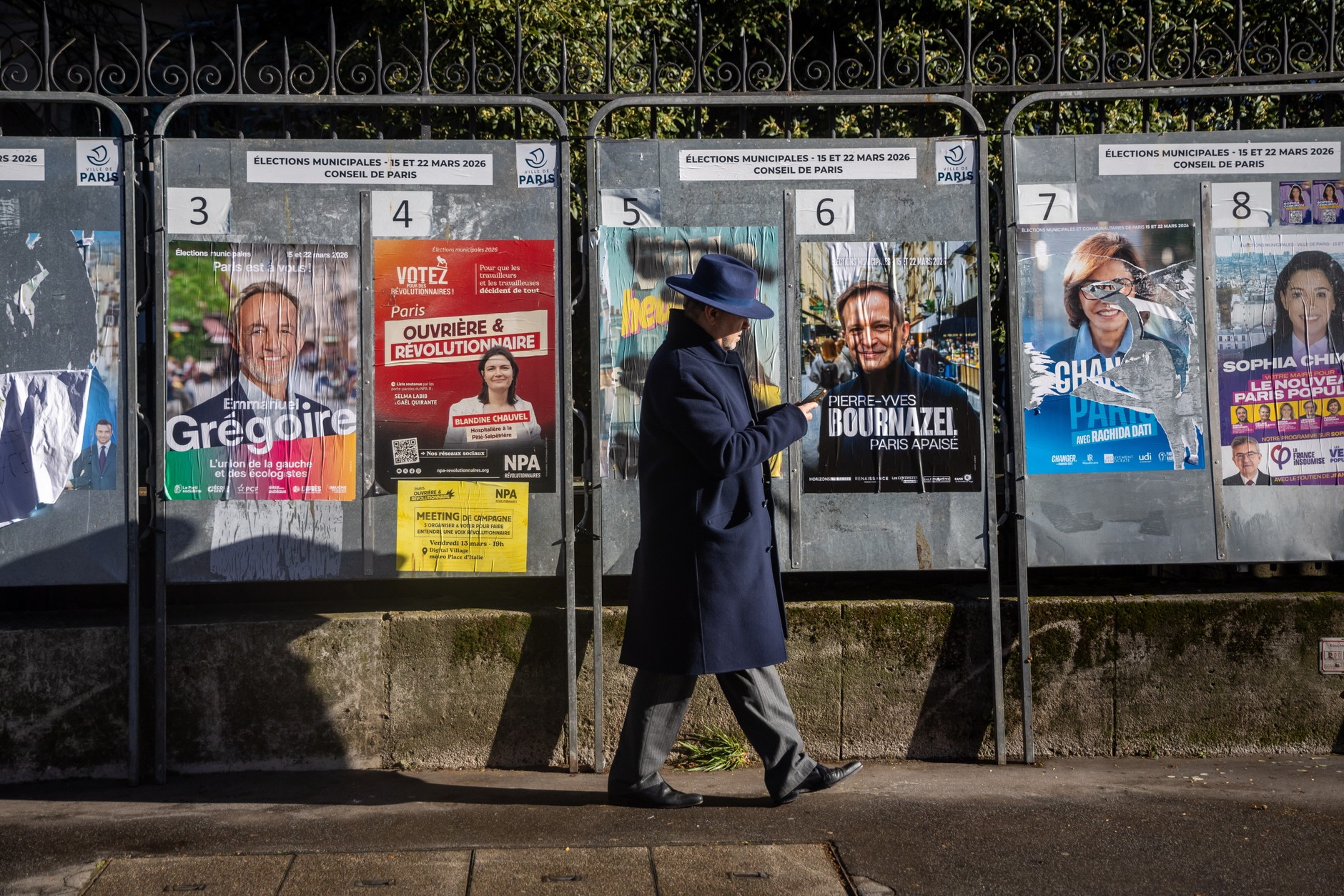
A passerby stands in front of election posters during the first round of the French municipal elections in Paris, France, March 15, 2026.PAP/EPA/CHRISTOPHE PETIT TESSON / PAP
Center-right under pressure
President Emmanuel Macron's allies are under pressure across the country, where center-right candidates are struggling to hold or win big cities as the far-right takes over part of their electorate.
An example is Nice, where Le Pen's ally, Eric Ciotti, won over 40 percent, according to preliminary estimates. votes, which makes him the favorite before the second round of elections against the incumbent Christian Estrosi, supported by centrist parties.
Ciotti was chairman of the Republican Party from 2022 to 2024, but was ousted in a dramatic coup after reaching an agreement with Le Pen's National Rally party without the consent of his supporters.
The race in Nice reflects both the struggle of traditional center-right forces to contain the far right and the fierce personal rivalry between Ciotti and Estrosi, a former member of the conservative Republican party.
Center-right leader Edouard Philippe survived to fight on
Former Prime Minister Edouard Philippe experienced moments of concern as polls showed a tie with his communist opponent, but the leading centrist candidate in the 2027 presidential elections gained a decisive advantage in the industrial city of Le Havre.
Philippe, who has already announced his candidacy for 2027, has said he will withdraw from the race if he loses the mayoral election in Normandy, which would put his political future in doubt.
— Polls are not elections; in a democracy, voters decide, he said after the results were announced.
The far left is scoring high
Defiant France, Melenchon's far-left movement, performed better than expected in key cities, which will increase anxiety among the moderate left ahead of the 2027 presidential elections.
The best example is the northern city of Lille, where, according to one forecast, the candidate of Defiant France drew with the incumbent mayor from the center-left. The party is also on track to take first place in Roubaix, a densely populated working-class city on the outskirts of Lille.
The party's prospects in this election were very uncertain after the controversy surrounding the death of a far-right activist last month. However, Defiant France's strategy of focusing on young voters and the urban working population, often of immigrant origin, is paying off despite repeated controversies, in particular accusations of anti-Semitism against Melenchon.
— These elections confirm that there is a strong electoral base of Unruly France in large cities, said Jean-Yves Dormagen, political scientist and head of the Cluster17 polling institute.
Dormagen also drew attention to the highly polarized and fragmented nature of the French political landscape, as Sunday's results confirmed. In many cities, even four or five candidates qualified for the second round, which was an exceptional situation a few years ago.
The article continues below the video
The moderate left will have several problems
This fragmented political landscape is causing a lot of headaches for French moderates (politicians), especially those on the left, where internal disputes were already visible on election night.
The moderate left is divided over making ad hoc alliances with the far-left movement Unruly France, whose fiery leader has become highly toxic to centrist voters.
“We won't be able to stem the tide of the far right with Jean-Luc Melenchon as a chain,” said Social Democratic leader Raphael Glucksmann on Sunday, who has long criticized Melenchon's outbursts and position.
This put him in opposition to the leader of the Greens, Marine Tondelier, who opened the door to alliances with the radical left. — I see fewer differences between the left and the right than between individual left-wing groups, she said.
Although the Socialist Party has turned its back on Melenchon at the national level, electoral math may force some candidates to rethink their strategy at the local level.
In important urban centers such as Nantes, Rennes, Marseille and even Paris, the path to victory may involve reaching an agreement with the Defiant France candidates – all of whom made it to the second round. In other cities, such as Limoges and Toulouse, the left has a chance to defeat the incumbent right-wing mayor – but the candidates of Indomitable France are ahead of the socialists.
Socialists can look at Paris with some optimism. Their candidate Emmanuel Gregoire took first place in the capital, overtaking his center-right rival Rachida Dati. However, there is no guarantee that he will win in the second round without the votes of the extreme left.
— Next Sunday will be a breakthrough moment for the future of Paris. What is at stake is how we will live together, Gregoire said.
Sophia Chikirou of Defiant France challenged him to form an alliance, saying she was “waiting for the call.”
I’m Ashley Davis as an editor, I’m committed to upholding the highest standards of integrity and accuracy in every piece we publish. My work is driven by curiosity, a passion for truth, and a belief that journalism plays a crucial role in shaping public discourse. I strive to tell stories that not only inform but also inspire action and conversation.