The Republic of Moldova declares a state of environmental alert on the Dniester after the pollution caused by a Russian attack in Ukraine

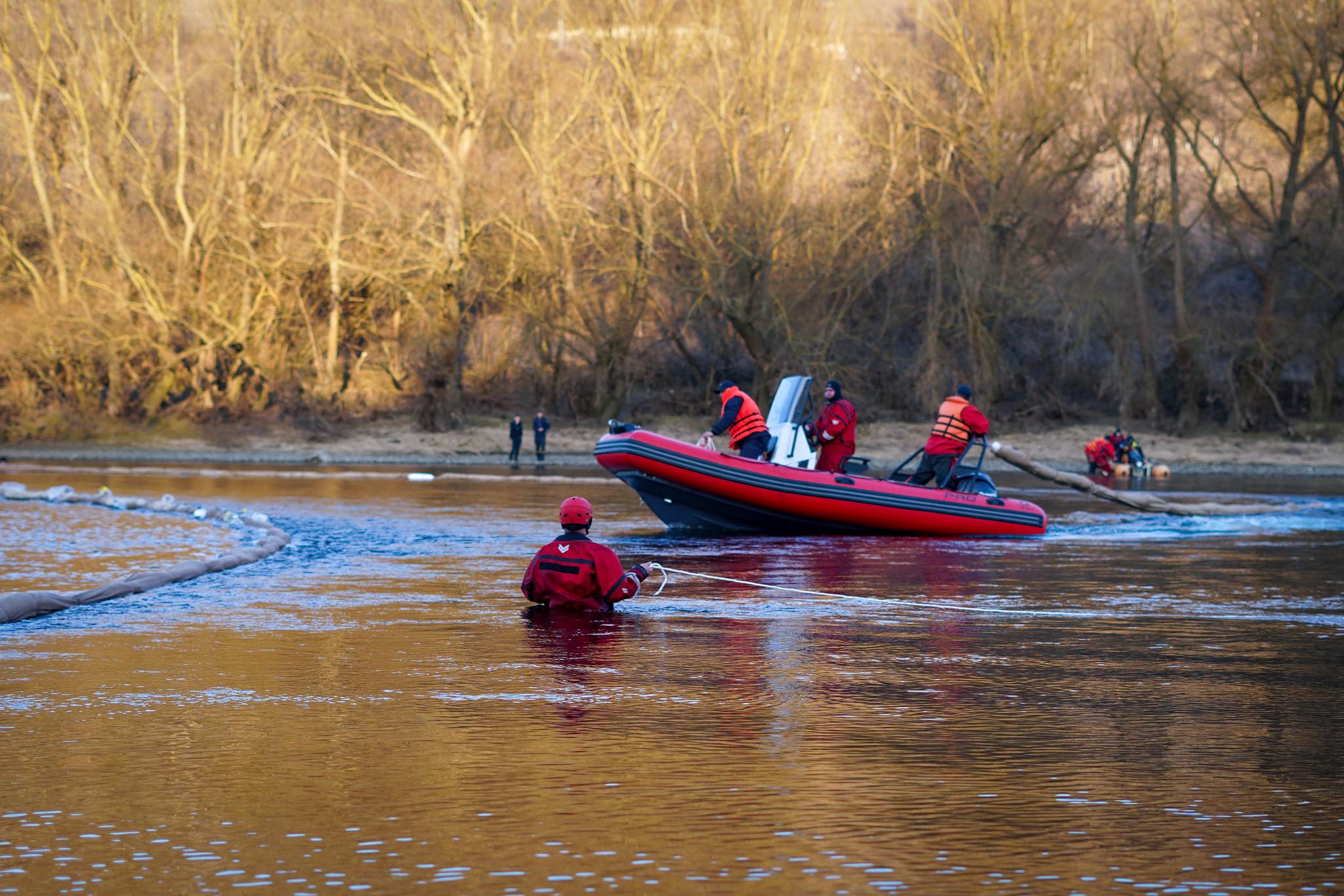
The government of the Republic of Moldova instituted a state of environmental alert for the Dniester river basin on Sunday, for a period of 15 days, due to a wave of oil pollution that continues to move along the river's course.
The pollution dates back to March 7 when Russia launched an attack on infrastructure in Ukraine. According to the Ministry of the Environment in Chisinau, in the Naslavcea-Soroca sector, the allowed values for oil products and aromatic hydrocarbons in water were exceeded.
Specialists warn that pollution reaches the river in waves, which makes it difficult to accurately estimate the evolution of the situation. Even if in some monitoring points the concentrations may temporarily return within the allowed limits, the substance continues to be transported by the river currents.
The measure taken during today's meeting of the executive of the Republic of Moldova allows the authorities to mobilize additional resources and impose restrictions to protect drinking water sources and the health of the population.
Additional dams and restrictions on water use
In the following period, in the context of the decision taken, the Chisinau authorities will apply a series of measures to limit the spread of the pollutant. Among them is the installation of additional dams at the Dubăsari reservoir, to prevent the movement of petroleum substances downstream.
Also, public institutions and economic agents will make an inventory of water wells that could be used as alternative sources in the event that the Dniester water intakes will be affected.
The alert regime also allows the introduction of restrictions on the capture and use of water in sectors where analyzes indicate exceeding the allowed values, in order to prevent the contamination of water supply systems.
At the same time, the government's decision allows the mobilization of additional resources, including from state reserves or from sources that are not directly administered by the authorities, as well as the involvement of additional intervention structures.
Water supply, stopped in several localities
Due to the risk of contamination, the water supply was temporarily stopped in several localities in the north of the Republic of Moldova. The Cosăuți catchment station was stopped, and the restrictions also affect localities in Soroca, Bălți, Florești and Sîngerei districts.
The measure was taken to prevent contaminated water from entering drinking water supply systems.
The Dniester River is one of the main sources of water for the Republic of Moldova, and the authorities are trying to prevent the pollutant from moving to the downstream sectors. To limit the pollution, barriers and filters were installed on the river, and the intervention teams continue the permanent monitoring of the water quality.
Romania offered support to the Moldovan authorities, sending intervention equipment, including dams and absorbent materials for the collection of oil products.
The pollution caused by a Russian attack in Ukraine
The ecological crisis began after a missile and drone attack launched by Russia on March 7 on energy infrastructure in Ukraine's Chernivtsi region, including a hydroelectric plant located on the Dniester River.
Following the bombings, technical oils and fuel ended up in the water, being later transported by the river current to the territory of the Republic of Moldova.
The first oil stains were observed on March 10, in the border area between Ukraine and the Republic of Moldova, and subsequent analyzes confirmed exceeding the permitted concentrations of petroleum products.
According to preliminary estimates, approximately 1.5 tons of oil products would have reached the waters of the Dniester. In the context of the risks for the population's water supply, the Chisinau authorities requested the activation of the Civil Protection Mechanism of the European Union, in order to receive technical support and specialized equipment to limit pollution.