Procedure for the first time in Sibiu: maximum efficiency of radiotherapy in prostate cancer, with minimal risk for healthy tissues

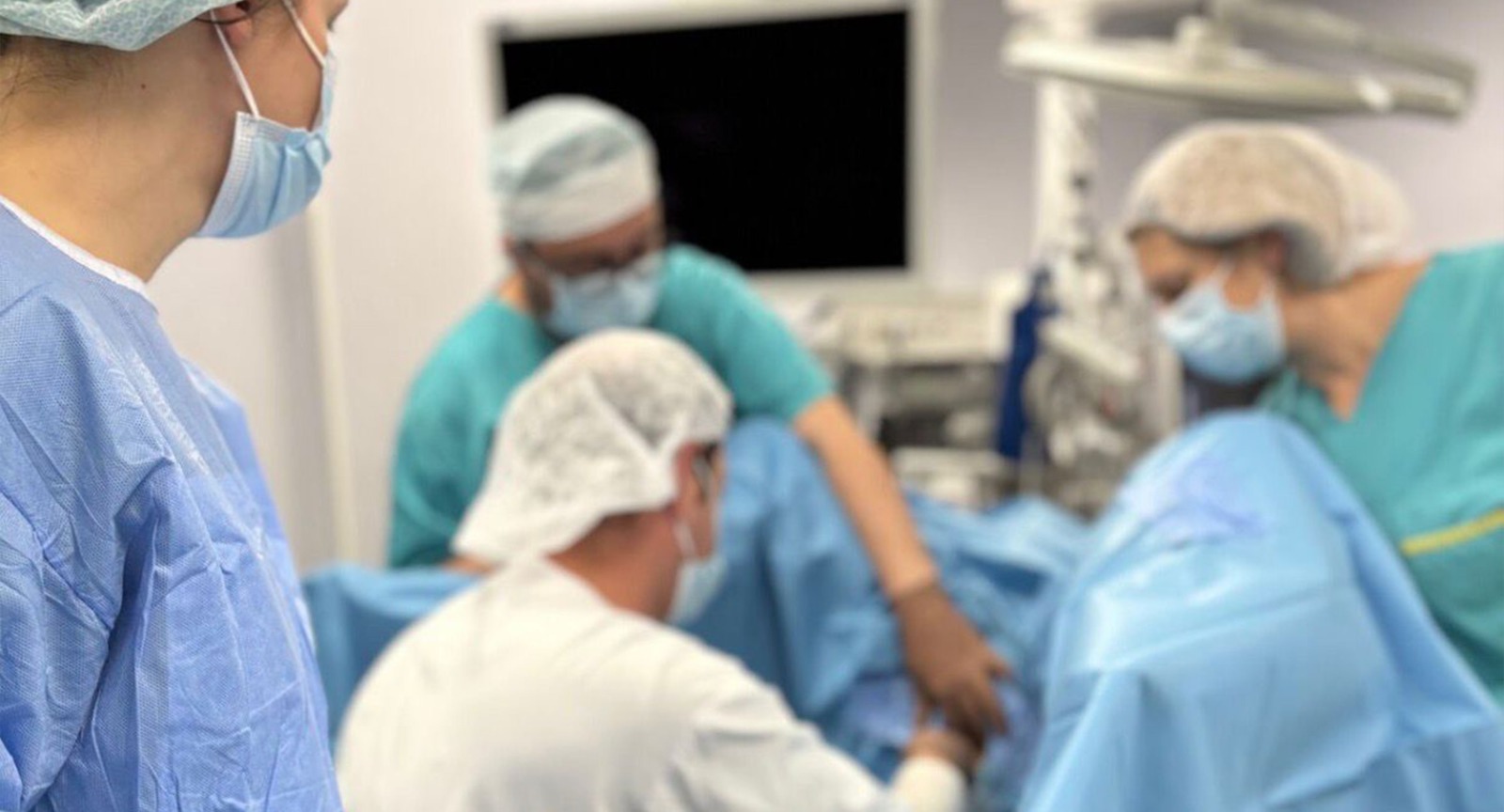
A procedure used before radiation therapy can make prostate cancer treatment much easier to bear and, in addition, can increase the quality of life for patients after the treatments are completed. The technique, realized for the first time at MedLife Polisano Sibiuby the assist team. university Dr. Valentin Pîrvuț and under the coordination of Dr. Victor Bacalu, significantly reduces the risk of damage to healthy tissues.
For many prostate cancer patients, radiation therapy is an essential part of treatment. The problem is that, no matter how well planned, radiation, even if it targets the tumor, can also affect healthy tissues to some extent. In the vicinity of the prostate is the rectum, and this anatomical proximity explains why some patients face, during the treatment or even several months after its completion, important side effects: stinging, pain, the constant feeling of going to the toilet, rectal bleeding or a discomfort that significantly affects their life. There are cases where the side effects are so difficult to bear that they can affect the patient's adherence to treatment.
What dose of radiation reaches healthy tissues
Before starting the radiotherapy, a CT simulation and the irradiation plan are carried out: the doctors determine the treatment target and the organs to be protected, and the medical physicists precisely calculate the radiation dose distribution.
Following such a plan, after finding that, in the case of a patient who needed high doses of radiation, the rectum would have been exposed to an increased risk of adverse effects, Dr. Victor Bacalu, specialist radiotherapist, turned to the team of urologists coordinated by Dr. Valentin Pîrvuț and together they found the solution: the implantation of a rectal spacer, which has the role of protecting the surrounding healthy tissues, especially the rectum, from the side effects of radiotherapy.
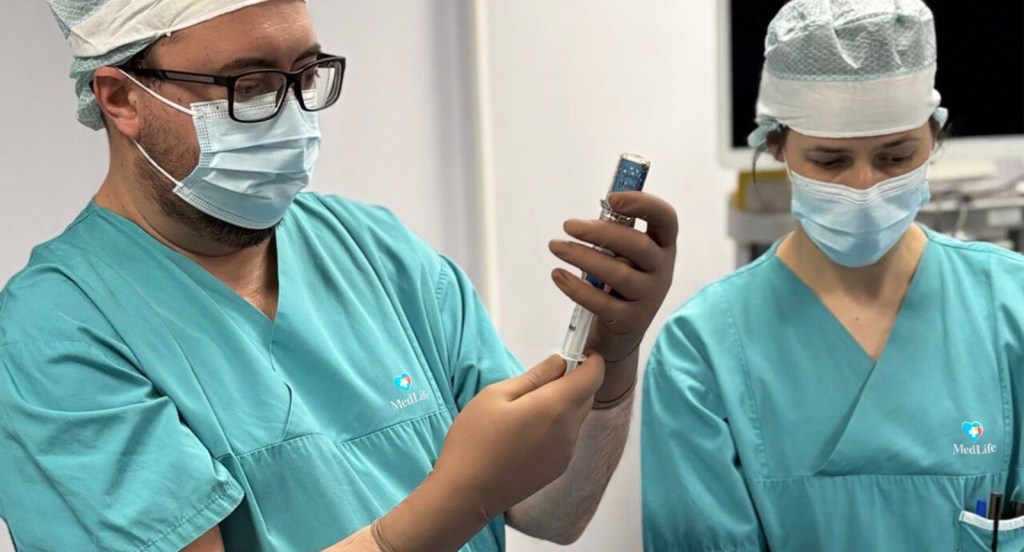
The team led by Dr. Pîrvuț implanted the first spacers in three patients, and thus MedLife Polisano became the first certified center in Romania to perform the procedure. Meanwhile, the number of prostate cancer patients who have benefited from this implant has reached 20.
“As for eligibility, almost all patients – 90-95% – who are proposed for radiotherapy in prostate cancer could benefit from the rectal spacer. The exceptions are very few”, mentions Dr. Pîrvuț.
For the team, the first case also became a starting point. After implantation, doctors were able to compare two plans: one calculated before and one after creating the protective space between the prostate and rectum. The observed difference in the dose reaching the rectum confirmed that the method can significantly reduce the irradiation of healthy tissues in the immediate vicinity of the prostate.
A short, minimally invasive, well-tolerated intervention
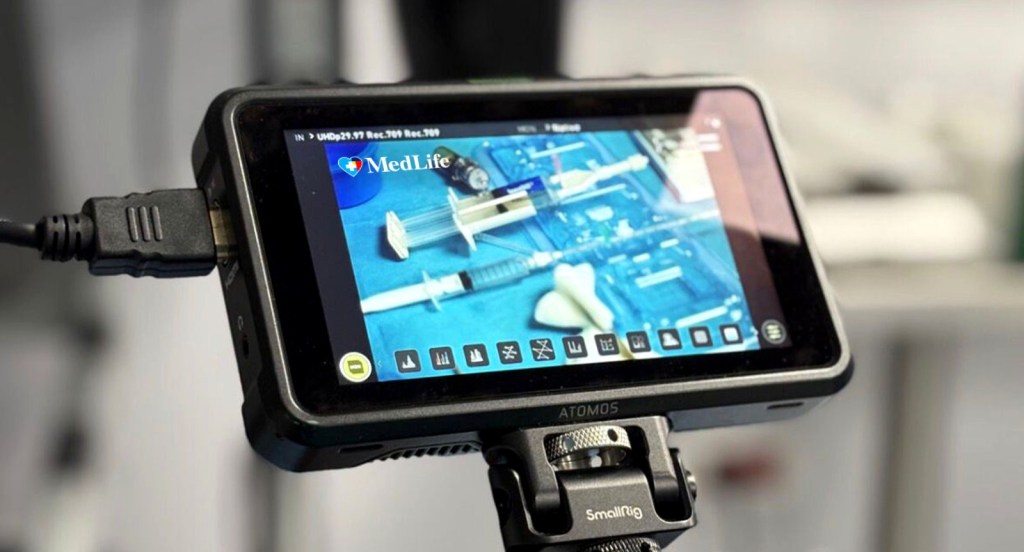
Assist. university Dr. Valentin Pîrvuț briefly explains what the procedure consists of: the rectal spacer is basically a gel injected into an anatomical space between the prostate and the rectum. After insertion, it hardens and creates about a centimeter of separation, enough to reduce the radiation exposure of the rectum.
So the great benefit of the procedure is that, while the therapy reaches its goal in the dose necessary to be as effective as possible, the rectal tissue is protected and the radiation dose reaching it is greatly diminished.
The implantation procedure is not a long one, nor does it usually involve a difficult recovery. According to Dr. Pîrvuț, the spacer is mounted under ultrasound guidance, through a transperineal approach, in an intervention that lasts approximately 15-30 minutes and can be done under analgesia. This means that the patient usually does not need a complicated general anesthesia.
After the procedure, there may be small local pains or a feeling of pressure in the injection area, but these are usually small and pass quickly. The need for analgesics is minimal or even absent. The spacer does not stay permanently in the body. It is used strictly for the period of radiotherapy, then it begins to resorb, the process being gradual.
Why is protecting the rectum so important?
In prostate cancer, one of the most feared complications of radiotherapy is radicular rectitis, i.e. inflammation of the rectum caused by radiation. Dr. Victor Bacalu, specialist radiotherapist, says that this is where the usefulness of the spacer is most clearly seen.
“The main benefit is in the rectum,” he points out. In the absence of sufficient distance between the prostate and the rectum, patients may develop during treatment symptoms such as stinging in the stool, pain, the annoying and repeated sensation of going to the toilet, sometimes even bleeding. These side effects do not always occur at the start of radiation therapy, but often as the treatment progresses, halfway through the sessions or later. In some patients, they do not disappear immediately after the end of radiotherapy treatments, but may continue for months to come.
By increasing the distance between the prostate and the rectum with the help of the spacer, the radiation reaching the rectum decreases. And when the dose goes down, so does the risk of side effects. For the patient, this can mean less discomfort, less anxiety about each session and, very importantly, a better quality of life during treatment.
Fewer side effects, better quality of life
Prostate cancer is the most common form of cancer in men in Romania. Fortunately, with better screening and faster presentation to the doctor, more and more cases are being discovered at stages where there are effective treatment options. But modern cancer treatment involves not only the optimal control of the disease, but also the protection of the quality of life. The better the adverse effects of the treatment are limited, without compromising the therapeutic efficiency, the less the patients' quality of life suffers, doctors say.
***
Read other informative articles on medical topics in the Make Romania good section.
This article is supported by MedLife, the largest network of private medical services in Romania, and is part of an extensive information and education effort, dedicated to prevention and a long-term healthy lifestyle.
At MedLife, health is approached with care and responsibility, starting from the real needs of each patient. Medical decisions are based on complex evaluations, supported by multidisciplinary teams of good doctors and state-of-the-art technologies. Through modern diagnostic and treatment solutions and, more recently, genomics expertise and the possibility of early identification of risks for common and lifestyle diseases, MedLife aims to help people take better care of their health.
The objective is clear: active prevention and timely intervention, before health problems affect the balance and quality of life. Because health means more than the absence of disease. It means energy, mobility and balance, at any age. MedLife is constantly investing in solutions that support sustainable health and contribute to a life well lived, not just today, but over the long term.
More information about the available services can be found at https://www.medlife.ro/.
Article sponsored by MedLife